




Executive Summary
- Speed Index (SI) measures the average time at which visible parts of the page are displayed, calculated via visual progress across video frames.
- Unlike milestone-based metrics like First Contentful Paint, SI provides a holistic view of the perceived loading speed and visual stability.
- Optimizing Speed Index requires minimizing main-thread work and prioritizing the delivery of critical-path CSS and above-the-fold assets.
What is Speed Index?
Speed Index (SI) is a lab-based performance metric that quantifies the rate at which content becomes visually available during page load. Unlike discrete milestones such as First Contentful Paint (FCP) or Largest Contentful Paint (LCP), Speed Index is a composite score derived from a frame-by-frame analysis of the browser’s rendering process. It calculates the area above the visual progress curve, effectively measuring the average time it takes for the visible portions of a webpage to be populated.
The metric is highly dependent on the viewport size and the efficiency of the browser’s rendering engine. At Andres SEO Expert, we utilize Speed Index to identify bottlenecks in the critical rendering path that might not be captured by individual timing events. A lower Speed Index score indicates that the visual elements of a page are appearing rapidly and uniformly, which significantly enhances the user’s perception of performance.
The Real-World Analogy
Imagine two construction crews building identical houses. Crew A spends months on the foundation and internal structure, so the house looks like a skeleton until the very last week when the walls and roof are suddenly finished. Crew B builds the exterior shell immediately, making the house look complete from the street within the first month, even though the interior takes just as long as Crew A. While both houses are finished on the same day, Crew B has a much better Speed Index because the visual progress was apparent to observers much earlier in the process.
Why is Speed Index Critical for Website Performance and Speed Engineering?
Speed Index is a vital indicator of perceived performance, which directly influences user engagement and conversion rates. While Core Web Vitals like LCP focus on the single largest element, Speed Index captures the overall visual experience. High Speed Index scores often point to excessive main-thread activity, render-blocking JavaScript, or unoptimized CSS that prevents the browser from painting pixels efficiently. In the context of modern SEO and AI-Search, search engines prioritize pages that provide immediate visual feedback, as this reduces the likelihood of user bounce and improves the overall quality of the interaction.
Best Practices & Implementation
- Minimize Main-Thread Work: Reduce the time spent parsing, compiling, and executing JavaScript to allow the browser to prioritize rendering tasks.
- Optimize the Critical Rendering Path: Inline essential CSS required for above-the-fold content and defer non-critical stylesheets to prevent render-blocking.
- Implement Resource Prioritization: Use <link rel=”preload”> and fetchpriority attributes to ensure high-priority assets are fetched and processed early.
- Compress and Resize Images: Utilize modern formats like WebP or AVIF and ensure images are sized correctly for the viewport to reduce the visual payload.
Common Mistakes to Avoid
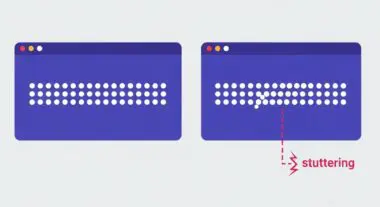
A frequent error is over-optimizing for a single metric like LCP while neglecting the overall visual progression, leading to a “stuttering” load experience. Another common mistake is the excessive use of third-party scripts that hijack the main thread during the initial paint phase, causing a significant lag in the Speed Index despite fast server response times.
Conclusion
Speed Index is a comprehensive metric for evaluating the visual efficiency of the rendering path. Optimizing it ensures a seamless, high-performance user experience that aligns with modern search engine requirements.