Executive Summary
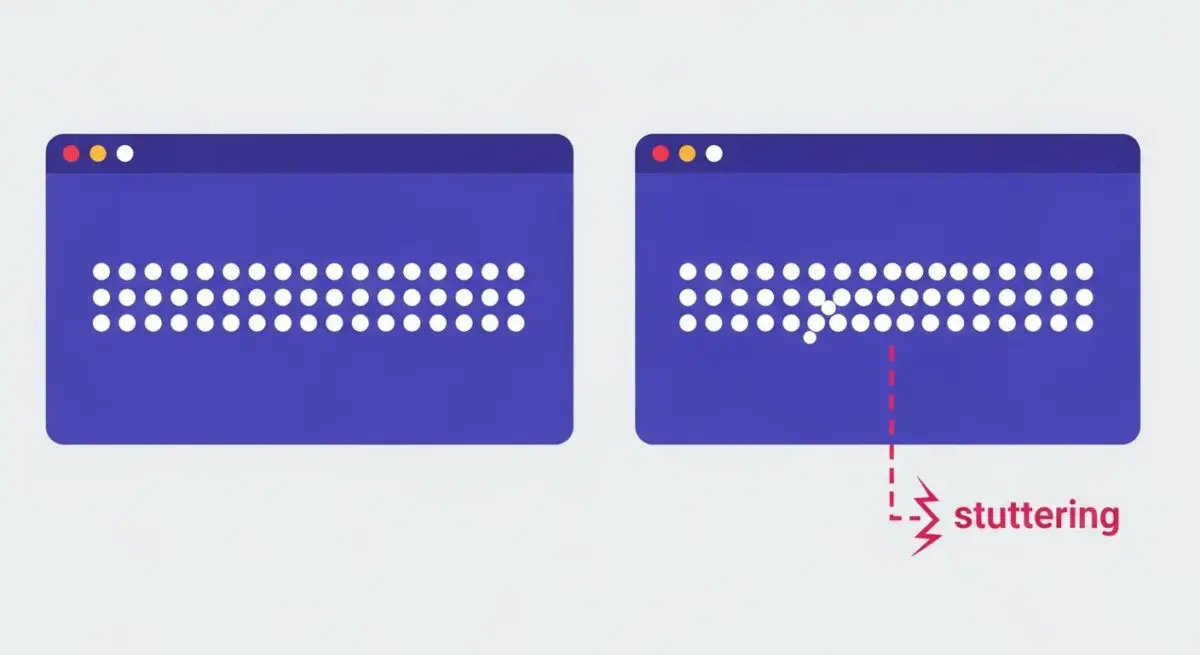
- Jank refers to visual stuttering or dropped frames that occur when the browser’s main thread is blocked, preventing a consistent 60fps refresh rate.
- It is a critical performance bottleneck that directly degrades Interaction to Next Paint (INP) and overall user perceived stability.
- Optimization requires minimizing main-thread execution time, avoiding layout thrashing, and offloading animations to the compositor thread.
What is Jank?
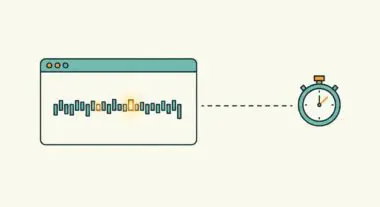
Jank is a technical term in web performance used to describe visual stuttering or hitching that occurs when a browser is unable to maintain a consistent frame rate during animations, transitions, or scrolling. Most modern digital displays refresh at a rate of 60 frames per second (fps). To achieve this, the browser has a strict budget of approximately 16.67 milliseconds to complete all tasks required to render a single frame, including JavaScript execution, style calculations, layout, and painting.
When the browser’s main thread is occupied by heavy computational tasks or inefficient code for longer than this 16.67ms window, it misses the frame deadline. This results in “dropped frames,” where the display remains static for a cycle before jumping to the next available state. This lack of fluidity is perceived by the user as jank, making the interface feel unresponsive, sluggish, or broken. In high-performance speed engineering, eliminating jank is essential for maintaining the “RAIL” (Response, Animation, Idle, Load) model standards.
The Real-World Analogy
Imagine watching a traditional film reel at a cinema. For the movie to look smooth, the projector must show 24 still images every second at a perfectly steady rhythm. If the projector’s gears occasionally snag, causing it to pause on one image for too long and then quickly skip two images to catch up, the motion looks jerky and jarring. This is exactly what happens on a website when jank occurs: your browser is the projector, and your code is the film. If the code is too “heavy” for the projector to pull through at a steady speed, the audience sees a stuttering, unpleasant sequence instead of a fluid movie.
Why is Jank Critical for Website Performance and Speed Engineering?
Jank is no longer just a cosmetic issue; it is a measurable technical failure that impacts search engine visibility and conversion rates. With the introduction of Interaction to Next Paint (INP) as a Core Web Vital, Google now quantifies how quickly a page responds to user inputs. If a user clicks a button or scrolls while the main thread is experiencing jank, the visual feedback is delayed, leading to a poor INP score and potentially lower rankings in search results.
Furthermore, jank is often a symptom of inefficient Rendering Path management. Excessive layout shifts (CLS) and long-running JavaScript tasks contribute to a high Total Blocking Time (TBT). In the context of AI-Search and Generative Experience Optimization (GEO), where users expect instantaneous and fluid interactions, jank serves as a signal of low-quality engineering, negatively affecting the user’s trust and the site’s technical authority.
Best Practices & Implementation
- Prioritize Compositor-Only Properties: Use CSS transform and opacity for animations. These properties bypass the layout and paint stages of the pixel pipeline, allowing the GPU to handle the work on the compositor thread without blocking the main thread.
- Eliminate Layout Thrashing: Avoid “forced synchronous layouts” by batching DOM reads and writes. Reading a property like offsetWidth immediately after changing a style forces the browser to recalculate the layout prematurely, creating significant jank.
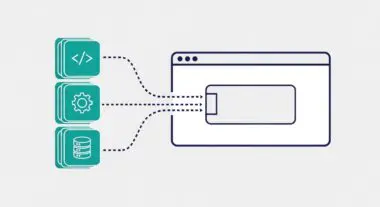
- Utilize Web Workers: Move heavy, non-UI related JavaScript logic to Web Workers. This allows complex calculations to run on a background thread, keeping the main thread free to handle 60fps rendering and user input.
- Implement requestAnimationFrame: Always use requestAnimationFrame for manual visual updates instead of setTimeout or setInterval. This ensures your code runs at the start of the frame, maximizing the time available to complete work before the deadline.
Common Mistakes to Avoid
One of the most frequent errors is the over-reliance on heavy third-party scripts that execute long tasks on the main thread during the initial load or during critical user interactions. Another common mistake is failing to debounce or throttle high-frequency event listeners, such as scroll or resize, which can trigger hundreds of layout calculations per second and cause severe jank on mobile devices with limited CPU power.
Conclusion
Jank is a critical indicator of main-thread inefficiency that directly impacts Core Web Vitals and user retention. By adhering to the 16.67ms frame budget and optimizing the rendering pipeline, developers can ensure a fluid, high-performance digital experience.