Executive Summary
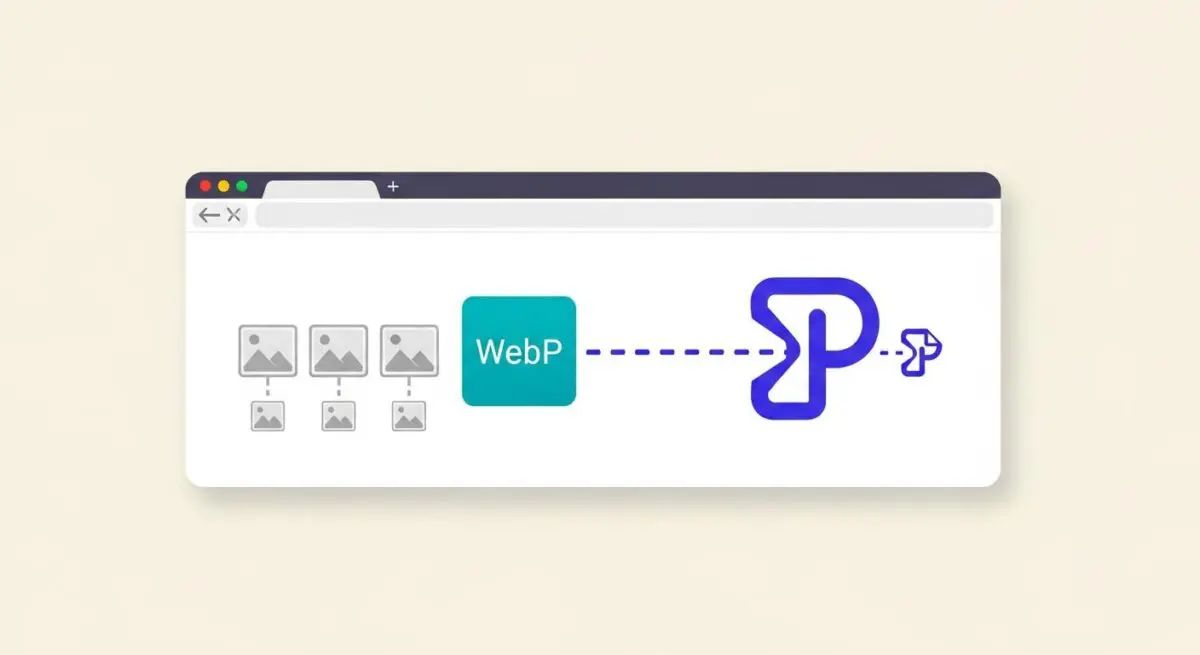
- WebP utilizes advanced predictive coding to provide 25-35% smaller file sizes than JPEG and PNG without significant quality loss.
- The format supports both lossy and lossless compression, transparency, and animation, consolidating multiple legacy formats into one.
- Implementing WebP directly optimizes the Largest Contentful Paint (LCP) metric by reducing the total byte weight of critical visual assets.
What is WebP?
WebP is a modern image format developed by Google, designed specifically to provide superior lossy and lossless compression for web-based assets. It leverages the VP8 video codec bitstream to encode image data, utilizing predictive coding to estimate the values of neighboring pixels. This method allows the format to store only the difference between the predicted and actual values, significantly reducing the amount of data required to render high-fidelity visuals.
Technically, WebP supports an 8-bit transparency layer (alpha channel), which was previously only available in the PNG format, and can handle both lossy and lossless metadata. By integrating these features into a single container, WebP serves as a versatile replacement for JPEG, PNG, and GIF, streamlining the asset delivery pipeline for high-traffic enterprise environments.
The Real-World Analogy
Think of WebP as a high-efficiency vacuum-sealing system for a shipping container. Traditional formats like JPEG are like packing clothes loosely in boxes; they take up significant space because of the air between them. WebP acts as the vacuum sealer, removing all unnecessary data from the package before it is shipped. The recipient receives the exact same garments, but the shipping company was able to fit 30% more items in the same truck, leading to faster delivery and lower fuel costs.
Why is WebP Critical for Website Performance and Speed Engineering?
In the era of Core Web Vitals, WebP is a fundamental tool for optimizing the Largest Contentful Paint (LCP). Since images often constitute the largest byte-weight on a webpage, reducing their size directly accelerates the rendering of the main content. Smaller file sizes also decrease the duration of the network contention phase, allowing other critical resources like CSS and JavaScript to be fetched more efficiently.
Furthermore, WebP reduces server egress costs and improves performance on mobile devices with limited bandwidth. By serving smaller files, we decrease the CPU cycles required for image decoding on the client side, particularly when compared to more complex next-gen formats like AVIF in certain hardware environments. This efficiency ensures a faster Time to Interactive (TTI) and a smoother user experience.
Best Practices & Implementation
- Implement Responsive Delivery: Use the HTML5
<picture>element to serve WebP as the primary source while providing a JPEG or PNG fallback for legacy browsers that do not support the format. - Optimize Compression Levels: For most web applications, a lossy compression setting between 75 and 85 provides the optimal balance between visual fidelity and file size reduction.
- Automate via CDN: Utilize Edge Computing or Image CDNs to perform real-time conversion to WebP based on the
Acceptheader sent by the user’s browser. - Preserve Essential Metadata: When converting, ensure that critical ICC profiles or XMP metadata are only retained if necessary for color accuracy, as stripping unnecessary metadata further reduces file size.
Common Mistakes to Avoid
One frequent error is the “double compression” of assets, where a low-quality, highly compressed JPEG is converted into a WebP. This does not recover lost quality and often results in a larger file size than the original. Another mistake is failing to provide fallbacks for older versions of Safari or Internet Explorer, which can lead to broken image icons. Finally, developers often overlook the importance of maintaining aspect ratio attributes in the <img> tag when switching formats, which can trigger Cumulative Layout Shift (CLS).
Conclusion
WebP is an essential standard for modern speed engineering, offering a high-performance alternative to legacy image formats that directly improves Core Web Vitals and reduces infrastructure overhead.