




Executive Summary
- Topical depth measures the exhaustive coverage of a subject, focusing on semantic density and entity relationships rather than keyword frequency.
- Generative engines prioritize deep content to satisfy Retrieval-Augmented Generation (RAG) requirements and provide high-utility responses.
- Optimizing for depth involves increasing information gain and addressing complex, multi-intent user queries within a single knowledge domain.
What is Topical Depth?
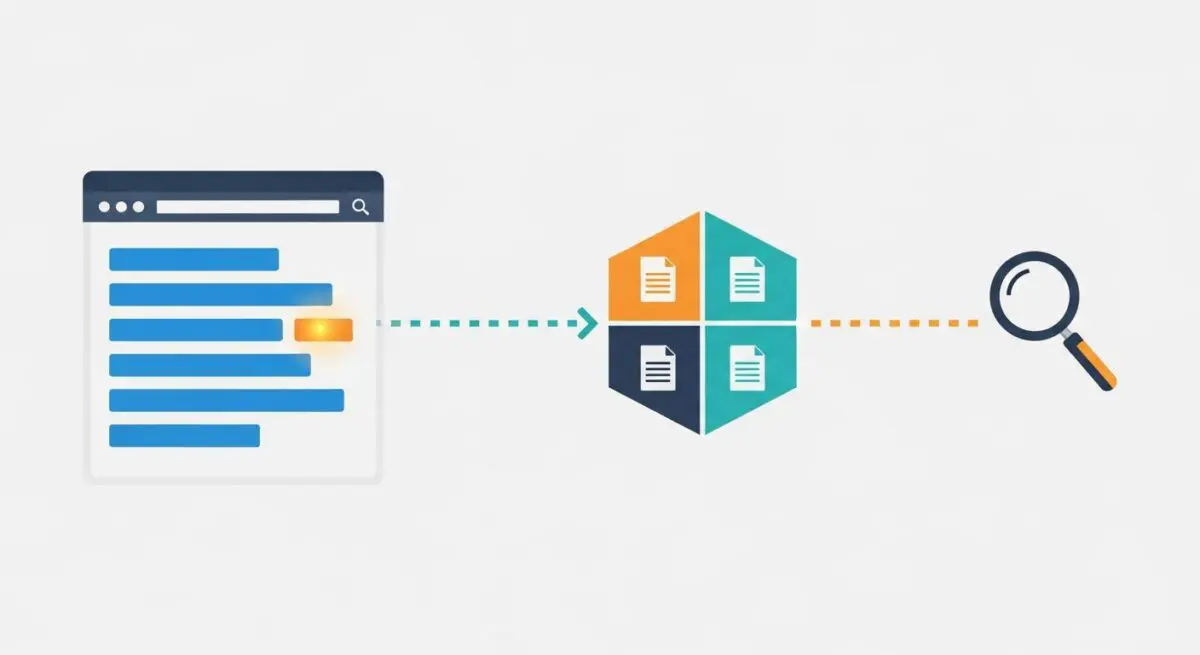
Topical depth is a metric used to evaluate the comprehensiveness and semantic density of content regarding a specific subject or entity. Unlike topical breadth, which covers a wide range of loosely related themes, topical depth focuses on the vertical exhaustion of a topic. This involves addressing not only the primary subject but also its secondary and tertiary nuances, causal relationships, and technical intricacies. In the context of modern information retrieval, depth is defined by the presence of latent semantic indexing (LSI) keywords, entity-attribute-value triples, and the resolution of complex user intents.
For Generative Engine Optimization (GEO), topical depth serves as a signal of authority. When an LLM (Large Language Model) processes a corpus, it identifies sources that provide the most granular data points. High topical depth ensures that a document contains the necessary context to be selected during the Retrieval-Augmented Generation (RAG) process, as it offers a higher probability of containing the specific “nuggets” of information required to synthesize an accurate response.
The Real-World Analogy
Imagine you are looking for information on a rare vintage watch. A general lifestyle magazine might mention the watch’s name and its approximate value—this is topical breadth. In contrast, a specialized horological archive would provide the serial number ranges, the specific alloy used in the balance wheel, the history of the master watchmaker who designed the escapement, and a comparison of its movement against contemporary competitors. The archive provides topical depth. For a business owner, being the “archive” rather than the “magazine” ensures that when an expert (or an AI) needs a definitive answer, your content is the only viable source.
Why is Topical Depth Important for GEO and LLMs?
Topical depth is critical for AI visibility because LLMs are designed to minimize hallucinations by grounding their outputs in high-quality, factual data. We at Andres SEO Expert have observed that content with significant depth achieves higher source attribution in platforms like Perplexity and SearchGPT. This is due to the concept of Information Gain: if your content provides unique insights or data layers that are absent from the general training set or competing web results, the AI perceives your source as high-utility.
Furthermore, depth establishes Entity Authority. By covering every facet of a topic, you signal to the search engine’s knowledge graph that your domain is a primary node for that specific entity. This reduces the “semantic distance” between a user’s complex query and your content, making it the preferred choice for generative summaries.
Best Practices & Implementation
- Conduct Semantic Gap Analysis: Use competitive intelligence to identify sub-topics and technical questions that competitors have ignored, then fill those gaps with data-backed content.
- Implement Entity-Based Structuring: Organize content around specific entities and their relationships, using Schema.org markup to explicitly define these connections for AI crawlers.
- Prioritize Information Gain: Include proprietary data, original case studies, or expert technical commentary that cannot be found elsewhere, ensuring the content offers unique value to the LLM’s retrieval set.
- Address Multi-Layered Intents: Structure articles to answer the “What,” “How,” “Why,” and “What if” of a topic to satisfy both informational and transactional search intents simultaneously.
Common Mistakes to Avoid
One frequent error is confusing word count with depth; long-form content that repeats the same basic concepts without adding new technical layers is viewed as “thin” by modern AI. Another mistake is failing to link related deep-dive articles, which prevents the establishment of a cohesive topical cluster. Finally, many brands ignore the technical “how-to” aspects, focusing only on high-level marketing summaries that lack the granular detail LLMs require for RAG.
Conclusion
Topical depth is the primary differentiator in an AI-saturated landscape, transforming standard web pages into authoritative knowledge bases. By prioritizing granular detail and information gain, organizations ensure their content remains the foundational source for generative engine responses.