Executive Summary
- GraphRAG integrates Knowledge Graphs with Retrieval-Augmented Generation to provide structured, relational context beyond simple vector similarity.
- It enables LLMs to perform global summarization and complex reasoning across large-scale, interconnected datasets.
- For GEO, GraphRAG is critical for establishing entity authority and ensuring accurate source attribution in multi-hop queries.
What is GraphRAG?
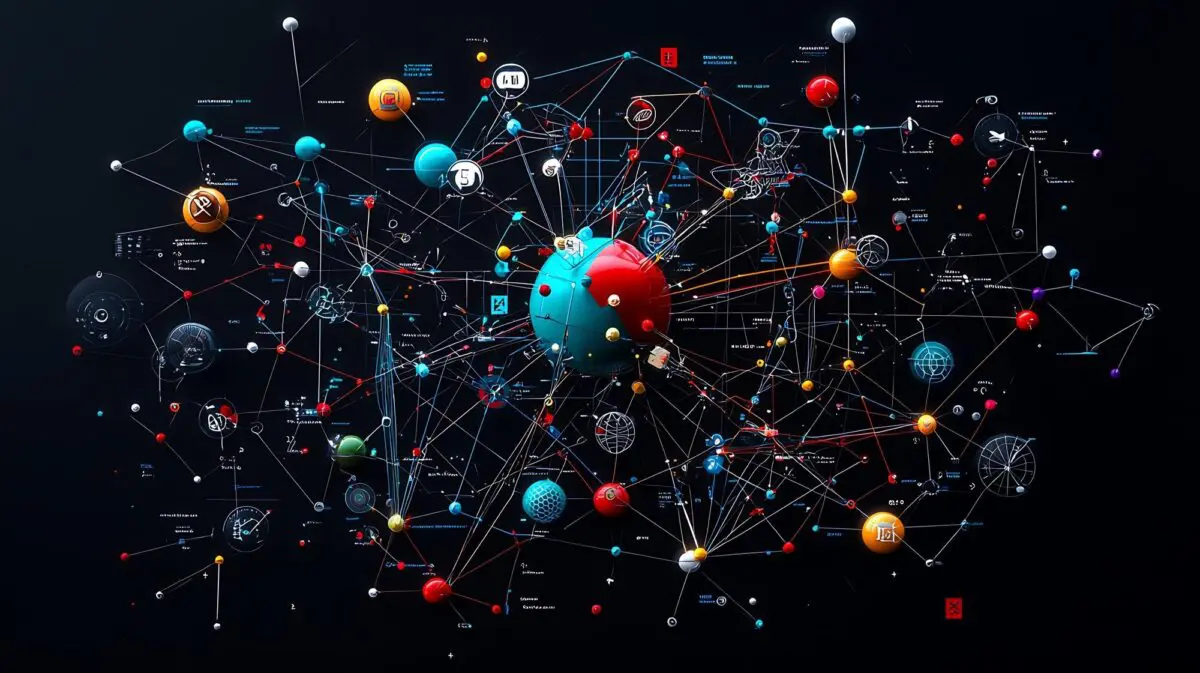
GraphRAG (Graph Retrieval-Augmented Generation) is an advanced architectural framework that enhances traditional RAG by incorporating structured Knowledge Graphs (KG) into the retrieval process. While standard RAG relies on vector databases to find semantically similar text chunks, GraphRAG maps entities and their relationships within a graph structure. This allows the system to traverse connections between data points, providing the Large Language Model (LLM) with a holistic understanding of the dataset’s topology.
By utilizing community detection algorithms and hierarchical indexing, GraphRAG can summarize entire datasets or answer complex, multi-part questions that require synthesizing information from disparate sources. It effectively bridges the gap between unstructured text and structured semantic data, enabling more precise and context-aware generative outputs.
The Real-World Analogy
Imagine you are trying to understand the history of a large corporation. Traditional RAG is like having a filing cabinet where you can search for specific keywords; you might find a memo about a merger, but you miss the context of who influenced whom. GraphRAG is like having a digital interactive map of the entire company history: every employee, project, and decision is a node, and the lines between them show exactly how a 1995 policy change led to a 2023 product launch. It doesn’t just find the “page”; it understands the “web” of events.
Why is GraphRAG Important for GEO and LLMs?
GraphRAG is a cornerstone of Generative Engine Optimization (GEO) because it directly influences how LLMs perceive Entity Authority and Relationship Mapping. In the era of AI search, engines like Perplexity or Google’s Search Generative Experience do not just look for keywords; they look for verified connections between entities. GraphRAG allows these systems to resolve ambiguities and provide accurate source attribution by tracing information back through a structured graph.
Furthermore, GraphRAG mitigates the “lost in the middle” phenomenon common in long-context windows by prioritizing high-centrality nodes—the most important concepts in a network. For brands, this means that being a well-connected entity within a niche’s knowledge graph is more valuable than simply having high-volume content. It ensures that the brand is cited not just for a single fact, but as a foundational component of a broader topical cluster.
Best Practices & Implementation
- Implement Schema.org markup rigorously to define entity relationships (e.g., parent organizations, founders, and related products) to facilitate graph construction by crawlers.
- Develop a Content Hub and Spoke model that emphasizes semantic internal linking, creating a clear hierarchy and relational map for AI agents to follow.
- Focus on Entity-Centric Content that defines not just what a product is, but how it interacts with other industry standards, competitors, and user needs.
Common Mistakes to Avoid
One frequent error is over-relying on unstructured data without providing a semantic framework, which leads to “hallucinated relationships” during the RAG process. Another mistake is failing to update entity metadata, causing the AI to rely on stale or conflicting nodes within its internal graph.
Conclusion
GraphRAG represents the evolution of AI search from simple retrieval to complex relational reasoning. For GEO professionals, mastering graph-based data structures is essential for maintaining visibility.