Executive Summary
- Information Gain is a technical metric quantifying the unique value or novel data a document provides relative to a corpus of previously indexed or retrieved content.
- In Generative Engine Optimization (GEO), high Information Gain scores significantly increase the likelihood of a source being selected for Retrieval-Augmented Generation (RAG) citations.
- Optimization shifts the focus from content length and keyword density toward proprietary data, unique perspectives, and the elimination of semantic redundancy.
What is Information Gain?
Information Gain is a concept rooted in information theory and machine learning, specifically used to measure the reduction in entropy—or uncertainty—after a specific data point is observed. In the context of search engines and Large Language Models (LLMs), it refers to the delta of new, non-redundant information a document provides compared to what is already present in the search index or the model’s training data. This concept gained significant prominence in the SEO industry following Google’s 2020 patent, “Contextual estimation of link information gain,” which describes a system for ranking documents based on their ability to provide additional information to a user who has already viewed other documents on the same topic.
From a technical perspective, Information Gain ensures that search results or generative responses do not merely repeat the same facts across multiple sources. For AI-driven search engines, this metric is critical for efficiency; processing redundant tokens increases computational costs without improving the quality of the output. Therefore, algorithms prioritize sources that offer unique entities, proprietary data, or novel synthesis of existing information, effectively penalizing “me-too” content that paraphrases existing top-ranking results.
The Real-World Analogy
Imagine you are a detective investigating a crime scene. You interview five witnesses. The first four witnesses all tell you exactly the same thing: “A blue car drove away quickly.” While this confirms a fact, the fifth witness tells you, “A blue car with a cracked windshield and a missing hubcap drove away quickly.” The fifth witness provides Information Gain. The first four witnesses provided high redundancy; the fifth witness provided the specific, unique details that actually help solve the case. In the digital ecosystem, Andres SEO Expert views your content as that fifth witness—providing the specific details that the AI needs to complete the picture for the user.
Why is Information Gain Important for GEO and LLMs?
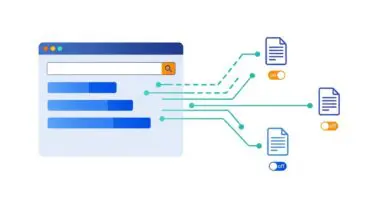
In the era of Generative Engine Optimization (GEO), Information Gain is a primary driver of Source Attribution. LLMs utilizing Retrieval-Augmented Generation (RAG) frameworks, such as Perplexity, SearchGPT, or Google’s AI Overviews, must select a limited number of snippets to synthesize an answer. If five articles provide the same generic definition of a topic, the LLM only needs one. However, if a sixth article provides a unique case study, a specific statistical breakdown, or a contrarian expert analysis, it becomes an essential reference point.
High Information Gain directly impacts Entity Authority. By providing information that does not exist elsewhere in the knowledge graph, a brand establishes itself as a primary source rather than a secondary aggregator. This reduces the risk of being filtered out by “diversity reranking” algorithms, which are designed to ensure that search engine results pages (SERPs) and generative responses offer a variety of perspectives rather than a monolithic repetition of facts.
Best Practices & Implementation
- Integrate Proprietary Data: Conduct original surveys, experiments, or data analysis. Publishing raw findings that cannot be found in other datasets is the most direct way to achieve high Information Gain.
- Develop Unique Visual Assets: Create original diagrams, flowcharts, or technical illustrations. AI models and search engines increasingly use multimodal analysis to identify unique explanatory value in images that clarify complex concepts better than text alone.
- Adopt a Specific Angle or Methodology: Avoid generic “How-To” guides. Instead, document a specific, proprietary framework or a “lessons learned” report from a real-world project to provide experiential information that LLMs cannot hallucinate or scrape from generic sources.
- Eliminate Semantic Redundancy: Audit your content against the current top-ranking results. If your article covers the same sub-topics in the same order as your competitors, it lacks Information Gain. Structure your content to address the “missing pieces” in the current digital discourse.
Common Mistakes to Avoid
One frequent error is the over-reliance on AI-generated content without human-in-the-loop intervention. Because LLMs are trained on existing data, they are inherently designed to produce the most probable (and therefore most redundant) response, which often results in zero Information Gain. Another mistake is “Skyscraper” content that merely aggregates existing points into a longer post; length does not equate to novelty, and RAG systems prioritize density of unique information over sheer word count.
Conclusion
Information Gain is the technical antidote to content commoditization in the AI era. For GEO success, practitioners must prioritize the production of unique, verifiable, and non-derivative data to ensure their assets remain indispensable to generative search architectures.