

Executive Summary
- Minimizes latency by processing AI inference tasks at the network periphery rather than centralized cloud servers.
- Enhances real-time Generative Engine Optimization (GEO) by providing faster data access for AI agents and RAG systems.
- Supports the deployment of localized, context-aware LLMs, improving user experience and data privacy through reduced WAN dependency.
What is Edge Computing?
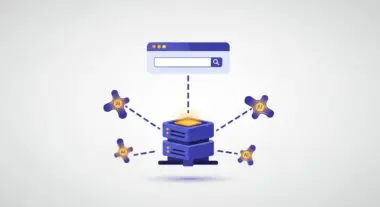
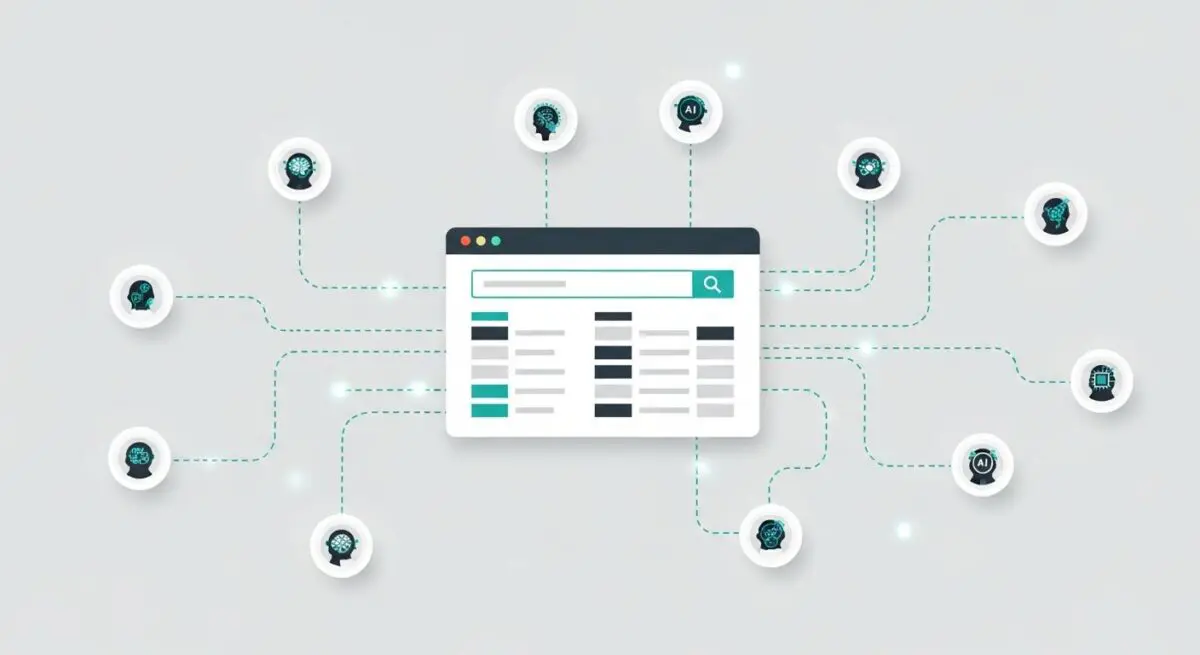
Edge computing is a distributed computing topology where information processing is located close to the edge—the proximity where things and people connect with that information. In the context of Artificial Intelligence, this manifests as Edge AI, where machine learning algorithms are processed locally on hardware devices or local servers rather than relying exclusively on a centralized cloud-based data center. This architecture minimizes the physical distance data must travel, significantly reducing latency and jitter in high-stakes AI applications.
For AI-Search and Generative Engine Optimization (GEO), edge computing facilitates the rapid execution of inference tasks. By offloading computational requirements from the core to the periphery, systems can achieve near-instantaneous response times. This is critical for autonomous agents and real-time retrieval-augmented generation (RAG) systems that require immediate access to localized data sets without the overhead of wide-area network (WAN) round-trips.
The Real-World Analogy
Imagine a large international bank with a single headquarters in New York. If a customer in Tokyo wants to withdraw cash, and the local ATM has to send a request to New York and wait for approval for every single button press, the process would be frustratingly slow. Edge computing is like giving that Tokyo branch its own local server and authority to process transactions. The local branch handles the immediate needs of the customer instantly, only syncing the final balance with the New York headquarters later. This ensures a seamless, high-speed experience for the user while maintaining the integrity of the global system.
Why is Edge Computing Important for GEO and LLMs?
In the landscape of Generative Engine Optimization (GEO), speed is a primary factor in how AI agents and LLMs interact with web content. Edge computing enables faster data ingestion and processing, which is vital for real-time source attribution. When an AI agent crawls or retrieves data to answer a user query, the latency involved in accessing that data influences the “freshness” and perceived reliability of the source. High-latency sources may be deprioritized in favor of edge-cached content that provides immediate utility.
Furthermore, as LLMs move toward on-device execution (Local LLMs), the ability of a brand’s infrastructure to interface with edge nodes becomes a competitive advantage. Edge computing supports the deployment of smaller, specialized models that can provide context-aware responses based on immediate environmental data, enhancing the entity authority of a brand within the localized AI search ecosystem.
Best Practices & Implementation
- Model Quantization: Compress AI models to run efficiently on edge hardware without significant loss in accuracy, ensuring fast local inference for AI agents.
- Edge Caching for RAG: Deploy Retrieval-Augmented Generation components at the edge to store frequently accessed embeddings, reducing the time to generate context-rich responses.
- Distributed Data Governance: Implement protocols to ensure data processed at the edge remains synchronized with central databases to maintain a “single source of truth” for AI crawlers.
- Latency-Centric Content Delivery: Use Content Delivery Networks (CDNs) with integrated compute capabilities to process logic closer to the user, improving GEO performance metrics.
Common Mistakes to Avoid
One frequent error is the “Cloud-First” fallacy, where organizations assume centralized processing is always superior, leading to unacceptable latency in real-time AI applications. Another mistake is neglecting the security of edge nodes; distributed architectures increase the attack surface, potentially compromising the data integrity that AI agents rely upon. Finally, many fail to optimize their site’s technical architecture for edge-based crawlers, resulting in slower indexing by next-generation generative engines.
Conclusion
Edge computing is the essential infrastructure for the next generation of low-latency AI interactions, serving as a critical pillar for maintaining visibility and performance in an AI-driven search economy.