Executive Summary
- Programmatic attribution via unique identifiers (UIDs) and server-side event tracking.
- Integration with CRM and billing APIs for autonomous reward fulfillment and ledger management.
- Scalability through stateless event listeners and webhook-triggered viral loops.
What is a Referral Program?
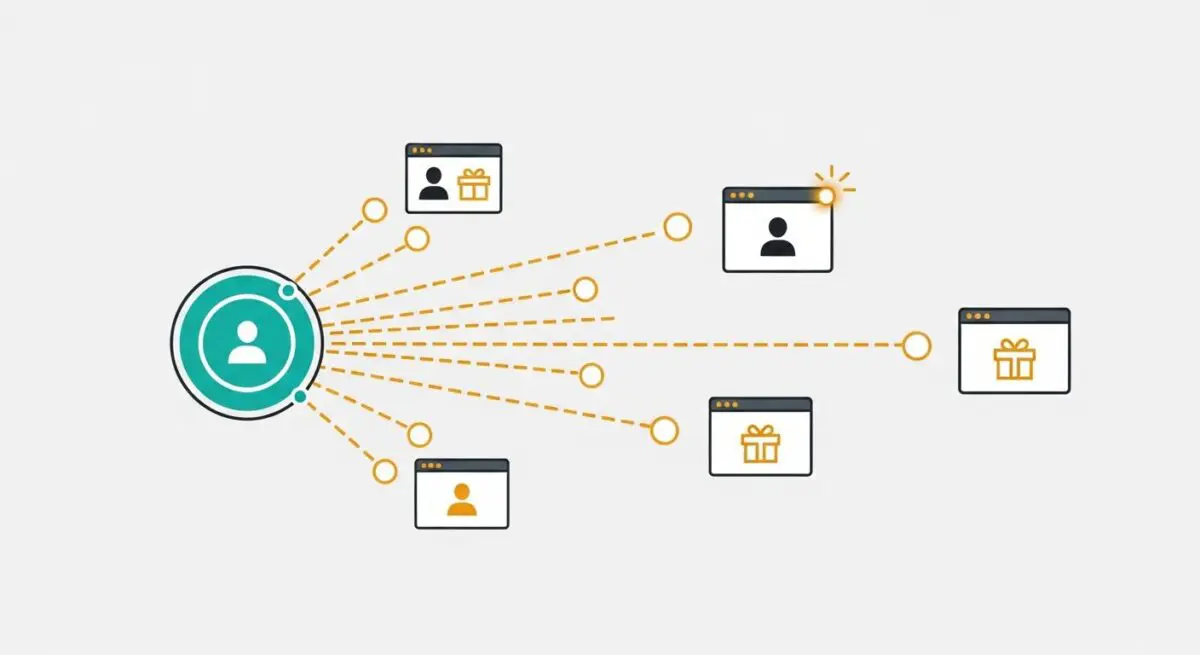
A Referral Program is a structured, programmatic framework designed to incentivize existing users to acquire new customers through tracked, unique identifiers. In the context of AI automations and modern software architecture, a referral program functions as a series of interconnected API calls and database triggers that manage the lifecycle of a lead from initial touchpoint to conversion and subsequent reward distribution.
Technically, it relies on attribution modeling and state management. When a user shares a unique referral link, the system generates a session-based or cookie-based tracking token. Upon a successful conversion event—defined by a specific API payload such as a completed checkout or a verified sign-up—the automation engine validates the referral against fraud detection parameters and updates the respective ledgers in the CRM and billing systems.
The Real-World Analogy
Think of a referral program as a digital relay race where the baton is a unique cryptographic token. When a runner (the existing user) passes the baton to a new participant, a sensor at the finish line (the server) instantly recognizes the original runner’s ID. Without needing a human referee to check a clipboard, the system automatically issues a medal (the reward) to the original runner’s locker, ensuring the race continues and scales without manual oversight.
Why is a Referral Program Critical for Autonomous Workflows and AI Content Ops?
In the era of stateless automation and AI-driven growth, referral programs provide a high-efficiency mechanism for lowering Customer Acquisition Cost (CAC). By leveraging webhooks, businesses can sync referral data across disparate platforms—such as Stripe, HubSpot, and custom-built AI content engines—in real-time. This allows for programmatic SEO execution, where personalized referral landing pages are dynamically generated based on the referrer’s profile data, optimizing the conversion funnel through automated personalization at scale.
Best Practices & Implementation
- Implement Server-Side Attribution: Move beyond client-side cookies to server-to-server (S2S) tracking to prevent attribution loss due to ad-blockers or browser privacy settings.
- Ensure Idempotency in Reward Distribution: Use idempotent API keys for reward fulfillment to prevent duplicate payouts in the event of network retries or webhook failures.
- Integrate Real-Time Fraud Detection: Deploy automated logic to flag anomalous patterns, such as high-frequency referrals from a single IP range or mismatched geolocation data.
- Optimize via Dynamic Deep-Linking: Use deep-link APIs to ensure the referral context is maintained across mobile app installs and web transitions, reducing friction in the user journey.
Common Mistakes to Avoid
One frequent error is relying exclusively on first-party cookies, which are increasingly volatile in the current privacy landscape, leading to broken attribution. Another mistake is failing to automate the reward reconciliation process, which creates operational bottlenecks and degrades user trust. Finally, neglecting to sanitize referral input data can expose the system to injection vulnerabilities or referral-loop exploits.
Conclusion
A robust referral program serves as a high-velocity engine for autonomous growth, utilizing API-first architectures to scale user acquisition with minimal human intervention.