Executive Summary
- Autonomous workflows utilize self-governing logic and AI agents to execute complex task sequences without manual intervention.
- These systems rely on event-driven architectures and stateless execution to scale high-volume data pipelines and content operations.
- Implementation requires robust error-handling, idempotency, and strict JSON schema validation to ensure system reliability and data integrity.
What is Autonomous Workflow?
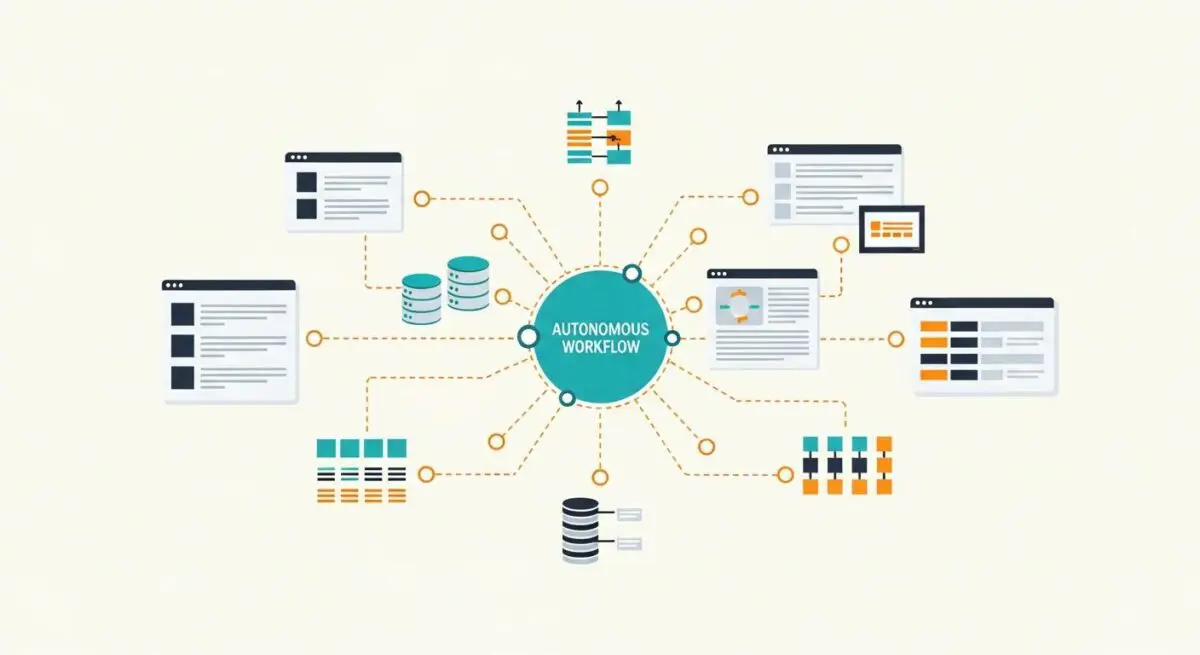
An autonomous workflow is a self-executing sequence of digital operations governed by logic-based triggers, machine learning models, or AI agents that function independently of human oversight. Unlike traditional automation, which follows rigid, linear paths (e.g., if-this-then-that), an autonomous workflow possesses the capability to interpret context, handle dynamic variables, and determine the optimal path toward a defined objective. In the landscape of AI Automations, these workflows are often decentralized, utilizing asynchronous communication between various microservices and APIs.
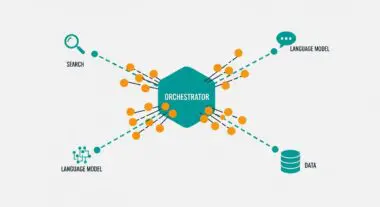
From a technical standpoint, an autonomous workflow manages state across distributed environments, ensuring that data payloads are processed, transformed, and routed based on real-time feedback loops. This involves the use of sophisticated orchestration layers that monitor the health of each node in the sequence. By leveraging agentic AI, these workflows can perform complex cognitive tasks—such as intent analysis or semantic mapping—allowing the system to adapt its behavior based on the specific characteristics of the input data without requiring a developer to hard-code every possible permutation.
The Real-World Analogy
To understand an autonomous workflow, consider the difference between a train and a self-driving car. A traditional automated workflow is like a train: it is highly efficient but restricted to a fixed track; if there is an obstruction, it stops and requires manual intervention. An autonomous workflow is like a self-driving car: you provide the destination, and the vehicle independently navigates traffic, recalculates the route if a road is closed, and manages its own fuel levels. It understands the environment and makes real-time decisions to reach the goal safely and efficiently without a driver touching the wheel.
Why is Autonomous Workflow Critical for Autonomous Workflows and AI Content Ops?
In the era of Generative Engine Optimization (GEO) and programmatic SEO, the volume of data exceeds human processing capacity. Autonomous workflows are critical because they enable stateless scaling. By decoupling task execution from manual triggers, organizations can process thousands of unique content pieces or data points simultaneously. These workflows utilize AI agents to parse complex JSON payloads, ensuring that each step in the content lifecycle—from keyword research to final publishing—is executed with precision.
Furthermore, autonomous workflows enhance the resilience of AI content operations through self-healing mechanisms. If an API endpoint fails or a rate limit is reached, the workflow can autonomously implement back-off strategies or route the task to a secondary service. This level of operational autonomy is essential for maintaining high-availability pipelines that drive organic search visibility and data-driven marketing strategies at an enterprise scale.
Best Practices & Implementation
- Implement Idempotency: Ensure that every task within the workflow can be executed multiple times without changing the result beyond the initial application, preventing data duplication during retries.
- Utilize Strict Schema Validation: Define and enforce JSON schemas for all inter-service communications to maintain data integrity and prevent logic errors in downstream agents.
- Incorporate Circuit Breakers: Design the architecture to automatically halt execution if a specific failure threshold is met, preventing recursive loops and excessive API consumption.
- Maintain Granular Logging: Record every decision point made by the autonomous agent to facilitate debugging and ensure transparency in the decision-making process.
- Decouple Logic from Infrastructure: Use serverless functions and containerized environments to allow individual components of the workflow to scale independently based on demand.
Common Mistakes to Avoid
A frequent error is the failure to define clear “guardrails” for AI agents, which can lead to “hallucinated” logic paths or content that violates technical specifications. Another common mistake is neglecting observability; without real-time monitoring of the workflow’s state, technical debt accumulates rapidly as edge cases go unaddressed. Finally, many organizations fail to account for API latency, leading to timeouts in synchronous steps that should have been designed as asynchronous events.
Conclusion
Autonomous workflows represent the evolution of digital operations from static scripts to intelligent, adaptive systems. By mastering these self-governing sequences, technical teams can build the scalable infrastructure necessary to lead in the AI-driven search landscape.