




Executive Summary
- ORM acts as a technical abstraction layer, translating relational database tables into object-oriented PHP structures for streamlined data manipulation.
- WordPress utilizes a specialized abstraction layer via the $wpdb class and the Metadata API rather than a traditional full-stack ORM like Eloquent.
- Efficient ORM implementation is critical for minimizing database latency and optimizing server-side resource allocation in high-traffic environments.
What is Object Relational Mapping?
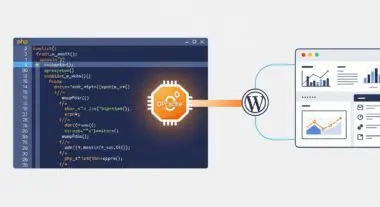
Object Relational Mapping (ORM) is a programming technique used to convert data between incompatible type systems in object-oriented programming languages and relational databases. In the context of WordPress, ORM principles allow developers to interact with the MySQL database using PHP objects and methods rather than writing raw SQL queries. This abstraction layer simplifies data persistence and retrieval, ensuring that complex data relationships are managed through a consistent interface.
While WordPress does not employ a traditional, heavy-duty ORM like Eloquent (Laravel) or Doctrine (Symfony), it utilizes a proprietary abstraction layer. The $wpdb class, along with the WP_Query, WP_User_Query, and the Metadata API, serves as the functional equivalent. These components map database rows from tables like wp_posts or wp_options into PHP objects, allowing for standardized data handling across themes and plugins.
The Real-World Analogy
Imagine a high-level international summit where a diplomat from “Object-Oriented Land” needs to communicate with a record-keeper from “Relational Table City.” The diplomat thinks in terms of complex entities with properties (like a “Person” with a name and age), while the record-keeper only understands rigid spreadsheets with rows and columns. Object Relational Mapping acts as the expert translator sitting between them. The translator takes the diplomat’s complex ideas and neatly files them into the record-keeper’s spreadsheets, and when the diplomat needs information back, the translator pulls data from multiple spreadsheets to reconstruct a complete, understandable person for the diplomat.
How Object Relational Mapping Impacts Server Performance & Speed Engineering?
The efficiency of the ORM layer directly dictates the Time to First Byte (TTFB) and overall server responsiveness. In WordPress, the process of “hydration”—converting SQL result sets into PHP objects—consumes CPU and memory resources. If an ORM implementation is inefficient, it can lead to the “N+1 query problem,” where the system executes one query to fetch a list of objects and then additional queries for each individual object to retrieve related metadata. This exponentially increases database load and latency.
Furthermore, effective mapping allows for the integration of Persistent Object Caching. By storing the hydrated PHP objects in memory (using Redis or Memcached), WordPress can bypass the database entirely for subsequent requests. This reduces the overhead of SQL execution and data transformation, allowing the server to handle significantly higher concurrent traffic volumes without degrading performance.
Best Practices & Implementation
- Leverage Core Abstraction: Always use WP_Query and core API functions instead of raw SQL to ensure compatibility with object caching layers and database optimization plugins.
- Implement Object Caching: Use a persistent cache like Redis to store the results of expensive database mappings, reducing the need for repetitive hydration cycles.
- Optimize Query Selectivity: Use the fields parameter in queries to retrieve only necessary data, minimizing the memory footprint of the resulting PHP objects.
- Batch Metadata Loading: Utilize functions like update_post_caches to prime the metadata cache in a single query, preventing the N+1 performance bottleneck during loops.
Common Mistakes to Avoid
A frequent error is bypassing the WordPress database abstraction layer with raw SQL queries that do not account for caching, leading to redundant database hits and stale data. Another critical mistake is failing to limit the scope of data retrieval, which results in “heavy” objects that saturate server memory, particularly when processing large datasets or complex custom post types.
Conclusion
Object Relational Mapping is a cornerstone of modern WordPress development, balancing developer productivity with database integrity. Proper management of this abstraction layer is vital for maintaining high-performance, scalable hosting environments.