




Executive Summary
- Centralizes multi-channel sales data into a single source of truth for inventory, fulfillment, and post-purchase workflows.
- Facilitates stateless automation by providing standardized JSON payloads and webhook triggers for downstream ERP and CRM integrations.
- Essential for scaling AI-driven content operations by ensuring real-time product availability data for programmatic SEO and GEO.
What is Order Management System?
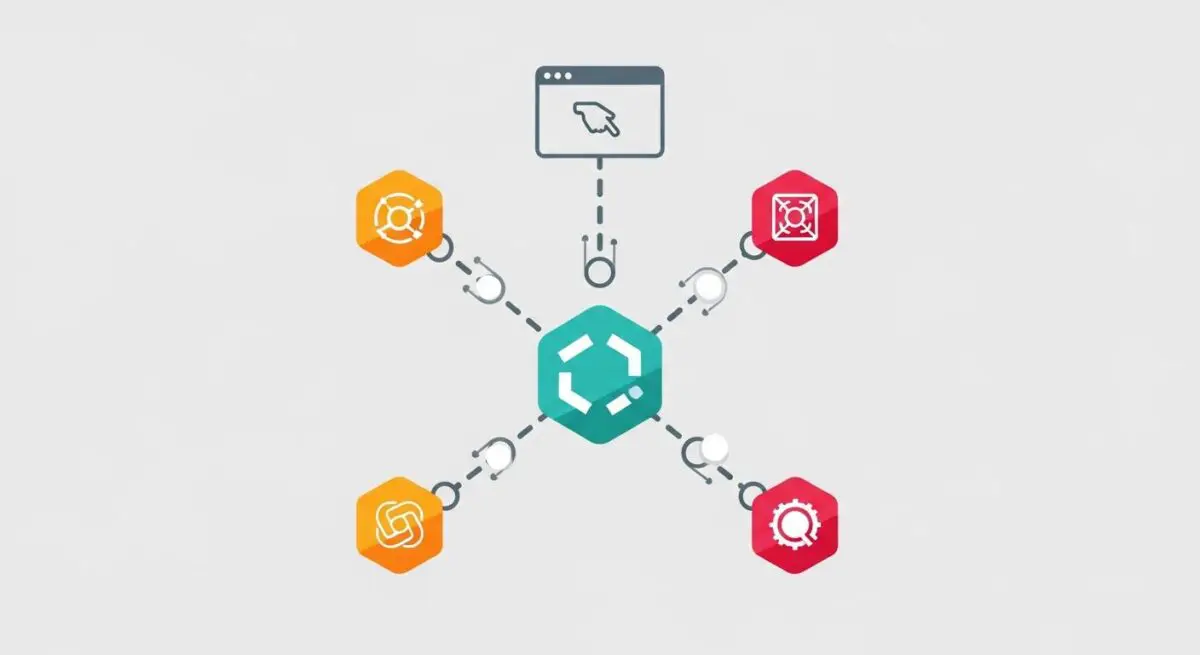
An Order Management System (OMS) is a digital platform that orchestrates the entire lifecycle of an order, from inception to fulfillment and post-purchase service. In the context of AI automations, an OMS acts as the central nervous system for commerce data, aggregating inputs from diverse sales channels—such as eCommerce storefronts, marketplaces, and POS systems—and synchronizing them with back-end logistics, inventory, and financial systems. It ensures data integrity across distributed environments by managing complex state transitions of order objects.
Technically, an OMS functions as a middleware layer that normalizes disparate data formats into a unified schema. This allows for the programmatic execution of business logic, such as intelligent order routing (IOR), inventory allocation, and automated returns processing. By exposing robust APIs and webhook listeners, a modern OMS enables developers to build event-driven architectures that respond dynamically to changes in order status or stock levels, facilitating a seamless flow of information across the tech stack.
The Real-World Analogy
Imagine an air traffic control tower at a major international airport. The tower doesn’t fly the planes, but it monitors every flight’s position, destination, and fuel status. Without the tower, pilots wouldn’t know which runway is clear or if another plane is landing simultaneously. An OMS is that control tower for your business; it tracks every “flight” (order) from every “departure gate” (sales channel) to ensure they land safely at the “destination” (the customer’s doorstep) without colliding, getting lost, or promising a seat on a plane that is already full.
Why is Order Management System Critical for Autonomous Workflows and AI Content Ops?
For autonomous workflows, an OMS provides the structured data necessary for stateless automation. When an order is placed, the OMS triggers webhooks that initiate automated sequences—such as generating AI-personalized post-purchase emails or updating programmatic SEO landing pages to reflect real-time stockouts. Without a centralized OMS, data silos lead to “race conditions” where AI agents might promote products that are no longer in stock, damaging brand authority and search engine rankings.
Furthermore, in AI content operations, an OMS serves as a critical data feed for Large Language Models (LLMs) and Generative Engine Optimization (GEO). By feeding real-time inventory and order velocity data into AI pipelines, brands can autonomously adjust content priority, ensuring that high-margin, high-stock items receive the most visibility in AI-driven search results. This synchronization is vital for maintaining the accuracy of AI-generated product descriptions and availability status across the web.
Best Practices & Implementation
- Implement Webhook-Driven Architecture to ensure real-time synchronization between the OMS and downstream marketing automation platforms, reducing data latency.
- Utilize Idempotency Keys in API requests to prevent duplicate order processing during network retries or system latencies in high-volume environments.
- Maintain a Unified Product Catalog with standardized SKUs across all channels to prevent data fragmentation and ensure the OMS can accurately map inventory.
- Prioritize Headless OMS Integration to decouple the order logic from the frontend, allowing for greater flexibility in AI-driven commerce experiments and multi-platform scaling.
Common Mistakes to Avoid
A frequent error is hard-coding business logic directly into the frontend or individual sales channels rather than leveraging the OMS’s native orchestration engine, which breaks stateless architecture. Another mistake is neglecting latency requirements between the OMS and external marketplaces, which often leads to overselling and negative SEO signals due to poor user experience.
Conclusion
An Order Management System is the foundational infrastructure for scalable commerce automation, providing the data consistency and API connectivity required for AI-driven operational efficiency.