Executive Summary
- Facilitates bidirectional data flow between centralized ERP systems and external AI-driven applications via RESTful APIs or middleware.
- Enables real-time synchronization of critical business entities like inventory, financial records, and supply chain logistics for autonomous decision-making.
- Reduces latency and data silos by implementing event-driven architectures and standardized JSON payloads across the enterprise stack.
What is ERP Integration?
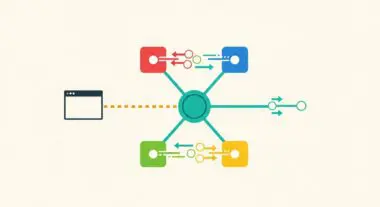
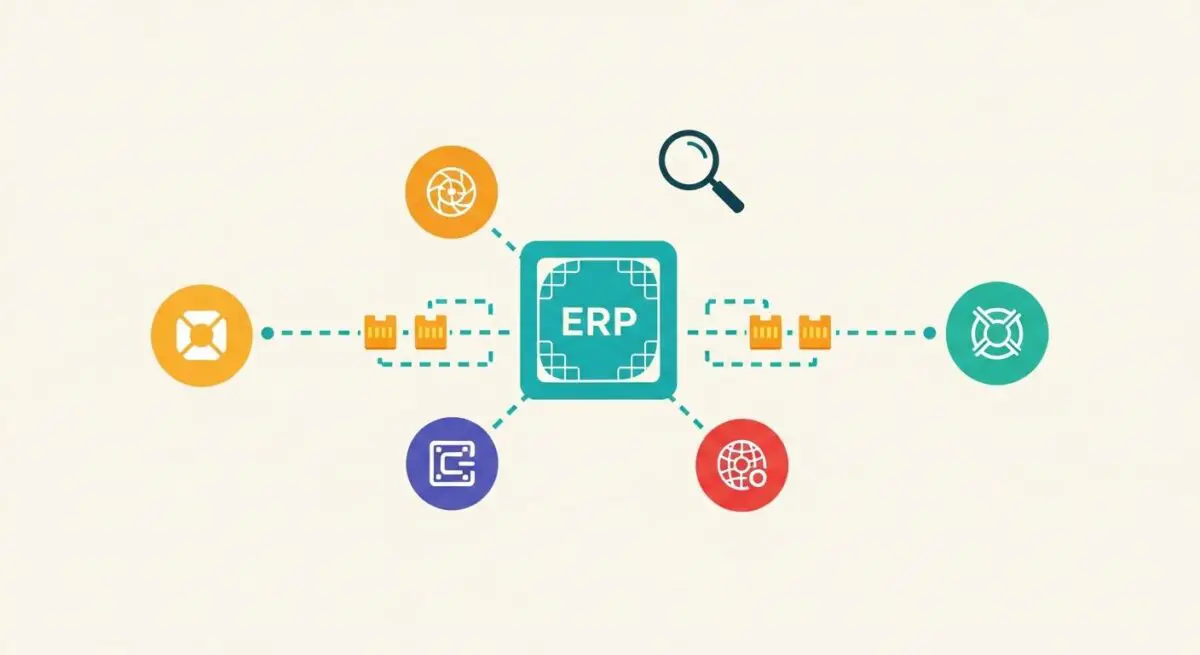
ERP Integration is the technical process of connecting an Enterprise Resource Planning (ERP) system—such as SAP, Oracle NetSuite, or Microsoft Dynamics 365—with other software applications, data sources, or AI-driven platforms. This architecture ensures that the single source of truth maintained within the ERP is accessible and synchronized across the entire digital ecosystem. In the context of modern automations, this involves the use of middleware, iPaaS (Integration Platform as a Service), and robust API layers to facilitate the seamless exchange of structured data.
From an engineering perspective, ERP integration focuses on mapping complex data schemas and ensuring transactional integrity. Whether through point-to-point connections or service-oriented architectures (SOA), the goal is to eliminate data silos. By utilizing webhooks and asynchronous processing, developers can trigger automated workflows in external systems based on state changes within the ERP, such as a new purchase order or a shift in inventory levels.
The Real-World Analogy
Imagine a massive international airport. The ERP is the central Air Traffic Control (ATC) tower, holding all the master data about flight schedules, gate assignments, and fuel levels. ERP Integration is the sophisticated communication network that instantly updates the display screens in the terminals, the mobile apps on passengers’ phones, and the refueling trucks on the tarmac. Without this integration, the ATC tower would have the information, but the rest of the airport would be operating on outdated data, leading to chaos and operational failure.
Why is ERP Integration Critical for Autonomous Workflows and AI Content Ops?
For autonomous workflows, ERP integration provides the stateful context required for stateless AI agents to function accurately. AI models cannot generate reliable outputs for programmatic SEO or automated supply chain adjustments if they are disconnected from real-time business logic. By piping ERP data into AI content operations, brands can execute hyper-accurate programmatic SEO campaigns that reflect actual stock levels, pricing fluctuations, and regional availability without manual intervention.
Furthermore, ERP integration optimizes API payload efficiency. By filtering and transforming data at the integration layer, developers can ensure that only the necessary JSON attributes are sent to serverless functions or LLM prompts. This reduces token consumption and latency, which is vital for scaling high-volume autonomous agents that perform tasks like automated procurement or dynamic customer service resolution.
Best Practices & Implementation
- Prioritize RESTful APIs and JSON: Move away from legacy SOAP/XML protocols in favor of REST or GraphQL to ensure compatibility with modern AI middleware and reduce overhead.
- Implement Robust Error Handling: Use exponential backoff and retry logic for API calls to handle transient network failures or ERP rate limiting.
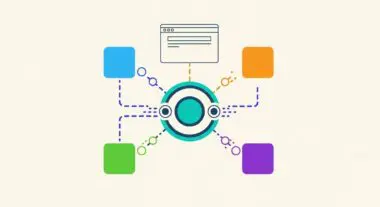
- Utilize an Intermediate Layer: Deploy an iPaaS or custom middleware to decouple the ERP from external apps, allowing for easier data transformation and security filtering.
- Adopt Event-Driven Architecture: Use webhooks or message queues (like RabbitMQ or AWS SQS) to trigger updates in real-time rather than relying on resource-heavy polling.
- Maintain Strict Data Mapping: Ensure field-level validation and normalization to prevent “dirty data” from polluting downstream AI models or reporting tools.
Common Mistakes to Avoid
One frequent error is hard-coding point-to-point integrations, which creates a “spaghetti architecture” that is difficult to maintain and scale. Another critical mistake is neglecting API rate limits of the ERP system, which can lead to service disruptions during high-volume automation tasks. Finally, many organizations fail to implement adequate security protocols, such as OAuth2 or encryption at rest, exposing sensitive financial data during the transit between systems.
Conclusion
ERP integration is the foundational layer for data-driven AI automations, ensuring that autonomous agents operate with real-time, authoritative business intelligence. Mastering this connectivity is essential for scaling programmatic operations and maintaining a competitive edge in the AI-search era.