Executive Summary
- Facilitates unified access to disparate data sources through ETL, ELT, or data virtualization techniques.
- Essential for maintaining context and state within stateless AI agents and autonomous programmatic workflows.
- Enables seamless synchronization between legacy systems, modern APIs, and vector databases for RAG architectures.
What is Data Integration?
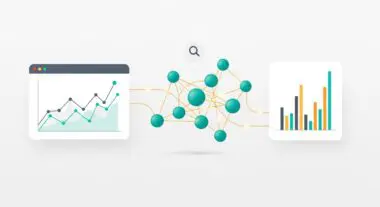
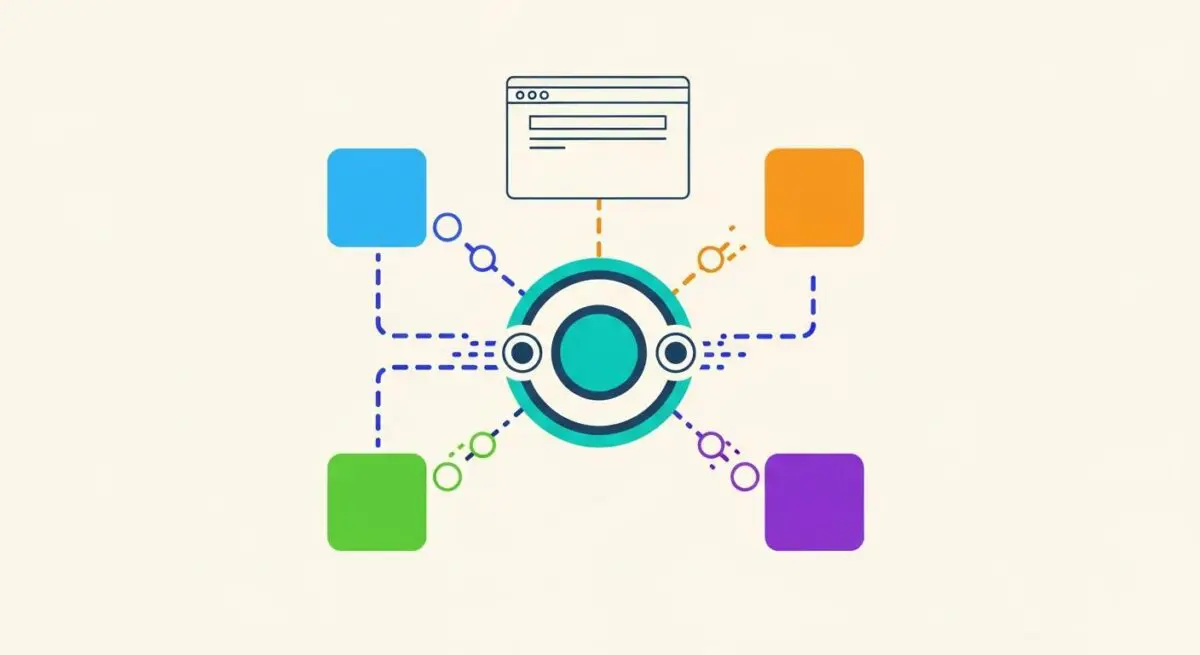
Data integration is the technical process of consolidating information from heterogeneous sources into a single, unified view. In the context of AI automations and modern software engineering, it involves the orchestration of data pipelines that extract raw data from disparate silos—such as SQL databases, SaaS platforms, and cloud storage—transforming that data into a standardized format, and loading it into a target system. This process is fundamental for creating a single source of truth that autonomous agents can query reliably.
Modern integration architectures typically leverage Application Programming Interfaces (APIs), webhooks, and middleware to facilitate real-time or batch data movement. Whether utilizing ETL (Extract, Transform, Load) or ELT (Extract, Load, Transform) methodologies, the objective remains the same: to ensure that data is accessible, consistent, and high-quality across the entire automation stack. For AI-driven operations, this often extends to feeding vector databases to support Retrieval-Augmented Generation (RAG) workflows.
The Real-World Analogy
Imagine a professional restaurant kitchen. The ingredients (data) arrive from different suppliers: vegetables from a local farm, meat from a butcher, and spices from an international importer. Without integration, the chef (the AI) would have to stop cooking to visit each supplier individually every time they needed an ingredient. Data integration is the equivalent of a highly organized prep station. The prep team collects all ingredients, washes them, chops them to the correct size, and places them in standardized containers within the chef’s reach. This allows the chef to focus entirely on executing the recipe (the automation) with maximum efficiency and consistency.
Why is Data Integration Critical for Autonomous Workflows and AI Content Ops?
For autonomous workflows, data integration is the bridge between stateless execution and contextual intelligence. AI agents often operate in a stateless manner, meaning they do not inherently remember previous interactions or have access to external databases unless that data is explicitly provided in the API payload. Robust integration ensures that the necessary context—customer history, inventory levels, or SEO metrics—is injected into the workflow at the precise moment of execution.
In AI content operations and programmatic SEO, integration enables the scaling of content production by connecting data warehouses to Large Language Model (LLM) prompts. By automating the flow of structured data into generative models, organizations can produce thousands of high-quality, data-driven pages without manual intervention. This reduces latency, eliminates data silos, and ensures that the AI-generated output is grounded in real-time, factual information rather than outdated training data.
Best Practices & Implementation
- Implement Schema Standardization: Ensure all incoming data adheres to a strict JSON schema or data model before it reaches the automation layer to prevent runtime errors.
- Prioritize Idempotency: Design integration pipelines so that repeated executions with the same input do not result in duplicate records or inconsistent states.
- Utilize Webhook Secret Validation: Secure data transmission by verifying the authenticity of incoming webhooks using cryptographic signatures such as HMAC.
- Monitor Rate Limits and Throttling: Implement exponential backoff and queuing mechanisms to handle API rate limits imposed by third-party SaaS providers.
Common Mistakes to Avoid
One frequent error is hard-coding data mappings, which creates brittle pipelines that break whenever a source system updates its API structure. Another critical mistake is neglecting data sanitization; failing to clean and validate data before integration can lead to “garbage in, garbage out” scenarios, where AI models generate hallucinations based on malformed input. Finally, many organizations fail to implement centralized logging, making it nearly impossible to debug failed synchronizations across complex, multi-step workflows.
Conclusion
Data integration is the foundational infrastructure that transforms isolated data points into actionable intelligence for AI automations. By mastering the flow of information across the stack, engineers can build resilient, scalable, and context-aware autonomous systems.