Executive Summary
- Real-time analytics enables sub-second data processing, allowing autonomous agents to execute decisions based on live environmental triggers rather than historical batches.
- The architecture leverages stream processing and event-driven design to ingest and transform high-velocity JSON payloads from distributed API endpoints.
- Integration is vital for Generative Engine Optimization (GEO), where immediate SERP fluctuations dictate programmatic content adjustments and stateless workflow execution.
What is Real-time Analytics?
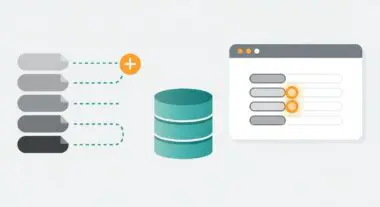
Real-time analytics refers to the technical discipline and infrastructure required to process, analyze, and derive actionable insights from data streams at the moment of ingestion. Unlike traditional batch processing, which collects data over a period before executing analysis, real-time analytics operates on a low-latency paradigm. In the context of AI automations, this involves the use of stream processing engines—such as Apache Kafka, Flink, or cloud-native solutions like AWS Kinesis—to handle continuous flows of information.
From an engineering perspective, real-time analytics is the backbone of reactive systems. It transforms raw telemetry, user interactions, and API responses into structured intelligence that can be immediately consumed by LLM-based agents or automated decision engines. This capability is essential for maintaining the accuracy of dynamic data sets in AI-Search environments, where the relevance of information decays rapidly.
The Real-World Analogy
Consider a modern GPS navigation system like Waze. Traditional data analysis is akin to looking at a printed road atlas; it shows you the structure of the roads as they were when the map was published. Real-time analytics, however, is the live system that processes pings from thousands of other drivers simultaneously. If a vehicle three miles ahead hits its brakes, the system analyzes that data point instantly and reroutes you before you ever see the brake lights. It doesn’t tell you where traffic was an hour ago; it tells you what is happening now so you can take immediate action.
Why is Real-time Analytics Critical for Autonomous Workflows and AI Content Ops?
In autonomous workflows, the delay between data generation and action is the primary bottleneck for efficiency. Real-time analytics facilitates stateless automation, where each execution is informed by the most current state of the ecosystem. For AI Content Ops, this is particularly transformative for programmatic SEO and GEO. When a search engine updates its generative fragments or a competitor launches a significant content cluster, real-time analytics identifies the shift through monitoring tools and triggers an automated response—such as updating a specific JSON-LD schema or regenerating a content module—via a webhook.
Furthermore, real-time analytics optimizes API payload efficiency. By analyzing data in transit, systems can filter out noise and only pass high-value signals to expensive LLM endpoints, significantly reducing computational overhead and latency in serverless architectures. This ensures that AI agents are not hallucinating based on outdated cached data but are instead operating on a live truth.
Best Practices & Implementation
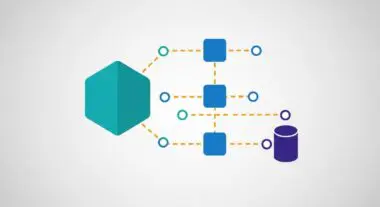
- Implement Event-Driven Architecture: Utilize webhooks and message brokers to ensure that data moves through the pipeline as events occur, rather than relying on scheduled polling which introduces unnecessary latency.
- Prioritize Idempotency: In high-velocity streams, retries are inevitable. Ensure that your automation logic is idempotent, meaning the same data packet processed multiple times results in the same state, preventing duplicate content generation or redundant API calls.
- Leverage Edge Computing: Process initial data transformations at the edge (closer to the data source) to reduce the volume of data traveling to the central processing unit, thereby decreasing total system latency.
- Monitor Data Drift: Implement automated observability to detect when the incoming data stream deviates from expected patterns, which could indicate an API change or a shift in search engine behavior.
Common Mistakes to Avoid
One frequent error is over-engineering; not every workflow requires sub-second latency. Implementing a complex stream processing stack for tasks that could be handled by a 5-minute cron job leads to unnecessary technical debt and infrastructure costs. Another critical mistake is ignoring backpressure. When the volume of incoming data exceeds the processing capacity of the AI agent or the database, the system must have a strategy to buffer or throttle data to prevent a total cascade failure. Finally, many brands fail to validate data freshness versus data accuracy, leading to automated decisions based on incomplete or corrupted real-time packets.
Conclusion
Real-time analytics is the fundamental layer that enables AI automations to transition from static tools to dynamic, reactive agents. By mastering stream processing and low-latency data integration, organizations can maintain a competitive edge in the rapidly evolving AI-Search landscape.