Executive Summary
- Centralization of third-party API and SaaS dependencies to ensure uptime and data integrity across distributed automation stacks.
- Implementation of robust authentication protocols and secret management to secure integration points between autonomous agents and external vendors.
- Systematic monitoring of rate limits, latency, and cost-per-token to optimize the efficiency of high-throughput AI content pipelines.
What is Vendor Management?
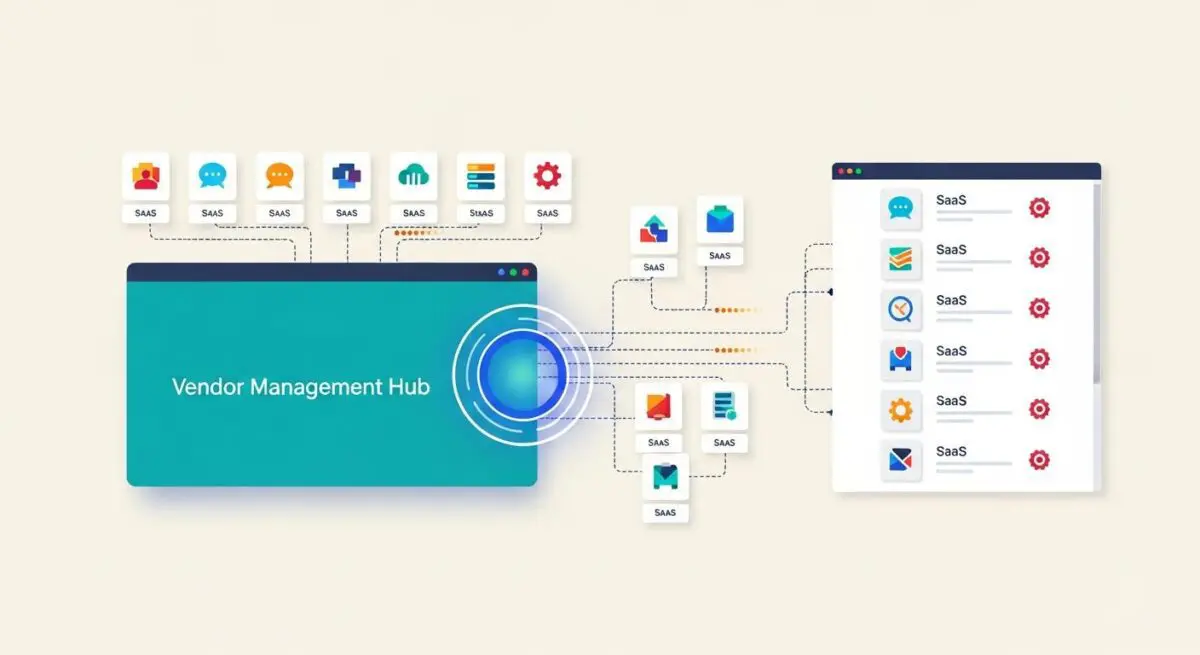
In the context of AI automations and digital infrastructure, Vendor Management refers to the systematic process of overseeing, coordinating, and optimizing third-party service providers that facilitate autonomous workflows. This includes managing API providers (such as OpenAI or Anthropic), cloud infrastructure (AWS, Google Cloud), and specialized SaaS tools that handle data ingestion, processing, and distribution. It is a critical layer in the automation stack that ensures all external dependencies are reliable, secure, and cost-effective.
From a technical standpoint, effective vendor management involves the orchestration of authentication tokens, monitoring of endpoint latency, and the enforcement of Service Level Agreements (SLAs). For AI-Search and GEO professionals, this means ensuring that the data pipelines feeding Large Language Models (LLMs) are resilient to third-party outages and that the integration points are optimized for high-throughput data exchange without compromising data integrity.
The Real-World Analogy
Imagine a master chef running a high-end restaurant. While the chef creates the recipes, they rely on a network of specialized suppliers for fresh produce, rare spices, and specialized kitchen equipment. If the vegetable supplier fails to deliver or the oven technician is unavailable, the entire kitchen grinds to a halt. Vendor Management is the equivalent of the restaurant manager who vets these suppliers, negotiates contracts, monitors the quality of every delivery, and maintains a list of backup providers to ensure the kitchen never stops serving meals, regardless of external disruptions.
Why is Vendor Management Critical for Autonomous Workflows and AI Content Ops?
For autonomous workflows, Vendor Management is the safeguard against cascading failures in stateless architectures. When an automation relies on multiple API calls to different vendors, a single point of failure can invalidate the entire payload. Robust management allows for the implementation of circuit breakers and failover logic, ensuring that if one LLM provider experiences downtime, the system can dynamically route requests to a secondary provider without manual intervention.
In AI Content Ops, managing vendors is essential for scaling programmatic SEO and GEO efforts. As content volume increases, so does the complexity of managing rate limits and API costs. Technical vendor management enables teams to implement centralized logging and monitoring, allowing for real-precision in tracking token usage and optimizing the financial efficiency of the entire content generation pipeline.
Best Practices & Implementation
- Implement API Key Rotation and Vaulting: Use secure secret management tools like HashiCorp Vault or AWS Secrets Manager to store and rotate credentials, reducing the risk of unauthorized access to vendor endpoints.
- Establish Multi-Vendor Redundancy: Architect workflows to be vendor-agnostic where possible, allowing for seamless switching between providers (e.g., switching from GPT-4 to Claude 3) if performance metrics or availability drop.
- Monitor Latency and Rate Limits: Deploy real-time monitoring dashboards to track the response times and error rates of third-party APIs, enabling proactive adjustments to request pacing.
- Standardize Data Schemas: Ensure that all data received from different vendors is normalized into a consistent internal format before being processed by downstream automation steps.
Common Mistakes to Avoid
One frequent error is the hardcoding of API credentials directly into automation scripts, which creates significant security vulnerabilities and complicates the process of updating keys. Another common mistake is failing to account for vendor-specific rate limits, leading to 429 errors that disrupt high-volume data pipelines. Finally, many organizations neglect to perform regular audits of their vendor stack, resulting in SaaS sprawl where redundant or underutilized services continue to incur costs without providing technical value.
Conclusion
Vendor Management is the technical foundation for resilient, scalable AI automations, ensuring that third-party dependencies are integrated with the security and reliability required for enterprise-grade content operations.