Executive Summary
- Facilitates bidirectional data synchronization between third-party marketplaces and internal ERP/PIM systems via REST or GraphQL APIs.
- Enables stateless automation by utilizing webhooks to trigger real-time inventory updates and order fulfillment workflows.
- Reduces operational latency and data silos, providing a unified source of truth for programmatic SEO and AI-driven commerce operations.
What is Marketplace Integration?
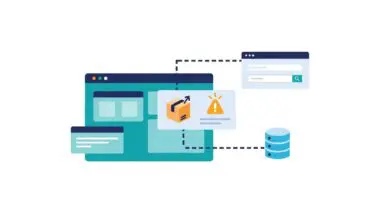
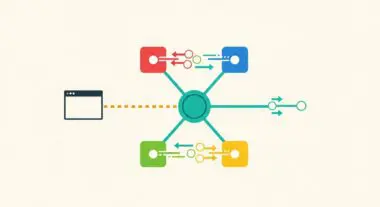
Marketplace integration is the architectural process of establishing a seamless, automated connection between an e-commerce marketplace—such as Amazon, Walmart, or eBay—and a business’s internal software ecosystem, including Enterprise Resource Planning (ERP), Product Information Management (PIM), and Customer Relationship Management (CRM) systems. This integration relies on robust API (Application Programming Interface) protocols to facilitate the bidirectional exchange of critical data points, including SKU-level inventory counts, pricing updates, order specifications, and logistics tracking information.
In the context of modern AI automations, marketplace integration serves as the data pipeline that feeds autonomous agents. By leveraging standardized JSON payloads, businesses can ensure that their product data is synchronized across disparate platforms without manual data entry. This creates a stateless environment where every transaction or inventory change triggers a specific, predefined workflow, ensuring high fidelity across the entire digital supply chain.
The Real-World Analogy
Imagine a high-end restaurant that sells its signature dishes through its own dining room, a walk-up window, and five different delivery apps. Without integration, the chef would have to manually update five different tablets every time they ran out of a specific ingredient. Marketplace integration is like a central kitchen display system that is hardwired to every ordering channel; the moment the last portion of a dish is sold anywhere, it is instantly removed from every menu across the city, preventing overbooking and ensuring the kitchen never misses an order.
Why is Marketplace Integration Critical for Autonomous Workflows and AI Content Ops?
Marketplace integration is the backbone of scalable, programmatic SEO and AI-driven commerce. For autonomous workflows, it provides the necessary infrastructure for stateless execution. When an order is placed via an external API, the system does not need to retain previous states; it simply processes the incoming JSON payload, updates the centralized database, and triggers downstream serverless functions for fulfillment and notification.
Furthermore, for AI content operations, integration allows for the programmatic generation of product descriptions and metadata. AI agents can pull real-time technical specifications from a PIM and push optimized, SEO-compliant content to multiple marketplaces simultaneously. This ensures that product listings are not only accurate but also optimized for Generative Engine Optimization (GEO), as the AI has access to the most current and structured data available.
Best Practices & Implementation
- Prioritize Webhooks over Polling: Implement webhook listeners to receive real-time event notifications from marketplaces, reducing server overhead and ensuring near-zero latency in data synchronization.
- Implement Idempotency Keys: Use idempotency keys in API requests to prevent duplicate order processing or redundant inventory updates in the event of network retries.
- Standardize Data Mapping: Develop a centralized schema for product attributes to ensure that data remains consistent when transformed between different marketplace requirements and internal database structures.
Common Mistakes to Avoid
One frequent error is the failure to account for API rate limits, which can lead to data desynchronization during peak traffic periods. Another common mistake is neglecting robust error-handling logs; without detailed telemetry on failed API calls, troubleshooting synchronization gaps becomes nearly impossible in a complex automation stack.
Conclusion
Marketplace integration is a fundamental requirement for achieving operational efficiency in AI-driven commerce. By bridging the gap between external sales channels and internal data systems, it enables the high-velocity, autonomous workflows necessary for modern digital scale.