Executive Summary
- Transformation of raw JSON/CSV outputs into structured graphical representations for rapid heuristic analysis.
- Integration within autonomous pipelines to monitor model drift and token consumption in real-time.
- Utilization of dynamic dashboards to bridge the gap between programmatic SEO execution and stakeholder reporting.
What is Data Visualization?
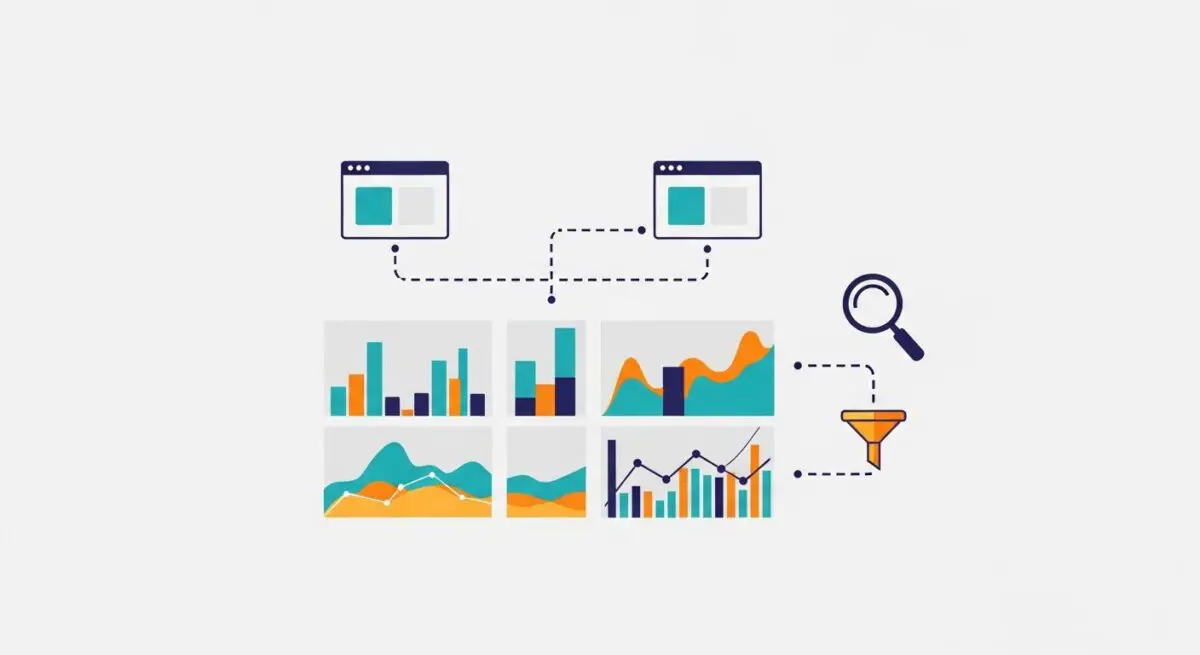
Data visualization is the systematic process of mapping quantitative and qualitative information into a visual context, such as a map or graph, to make data easier for the human brain to understand and pull insights from. In the context of AI automations and high-scale data pipelines, it involves the programmatic transformation of raw JSON payloads, database records, or API response streams into structured visual formats. This allows engineers and SEO professionals to detect patterns, trends, and outliers that are often obscured in text-heavy datasets.
From a technical standpoint, data visualization serves as a heuristic layer for monitoring complex systems. By utilizing libraries such as D3.js, Chart.js, or integration tools like Looker Studio, organizations can create real-time interfaces that reflect the health of autonomous workflows. This is particularly vital when managing high-dimensional data generated by Large Language Models (LLMs) and programmatic SEO scripts where manual auditing is physically impossible.
The Real-World Analogy
Imagine a pilot flying a modern jet. Instead of the pilot having to read thousands of lines of raw scrolling text representing engine temperature, wind speed, and fuel levels, they have a digital cockpit with gauges and maps. Data visualization is that cockpit; it takes the noise of millions of raw data points and turns them into clear, visual signals that allow the pilot to make split-second decisions without getting lost in the code.
Why is Data Visualization Critical for Autonomous Workflows and AI Content Ops?
[Detailed explanation of its impact on stateless automation, API payload efficiency, serverless architecture scaling, or programmatic SEO execution]
In the era of stateless automation and serverless architectures, data visualization is the primary tool for maintaining observability. When executing programmatic SEO at scale—generating thousands of pages via API—visualization allows for the immediate identification of indexing bottlenecks or content quality regressions. It provides a visual audit trail for API payload efficiency, helping developers optimize token usage and reduce latency in AI-driven pipelines.
Furthermore, for AI content operations, visualization tracks the performance of various model versions. By plotting output quality scores against prompt iterations, teams can scientifically determine which configurations yield the highest ROI. Without this visual layer, autonomous systems operate as black boxes, making it difficult to justify spend or troubleshoot systemic failures in the automation logic.
Best Practices & Implementation
- Normalize Data Structures: Ensure all raw data is cleaned and normalized before it reaches the visualization layer to prevent skewed axes or misleading graphical representations.
- Implement Real-Time Streaming: Use WebSockets or Server-Sent Events (SSE) to feed live data into dashboards, ensuring that monitoring of automation tasks is current and actionable.
- Focus on Data-to-Ink Ratio: Remove unnecessary decorative elements (chart junk) to ensure the technical audience can focus strictly on the data points that matter for system performance.
- Utilize Interactive Drill-Downs: Build visualizations that allow users to click into specific data points to view the underlying JSON payload or log entry for rapid debugging.
Common Mistakes to Avoid
One frequent error is the use of inappropriate chart types, such as using a pie chart for high-cardinality data, which obscures rather than clarifies. Another critical mistake is failing to account for data latency; displaying real-time graphs that are actually cached or delayed can lead to incorrect technical interventions in an automated pipeline.
Conclusion
Data visualization is the essential interface that converts complex automation telemetry into actionable intelligence, ensuring that AI-driven workflows remain transparent, scalable, and optimized.