Executive Summary
- Stateless automation ensures each AI request is self-contained, eliminating dependencies on previous session data for improved scalability.
- In Generative Engine Optimization (GEO), statelessness facilitates more predictable RAG outputs by forcing explicit context injection.
- Implementing stateless architectures reduces computational overhead and simplifies the deployment of distributed AI agents.
What is Stateless Automation?
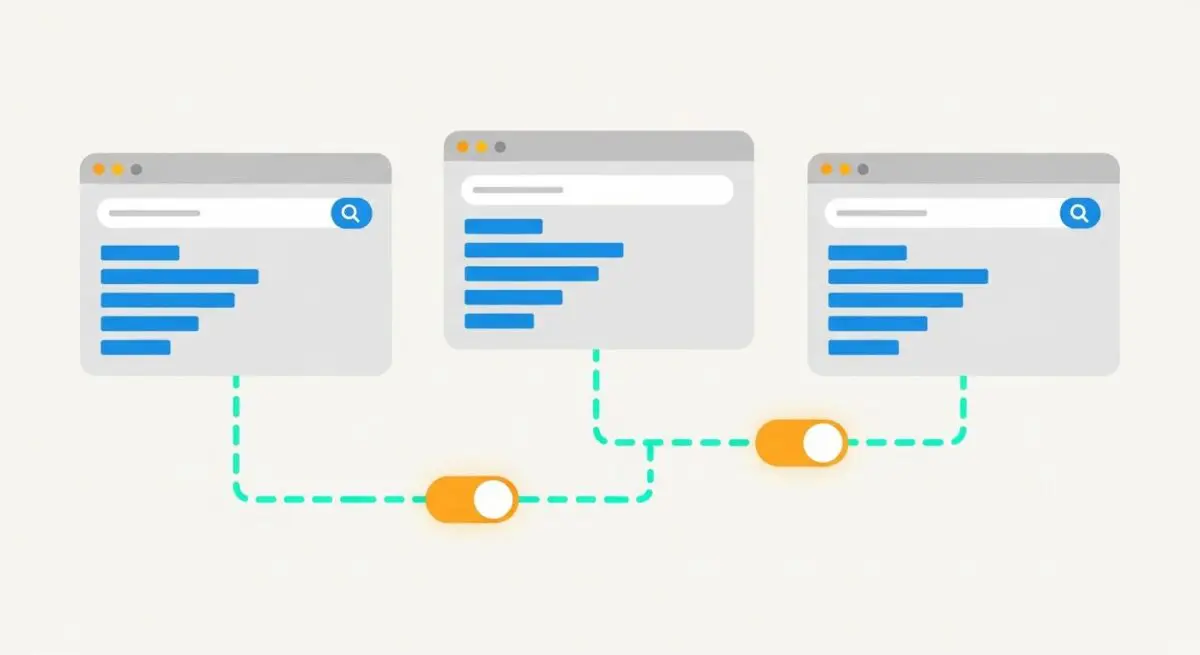
Stateless automation is a software design paradigm where each request from a client to a server is treated as an independent transaction, containing all the information necessary to complete the task. In this architecture, the server does not retain any session information or “state” about the client between requests. Within the context of Artificial Intelligence and Large Language Models (LLMs), statelessness implies that the model processes a prompt based strictly on the input provided in the current call, without relying on hidden variables or historical interactions stored within the model’s immediate runtime environment.
From a technical perspective, stateless automation leverages a “shared-nothing” architecture. This is critical for modern AI infrastructure, particularly when deploying LLMs via APIs. Since the model does not “remember” previous prompts natively, developers must use techniques like Retrieval-Augmented Generation (RAG) or context window management to pass relevant history back into the system. This ensures that the AI’s output remains consistent, verifiable, and decoupled from the specific server instance handling the request, allowing for massive horizontal scaling across distributed GPU clusters.
The Real-World Analogy
Imagine a traditional vending machine compared to a personal barista. A barista is “stateful”; they might remember your name, your favorite drink from yesterday, and how much you tipped. If that barista is busy, you have to wait for them specifically to get that personalized service. A vending machine, however, is “stateless.” It does not care who you are or what you bought five minutes ago. You provide the exact input (the code for the snack and the payment), and it delivers the exact output every time, regardless of which machine you use or when you use it. This makes the vending machine model much easier to replicate and scale across a thousand locations simultaneously.
Why is Stateless Automation Important for GEO and LLMs?
Stateless automation is the backbone of Generative Engine Optimization (GEO) because it dictates how AI agents and search engines perceive and process data. When an AI search engine like Perplexity or a GPT-based agent crawls a website, it often does so in a stateless manner to maximize efficiency. If your content relies on session-based cookies or complex stateful navigation to reveal information, AI crawlers may fail to index it properly. Furthermore, in RAG systems, statelessness ensures that the retrieved context is the sole source of truth, preventing “hallucination drift” that can occur when a model’s output is influenced by stale or irrelevant session data.
For brands, understanding statelessness is vital for Source Attribution. Since AI models evaluate information in discrete chunks, content must be structured so that its authority and entity relationships are clear within every individual segment. This ensures that when a stateless agent retrieves a snippet of your data, the context, brand identity, and factual accuracy remain intact without needing the rest of the website’s state to be present.
Best Practices & Implementation
- Explicit Context Injection: Always include necessary metadata, entity definitions, and brand identifiers within the prompt or the RAG-retrieved document chunk to compensate for the lack of session memory.
- Idempotency Design: Ensure that your AI automation workflows are idempotent, meaning that providing the same input multiple times will always yield the same output, preventing data corruption in distributed systems.
- External State Management: Use high-performance external databases (like Redis or Vector Databases) to store and retrieve stateful information, passing it into the stateless AI model only when required.
- Atomic Content Structuring: Design web content as independent, semantically rich modules that provide full value even when extracted from the broader site architecture by a stateless AI crawler.
Common Mistakes to Avoid
A frequent error is assuming that an AI agent will “remember” context from a previous API call without explicitly passing that data back into the context window. This leads to fragmented and incoherent outputs. Another mistake is failing to optimize for stateless crawlers by hiding critical technical data behind stateful UI elements like “load more” buttons or session-locked portals, which prevents AI engines from accessing the full depth of the site’s knowledge graph.
Conclusion
Stateless automation is a fundamental requirement for scaling AI-driven search and agentic workflows, necessitating a shift toward explicit context management and modular content architecture to ensure maximum visibility in generative engines.