



Executive Summary
- Establishes a technical framework for data integrity, security, and availability within automated pipelines.
- Ensures programmatic compliance with global privacy regulations like GDPR and CCPA through automated auditing.
- Optimizes AI model performance by maintaining high-quality, structured datasets for RAG and fine-tuning.
What is Data Governance?
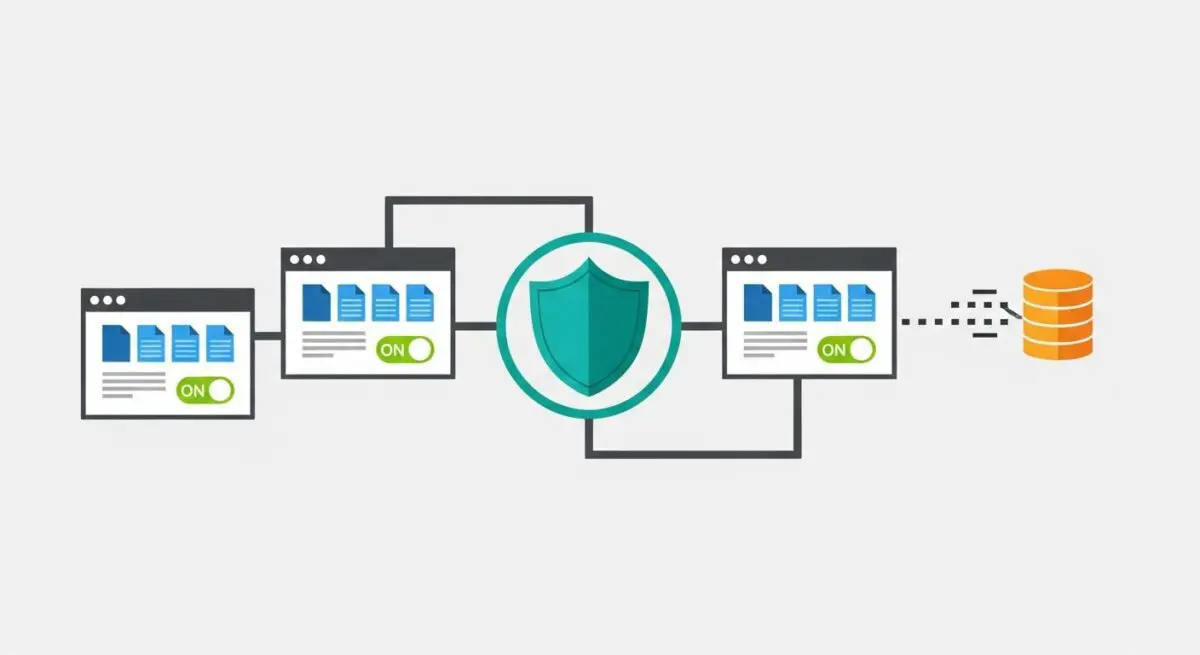
Data Governance is a comprehensive framework of policies, standards, and technical protocols that ensure an organization’s data remains accurate, secure, and accessible throughout its lifecycle. In the context of AI Automations, we at Andres SEO Expert define it as the systematic management of data quality and integrity as it flows through APIs, Large Language Models (LLMs), and vector databases. It is the engineering discipline of defining who can take what action, upon what data, in what situation, using what specific methods.
Effective governance architectures focus on data lineage—the ability to track the origin and transformation of data—to ensure that autonomous decisions are based on verifiable, high-fidelity inputs. This is particularly critical in Retrieval-Augmented Generation (RAG) systems, where the quality of the retrieved context directly dictates the accuracy of the AI’s response. Without a robust governance layer, autonomous systems risk propagating hallucinations or exposing sensitive information through insecure data pipelines.
The Real-World Analogy
Think of Data Governance as the air traffic control system of a major international airport. While the planes (data packets) carry the actual value, the control system (governance) ensures they follow specific flight paths, maintain safe distances, and land at the correct gates. Without this oversight, the efficiency of the airport collapses into chaos, leading to collisions (data breaches) and lost cargo (data loss). The system doesn’t fly the planes, but it provides the essential rules and monitoring that make safe, high-volume flight possible.
Why is Data Governance Critical for Autonomous Workflows and AI Content Ops?
For AI Content Ops and programmatic SEO, Data Governance is the primary safeguard against algorithmic degradation. In stateless automation environments, where data is processed in transient memory, governance ensures that every JSON payload adheres to a strict schema. This reduces API overhead and prevents execution failures caused by malformed data. Furthermore, as organizations scale their serverless architectures, governance provides the necessary metadata management to maintain consistency across thousands of concurrent automated tasks.
In the era of Generative Engine Optimization (GEO), governance also plays a role in brand authority. By governing the datasets used for context injection, brands can ensure that their AI-generated content remains factually correct and aligned with their authoritative voice, which is a key signal for AI-based search engines and LLM-driven discovery.
Best Practices & Implementation
- Automated Schema Validation: Implement strict JSON schema validation at every API endpoint to ensure data integrity before it enters the automation pipeline.
- Role-Based Access Control (RBAC): Enforce granular access permissions for all data sources, ensuring that automation scripts only access the specific datasets required for their execution.
- Data Lineage Tracking: Utilize metadata tagging to record the provenance and transformation history of every data point, facilitating easier debugging and regulatory auditing.
- Programmatic Compliance Checks: Integrate automated scanners to detect and redact Personally Identifiable Information (PII) within data streams to maintain global privacy compliance.
Common Mistakes to Avoid
A frequent error is treating Data Governance as a static document rather than a dynamic, automated process. Many organizations fail to integrate governance checks directly into their CI/CD pipelines, leading to “data drift” where the quality of inputs degrades over time. Another common mistake is the lack of centralized ownership, resulting in fragmented data silos that make it impossible to maintain a single source of truth for AI training and inference.
Conclusion
Data Governance provides the structural integrity required to scale AI automations safely and efficiently. By prioritizing data quality and security, organizations can build resilient autonomous workflows that drive long-term technical value.