Executive Summary
- Enhances raw data streams with contextual metadata via third-party API integrations.
- Enables sophisticated conditional logic and personalization within autonomous AI workflows.
- Reduces operational friction by programmatically appending firmographic or demographic details to JSON payloads.
What is Data Enrichment?
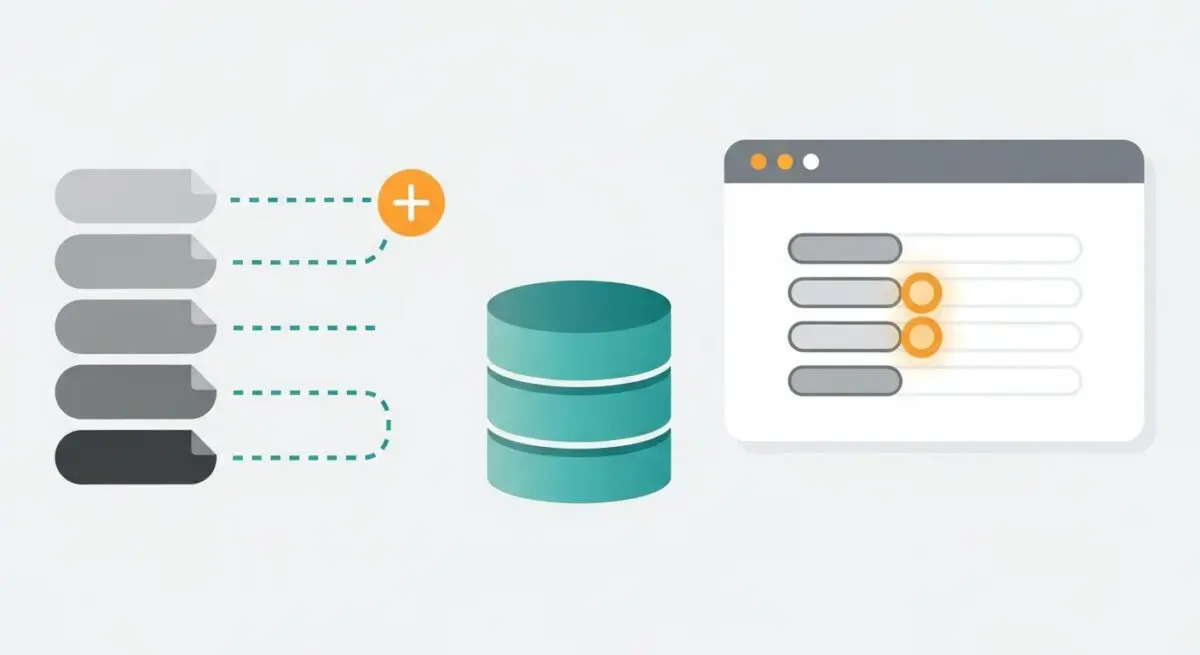
Data enrichment is the technical process of augmenting a primary dataset with supplemental information derived from external sources. In the context of AI automations and modern data pipelines, this typically involves intercepting a raw data packet—such as a webhook payload from a lead form—and programmatically querying third-party APIs to append missing attributes. These attributes may include firmographic data, social media profiles, or historical behavioral patterns, transforming a sparse data point into a high-context asset.
From an engineering perspective, data enrichment functions as a middleware layer within stateless architectures. By utilizing tools like Make, Zapier, or custom Python scripts, developers can ensure that downstream systems, such as Large Language Models (LLMs) or CRMs, receive a fully realized JSON object. This eliminates the need for manual research and ensures that autonomous agents have the necessary context to execute complex tasks without human intervention.
The Real-World Analogy
Imagine receiving a business card that only contains a person’s first name and a phone number. To make this information useful, you would normally have to spend time searching LinkedIn or company websites to understand who they are. Data enrichment is like having an invisible assistant who, the moment that card touches your hand, instantly writes down the person’s job title, their company’s annual revenue, their recent industry awards, and their office location on the back of the card. You start the conversation with a complete profile instead of a mystery.
Why is Data Enrichment Critical for Autonomous Workflows and AI Content Ops?
Data enrichment is the backbone of high-fidelity autonomous workflows because it solves the problem of context scarcity. In AI Content Ops, enrichment allows for the generation of hyper-personalized content at scale. For example, a programmatic SEO workflow can use an enrichment step to pull real-time pricing or technical specifications for thousands of products, ensuring the generated content is both accurate and authoritative.
Furthermore, it optimizes API payload efficiency. Instead of passing massive, redundant datasets through every stage of a workflow, engineers can pass a unique identifier (like an email or domain) and perform just-in-time enrichment only when specific data points are required. This modular approach supports serverless architecture scaling by reducing memory overhead and processing time for individual automation steps.
Best Practices & Implementation
- Implement Caching Layers: Use Redis or internal databases to store frequently queried enrichment data, reducing API costs and latency.
- Schema Validation: Always validate the structure of the enriched payload using JSON Schema to ensure downstream nodes do not fail due to unexpected data formats.
- Asynchronous Processing: Execute enrichment tasks in parallel or via asynchronous queues to prevent bottlenecks in time-sensitive automation sequences.
- Graceful Degradation: Design workflows to handle null or undefined responses from enrichment providers without crashing the entire pipeline.
Common Mistakes to Avoid
One frequent error is over-enrichment, where teams pay for data points that are never utilized in the final output, leading to unnecessary API expenses. Another critical mistake is neglecting data privacy compliance; enriching personal data without proper consent or security measures can violate GDPR or CCPA regulations. Finally, many developers fail to implement rate-limiting, which can lead to 429 errors and broken workflows during high-traffic events.
Conclusion
Data enrichment transforms raw inputs into actionable intelligence, serving as a critical catalyst for sophisticated AI-driven automation and programmatic content strategies.