Executive Summary
- Zero-party data represents the highest tier of data accuracy, as it is proactively and intentionally shared by the consumer with a brand.
- It serves as a critical solution to signal loss caused by the deprecation of third-party cookies and increasing privacy restrictions in iOS and Android ecosystems.
- Integration of zero-party data into Customer Data Platforms (CDPs) enables hyper-personalized LLM training and more accurate predictive modeling for LTV.
What is Zero-Party Data?
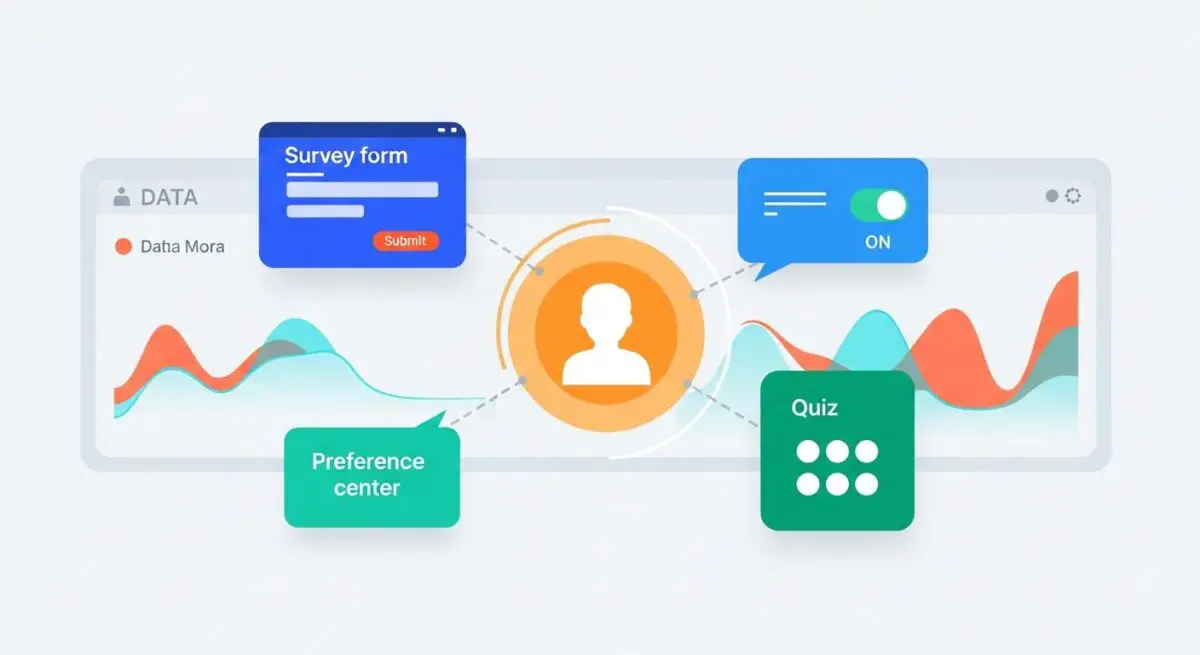
Zero-party data is a term coined to describe information that a customer intentionally and proactively shares with a brand. Unlike first-party data, which is gathered through passive observation of user behavior on a brand’s own properties (such as clicks, time on page, or purchase history), zero-party data is explicit. It includes personal preferences, purchase intentions, personal context, and how an individual wants to be recognized by the brand. In the modern MarTech stack, this data is typically collected through interactive experiences such as preference centers, quizzes, surveys, and direct account profile configurations.
From a technical perspective, zero-party data is the most reliable source for building a comprehensive Customer 360 view. As global privacy regulations like GDPR, CCPA, and DMA tighten, and as browser-level tracking (e.g., Intelligent Tracking Prevention in Safari) becomes more restrictive, the reliance on inferred data is becoming a liability. Zero-party data bypasses the probabilistic nature of third-party data and the observational limits of first-party data, providing deterministic insights that are natively compliant with privacy-by-design principles. This data is often stored within a Customer Data Platform (CDP) or a CRM, where it acts as the primary signal for orchestration engines and personalization algorithms.
In the context of Search Engine Optimization (SEO) and Generative Engine Optimization (GEO), zero-party data provides the qualitative insights necessary to align content strategy with actual user intent rather than estimated keyword volume. By understanding the specific pain points and preferences shared directly by users, technical marketers can architect information hierarchies and conversion funnels that mirror the exact requirements of their high-value segments, thereby improving engagement metrics that search engines use as indirect ranking signals.
The Real-World Analogy
To understand zero-party data, consider the difference between a detective and a bespoke tailor. A detective (representing third-party or first-party data) watches you from a distance, notes which shops you enter, and tries to guess your suit size and style preferences based on your movements. They might get it right, but there is a high margin for error and a sense of intrusion. A bespoke tailor, however, represents zero-party data. You walk into the tailor’s shop and explicitly tell them your exact measurements, your preferred fabric, the occasion for the suit, and how you like the fit. Because you provided this information voluntarily to receive a superior product, the tailor doesn’t have to guess, the result is perfect, and the relationship is built on mutual transparency and value.
How Zero-Party Data Impacts Marketing ROI & Data Attribution?
The integration of zero-party data into marketing workflows has a direct, measurable impact on Return on Investment (ROI) by drastically reducing wasted ad spend and lowering Customer Acquisition Costs (CAC). When a brand utilizes explicit preference data, it can move away from broad-match targeting and toward precision-based segmentation. For instance, if a user explicitly states they are interested in “enterprise-level cloud security” rather than “general IT services,” the marketing automation system can immediately trigger a high-relevance nurture sequence, increasing the probability of conversion and shortening the sales cycle.
Furthermore, zero-party data revolutionizes attribution models. Traditional attribution often struggles with the “dark funnel”—the untraceable touchpoints that occur across different devices or offline. By asking a customer directly during a sign-up process or post-purchase survey about their journey, brands can fill the gaps in their data silos. This deterministic attribution allows for more accurate budget allocation, as marketers can identify which channels are truly driving high-intent leads versus those that merely generate vanity traffic. In the era of AI-driven marketing, this high-quality data is also used to fine-tune Large Language Models (LLMs) for personalized chatbots and content generation, ensuring that the AI’s output is grounded in actual customer desires rather than generalized datasets.
Strategic Implementation & Best Practices
- Implement Robust Preference Centers: Develop a centralized, user-friendly interface where customers can manage their data, communication frequency, and topical interests. This should be integrated via API with your CRM and Email Service Provider (ESP) to ensure real-time synchronization.
- Utilize Progressive Profiling: To minimize friction and prevent form abandonment, collect zero-party data incrementally over multiple interactions. Start with high-level preferences and move toward more granular details as the relationship and trust with the user grow.
- Establish a Clear Value Exchange: Users are more likely to share data if they understand the benefit. Clearly communicate how providing this information will improve their experience, such as through personalized product recommendations, exclusive access, or tailored content.
- Data Normalization and Integration: Ensure that the qualitative data collected (e.g., text-based survey responses) is normalized into quantitative fields within your CDP. This allows the data to be used effectively by machine learning models for churn prediction and lifetime value (LTV) forecasting.
Common Pitfalls & Strategic Mistakes
One frequent error is the creation of “Data Graveyards,” where brands collect vast amounts of zero-party data but fail to activate it within their marketing automation tools. If a customer tells you their preference and you continue to send irrelevant content, you destroy the trust established during the data collection phase. Another mistake is over-collection; asking too many intrusive questions too early in the customer journey can lead to high bounce rates and a negative brand perception. Finally, many organizations fail to maintain data hygiene, allowing zero-party data to become stale. Preferences change over time, and failing to provide a mechanism for users to update their information leads to inaccurate targeting and diminished ROI.
Conclusion
Zero-party data is the foundational element of a modern, privacy-first marketing architecture, offering unparalleled accuracy for personalization and attribution. By prioritizing transparent data collection and seamless MarTech integration, enterprises can build resilient growth strategies that are immune to the volatility of the third-party data ecosystem.