Executive Summary
- A MarTech stack is a cohesive ecosystem of integrated software solutions designed to automate marketing operations, facilitate data-driven decision-making, and optimize customer acquisition.
- Modern architectures prioritize API-first connectivity and centralized Customer Data Platforms (CDPs) to eliminate data silos and ensure a single source of truth for attribution modeling.
- Strategic stack optimization directly impacts Marketing ROI by reducing technical debt, improving site performance for SEO, and enabling advanced Generative Engine Optimization (GEO).
What is MarTech Stack?
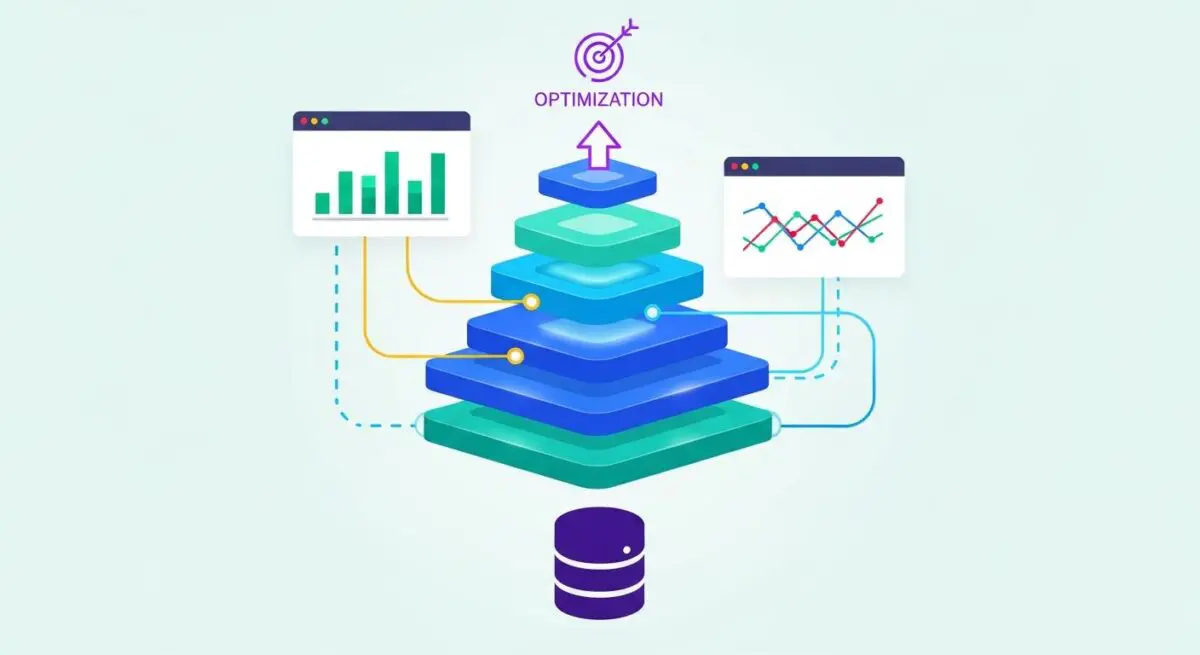
A MarTech stack, or marketing technology stack, is the foundational infrastructure of software and technological tools that marketing professionals leverage to plan, execute, manage, and measure marketing activities throughout the customer lifecycle. In a highly technical sense, the stack represents a layered architecture where data flows between disparate systems—ranging from Customer Relationship Management (CRM) platforms and Content Management Systems (CMS) to advanced analytics engines and programmatic advertising interfaces. The primary objective of a well-architected MarTech stack is to create a seamless data loop that allows for real-time optimization of marketing spend and user experience.
The evolution of the MarTech stack has transitioned from monolithic, all-in-one suites to a “best-of-breed” approach. This modern paradigm emphasizes interoperability, where specialized tools are connected via RESTful APIs or middleware. At the core of a sophisticated stack lies the data layer, often comprising a Data Warehouse (such as Snowflake or BigQuery) and a Customer Data Platform (CDP). This layer serves as the orchestration hub, ingesting raw data from various touchpoints, normalizing it, and pushing actionable insights back to the execution layers, such as email service providers (ESPs) or social media management tools. For SEO and GEO professionals, the stack is critical because it dictates how structured data is served to search engines and Large Language Models (LLMs).
The Real-World Analogy
To understand the complexity of a MarTech stack, consider the operational framework of a modern international airport. The airport is not a single machine but a collection of highly specialized, interconnected systems that must function in perfect synchronization. The Air Traffic Control (ATC) acts as the Customer Data Platform (CDP), orchestrating the movement of all data points (planes) to prevent collisions and ensure efficiency. The runways and terminals represent the Execution Layer (CMS and Advertising platforms), where the actual interaction with the customer (passenger) occurs. The radar and ground sensors are the Analytics and Tracking tools, providing real-time feedback on performance. If the radar fails to communicate with the ATC, the entire system becomes inefficient and dangerous. Similarly, if your analytics tool does not communicate with your CRM, your marketing efforts are flying blind, leading to wasted budget and a fragmented customer experience.
How MarTech Stack Impacts Marketing ROI & Data Attribution?
The technical integrity of a MarTech stack is the primary determinant of an organization’s ability to calculate and improve Marketing Return on Investment (ROI). Without a unified stack, data remains trapped in silos, leading to “fragmented attribution.” For instance, if a user interacts with a LinkedIn ad, later visits the site via an organic search, and finally converts through an email campaign, a disconnected stack might incorrectly attribute 100% of the conversion to the email. A technically sound stack utilizes unified identifiers and server-side tracking to implement multi-touch attribution models, providing a granular view of how each channel contributes to the final conversion. This level of insight allows for the reallocation of budget from underperforming channels to high-impact touchpoints, effectively lowering the Customer Acquisition Cost (CAC).
Furthermore, the MarTech stack plays a pivotal role in Data Attribution and integrity in the era of privacy regulations like GDPR and CCPA. By implementing server-side tagging and first-party data collection strategies within the stack, brands can mitigate the loss of data caused by the deprecation of third-party cookies. This ensures that the data used for ROI calculations is both accurate and compliant. From an SEO perspective, a bloated stack with redundant JavaScript tags can severely degrade Core Web Vitals, negatively impacting search rankings. Therefore, technical stack auditing is not just about functionality; it is a performance optimization necessity that directly influences organic visibility and conversion rates.
Strategic Implementation & Best Practices
- Prioritize API-First Architecture: When selecting new tools, ensure they offer robust, well-documented APIs. This ensures that as your stack grows, you can maintain a seamless flow of data between the execution and analytics layers without relying on manual data exports.
- Implement a Centralized Data Layer: Utilize a Customer Data Platform (CDP) or a dedicated Data Warehouse to act as the single source of truth. This prevents the common issue of conflicting data reports between different tools (e.g., Facebook Ads reporting different conversion numbers than Google Analytics).
- Audit for Redundancy and Latency: Conduct quarterly technical audits of your stack to identify overlapping functionalities. Removing redundant tools reduces SaaS bloat and improves website load times by minimizing the number of external scripts being called.
- Focus on Identity Resolution: Ensure your stack is capable of cross-device and cross-platform identity resolution. This allows you to track a single user across multiple sessions and devices, which is essential for accurate Lifetime Value (LTV) modeling and personalized marketing.
Common Pitfalls & Strategic Mistakes
One of the most frequent errors in enterprise marketing is “Tool Sprawl,” where organizations acquire software to solve isolated problems without considering how those tools integrate into the broader ecosystem. This leads to data silos, where the marketing team has a fragmented view of the customer journey, resulting in inefficient budget allocation and inconsistent messaging. Another critical mistake is the lack of technical ownership; without a dedicated Marketing Operations (MOps) or technical lead, the stack often becomes a collection of “shadow IT” projects that lack proper security, compliance, and data governance.
Conclusion
A robust MarTech stack is the technical backbone of modern marketing, enabling precise attribution, scalable automation, and data-driven growth. By focusing on integration, data integrity, and performance optimization, organizations can transform their technology from a cost center into a powerful engine for ROI.