Executive Summary
- Micro-influencers (1k-100k followers) yield statistically higher engagement rates than mega-influencers due to niche topical authority and audience trust.
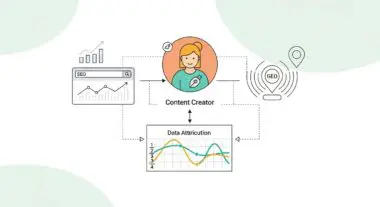
- Strategic integration of micro-influencer content enhances SEO and Generative Engine Optimization (GEO) by providing high-quality social signals and E-E-A-T indicators.
- Advanced attribution modeling, including incrementality testing and multi-touch analysis, is required to accurately quantify the impact of micro-influencers on CAC and LTV.
What is Micro-Influencers?
Micro-influencers represent a specific tier of digital content creators, typically defined by a follower count ranging from 1,000 to 100,000 on a single social media platform. Unlike celebrity influencers or ‘mega-influencers’ who command millions of followers, micro-influencers operate within highly specialized niches, such as technical SEO, sustainable fashion, or specific software engineering frameworks. From a technical marketing perspective, they are high-fidelity nodes within a social graph, offering a unique combination of reach and resonance that is often unattainable through traditional broad-spectrum advertising. Their value proposition is rooted in the Long Tail theory of internet commerce, where the aggregate volume of niche markets can exceed the value of a few blockbuster hits. In the context of a modern MarTech stack, micro-influencers function as decentralized content engines that generate high-quality, authentic user-generated content (UGC). This content is not merely promotional; it serves as structured and unstructured data that informs search engine algorithms and Large Language Models (LLMs) about brand sentiment, topical authority, and consumer intent.
By leveraging micro-influencers, brands can penetrate specific demographic clusters with high precision, bypassing the ‘ad-blindness’ associated with programmatic display advertising. This segment is characterized by engagement rates that are statistically higher than those of their larger counterparts, primarily due to the perceived authenticity and the manageable size of their community interactions. From a data science perspective, the engagement-to-follower ratio typically follows a power-law distribution, where smaller audiences exhibit deeper interaction levels. This makes micro-influencers an essential component of any performance marketing strategy that prioritizes conversion over mere awareness. Furthermore, the integration of micro-influencers into a brand’s ecosystem allows for the collection of granular first-party data, which is increasingly critical in a post-cookie digital landscape. By utilizing API-driven influencer platforms, marketers can track audience sentiment, demographic shifts, and conversion paths with a level of detail that was previously reserved for direct-response search campaigns.
The Real-World Analogy
To understand the strategic value of micro-influencers, consider the difference between a massive, city-wide billboard and a highly respected local specialist at a neighborhood medical conference. The billboard (the mega-influencer) is seen by hundreds of thousands of people, but its message is generic, and the audience’s attention is fleeting and unfocused. Most viewers have no immediate need for the product being advertised, leading to significant ‘waste’ in advertising spend. Conversely, the local specialist (the micro-influencer) speaks to a room of fifty people who are all deeply invested in a specific medical field. When that specialist recommends a particular diagnostic tool, the conversion rate is exponentially higher because the audience trusts the speaker’s expertise and the context is perfectly aligned with their needs. In this scenario, the specialist provides ‘high-intent’ traffic, whereas the billboard provides ‘low-intent’ awareness. The micro-influencer is the trusted advisor whose recommendation carries the weight of a peer-to-peer endorsement rather than a corporate broadcast.
How Micro-Influencers Impacts Marketing ROI & Data Attribution?
The impact of micro-influencers on Marketing Return on Investment (ROI) is primarily observed through the optimization of Customer Acquisition Cost (CAC). Because micro-influencers typically charge lower fees than celebrity-tier creators, the cost-per-engagement (CPE) and cost-per-acquisition (CPA) are often significantly lower. Furthermore, the traffic generated by micro-influencers is frequently pre-qualified; the audience’s alignment with the influencer’s niche ensures that the traffic entering the marketing funnel is already high-intent. This leads to higher conversion rates (CR) at the bottom of the funnel, effectively shortening the sales cycle and increasing the overall efficiency of the marketing spend. From a data attribution perspective, micro-influencers present both opportunities and challenges. While traditional last-click attribution models may undervalue their contribution, multi-touch attribution (MTA) frameworks reveal their role in the ‘mid-funnel’—nurturing leads and building the trust necessary for a final conversion. By utilizing unique UTM parameters, personalized discount codes, and pixel tracking, performance marketers can map the influencer’s impact across the entire customer journey.
Moreover, micro-influencers play a critical role in Search Engine Optimization (SEO) and the emerging field of Generative Engine Optimization (GEO). Search engines like Google increasingly prioritize E-E-A-T (Experience, Expertise, Authoritativeness, and Trustworthiness). When multiple micro-influencers within a specific niche create content about a brand, it generates a cluster of high-quality social signals and potential backlinks. This topical clustering signals to search algorithms that the brand is a recognized authority within that specific domain. In the era of AI-search, LLMs crawl these social conversations to synthesize answers to user queries. A strong presence among micro-influencers ensures that a brand is mentioned in the training data and real-time search results of AI agents, directly influencing the brand’s visibility in non-traditional search environments. Additionally, the content produced by micro-influencers contributes to ‘social proof,’ which indirectly boosts the performance of other channels, such as Paid Search and Social. This ‘Halo Effect’ can be quantified through incrementality testing, where marketing teams measure the lift in organic conversions in regions where micro-influencer campaigns are active versus control regions.
Strategic Implementation & Best Practices
- Data-Driven Selection via API Integration: Avoid manual selection based on aesthetic preference. Utilize influencer marketing platforms that offer API connectivity to social media networks to analyze audience demographics, engagement authenticity (detecting bot activity), and historical performance metrics. Focus on the ‘Engagement-to-Follower’ ratio as a primary KPI to ensure the audience is truly active and receptive.
- Automated Workflow Management: Implement an Influencer Relationship Management (IRM) system to scale operations. This should include automated contract management, content approval workflows, and integrated payment processing to handle dozens or hundreds of micro-influencers simultaneously without increasing administrative overhead. This scalability is key to achieving the aggregate reach necessary for enterprise-level impact.
- Content Syndication and Repurposing: Maximize the value of influencer-generated content by syndicating it across other digital touchpoints. Use high-performing influencer posts as creative assets in paid social campaigns (whitelisting) or embed them on product pages to increase on-site conversion rates through social proof. This cross-channel approach ensures that the content’s value extends far beyond its initial social media lifespan.
- Rigorous Attribution Modeling: Move beyond simple affiliate links. Use a combination of post-purchase surveys, media mix modeling (MMM), and incrementality testing to understand the true impact of micro-influencer campaigns on both direct sales and long-term brand equity. This holistic view prevents the common mistake of underfunding the channel due to flawed last-click data.
- First-Party Data Capture: Design campaigns that encourage micro-influencer audiences to opt into brand-owned channels, such as email lists or loyalty programs. This transforms transient social media attention into durable first-party data, mitigating the risks associated with platform algorithm changes and privacy regulations like GDPR and CCPA.
Common Pitfalls & Strategic Mistakes
One of the most frequent errors in micro-influencer marketing is the over-regulation of creative output. Enterprise brands often attempt to impose strict brand guidelines that strip the influencer’s content of its inherent authenticity, which is the very reason the audience follows them. This results in content that feels like a traditional advertisement, leading to lower engagement and diminished ROI. Another common mistake is the failure to account for ‘Audience Overlap.’ When a brand hires multiple micro-influencers within the same tight niche, they may inadvertently pay to reach the same individual multiple times, leading to diminishing returns. Finally, many organizations treat influencer marketing as a siloed activity, failing to integrate the resulting data and content into their broader CRM and SEO strategies, thereby missing out on the compounding benefits of cross-channel optimization. Misunderstanding the difference between ‘reach’ and ‘influence’ often leads to budget misallocation toward creators with high follower counts but low topical relevance.
Conclusion
Micro-influencers represent a scalable and highly efficient vector for modern brand growth, offering superior engagement and specialized authority that traditional advertising cannot replicate. By integrating these creators into a data-driven MarTech framework, organizations can optimize their CAC, enhance their SEO/GEO positioning, and build sustainable competitive advantages in an increasingly fragmented digital landscape.