Executive Summary
- Upsell revenue represents incremental expansion income generated from existing customers through product tier migration or capacity increases.
- It serves as a primary driver for optimizing the LTV/CAC ratio by reducing the marginal cost of revenue growth compared to new customer acquisition.
- Effective scaling requires technical integration between CRM, billing systems, and behavioral analytics to deploy predictive upgrade triggers.
What is Upsell Revenue?
Upsell revenue refers to the incremental income generated when an existing customer upgrades to a more expensive, feature-rich, or higher-capacity version of a product or service they currently utilize. In the architecture of modern SaaS and subscription-based business models, upsell revenue is a critical component of Expansion Monthly Recurring Revenue (MRR). Unlike cross-selling, which involves the purchase of complementary products from different categories, upselling focuses on vertical movement within a single product line. From a technical standpoint, this often involves moving a user from a ‘Basic’ tier to an ‘Enterprise’ tier, or increasing seat counts and API call limits.
Within a sophisticated MarTech stack, upsell revenue is tracked through the integration of Customer Relationship Management (CRM) systems and Enterprise Resource Planning (ERP) software. It is a high-margin revenue stream because the heavy lifting of customer acquisition—including brand awareness, initial trust-building, and billing infrastructure setup—has already been completed. Consequently, the profitability of upsell revenue is significantly higher than that of initial sales, making it a focal point for data-driven marketing directors and financial analysts aiming for sustainable growth.
The Real-World Analogy
Consider a high-end data center facility. A client initially signs a contract for a single server rack with a standard 1Gbps uplink. As the client’s application gains traction and their traffic spikes, the facility manager offers them a ‘High-Performance’ package. This package includes the same physical footprint but upgrades the network interface to 10Gbps and adds redundant power supplies. The client is not buying a new service, such as cloud storage or managed security; they are simply upgrading their existing infrastructure to a more robust version. This transition represents upsell revenue: the data center maximizes the financial yield of an existing customer relationship without the overhead of marketing to a new tenant or provisioning entirely new physical space.
How Upsell Revenue Impacts Marketing ROI & Data Attribution?
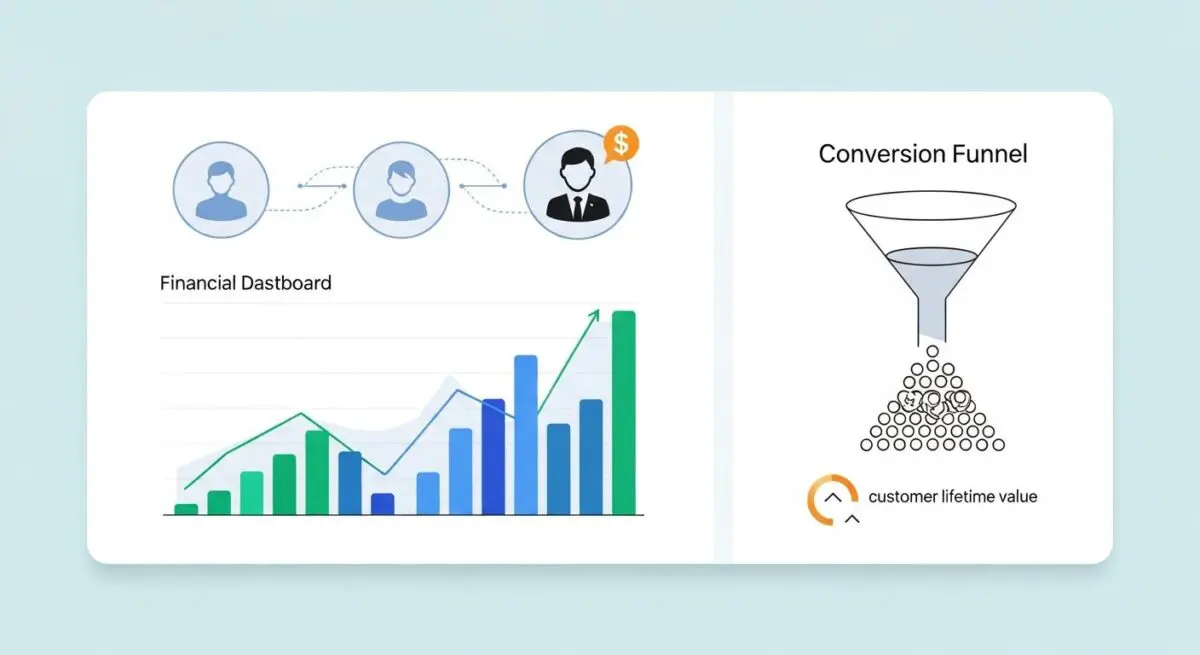
Upsell revenue is a fundamental lever in the optimization of the Lifetime Value (LTV) to Customer Acquisition Cost (CAC) ratio. In enterprise marketing, the cost to acquire a new customer (CAC) can be substantial, often requiring months of lead nurturing and high-intent search spend. However, once a customer is in the ecosystem, the cost to generate upsell revenue is remarkably low. By increasing the average revenue per account (ARPA) through upselling, organizations can effectively ‘pay down’ the initial CAC faster, leading to a shorter payback period and higher overall ROI.
From a data attribution perspective, upsell revenue introduces complexity but also provides deeper insights into channel quality. Traditional attribution models often focus on the first or last touch leading to the initial conversion. However, advanced marketing teams utilize multi-touch attribution to determine which post-purchase interactions—such as technical webinars, documentation engagement, or customer success check-ins—contributed to the upsell. If data reveals that users acquired via specific SEO keywords have a 40% higher propensity to upgrade than those from social media, the marketing team can reallocate budget toward those high-LTV channels, even if the initial CAC is higher. This shift from ‘volume-based’ to ‘value-based’ attribution is essential for AI-driven marketing environments where algorithmic bidding relies on accurate conversion value signals.
Strategic Implementation & Best Practices
- Predictive Behavioral Triggering: Utilize machine learning models within your Customer Data Platform (CDP) to identify ‘Propensity to Upgrade’ scores. These scores should be based on real-time telemetry data, such as a user reaching 80% of their storage limit or frequenting high-value feature pages that are locked behind a paywall.
- Feature Gating and In-App UX: Implement technical feature-flagging systems (like LaunchDarkly or Optimizely) to allow users to see, but not access, premium features. Providing a ‘Request Access’ or ‘Start Trial’ button directly within the UI creates a frictionless path to upsell revenue without requiring manual sales intervention.
- Unified Data Architecture: Ensure that your billing system (e.g., Stripe, Chargebee) is bi-directionally synced with your CRM (e.g., Salesforce, HubSpot). This prevents the marketing team from sending acquisition-focused ads to customers who are already prime candidates for an upgrade, ensuring a cohesive and professional customer experience.
- Automated Lifecycle Messaging: Deploy automated email and SMS sequences triggered by specific milestones. For example, when a user completes their 100th successful task in a project management tool, an automated message can highlight the benefits of the ‘Pro’ tier for managing larger teams.
Common Pitfalls & Strategic Mistakes
One frequent error in enterprise environments is the creation of data silos between the Marketing and Customer Success (CS) departments. When CS teams manage upgrades manually without feeding that data back into the marketing attribution engine, the marketing team lacks the visibility needed to optimize for high-value users. This results in inefficient budget allocation toward channels that may bring in many low-tier users who never upgrade.
Another common mistake is ‘Upsell Fatigue,’ where a brand pushes upgrades too aggressively or too early in the customer journey. If a user has not yet realized the core value of their initial purchase, an upsell attempt can be perceived as intrusive, potentially increasing churn rates. Technical teams must ensure that upsell prompts are contextually relevant and based on actual product usage rather than arbitrary time-based triggers.
Conclusion
Upsell revenue is the engine of scalable growth, allowing organizations to maximize the economic value of every customer through data-driven upgrades. By integrating behavioral analytics with automated marketing workflows, brands can significantly enhance their LTV/CAC ratios and build a more resilient, high-margin revenue model.