Executive Summary
- Operational ROI: Transitioning 50% of physical quarterly meetings to VR environments yields a 50% ROI over 24 months, driven by travel savings exceeding $1,220 per capita.
- Infrastructure Evolution: The adoption of Distributed Hybrid Infrastructure and NVIDIA CloudXR.js allows for high-fidelity 3D streaming with sub-20ms latency on lightweight hardware.
- Agentic Integration: Modern VR collaboration has evolved from simple avatars to autonomous AI orchestration layers that execute multi-step tasks like live CRM updates and budget mapping.
The Evolution of the Virtual Boardroom
The transition from traditional video conferencing to immersive spatial environments represents the most significant shift in corporate communication since the advent of the internet. In the current digital ecosystem, the focus has moved beyond the novelty of avatars toward a rigorous pursuit of spatial productivity. For the modern executive, VR for collaborative work and virtual meetings is no longer a speculative venture but a core component of a high-performance infrastructure designed to mitigate the friction of global operations.
The current market is defined by a clear bifurcation. On one side, Meta maintains a dominant 50.8% market share, positioning the Quest 3 as the enterprise standard for general-purpose collaboration. On the other, Apple has established a high-end benchmark with its Vision Pro series, utilizing the M5 chip to deliver 120Hz refresh rates that eliminate the motion blur previously associated with virtual fatigue. This competition has catalyzed a surge in M&A activity, with a 40% increase in deal volume as legacy firms divest non-core assets to fund their entry into the spatial computing era.
Defining Spatial Productivity and Distributed Infrastructure
To understand the business logic behind this shift, one must first grasp the technical foundation of Spatial Productivity. This concept refers to the use of three-dimensional digital environments to enhance cognitive load management and data visualization. Unlike a flat screen, spatial environments allow for the simultaneous manipulation of complex datasets, 3D models, and collaborative whiteboards in a way that mimics natural human spatial memory.
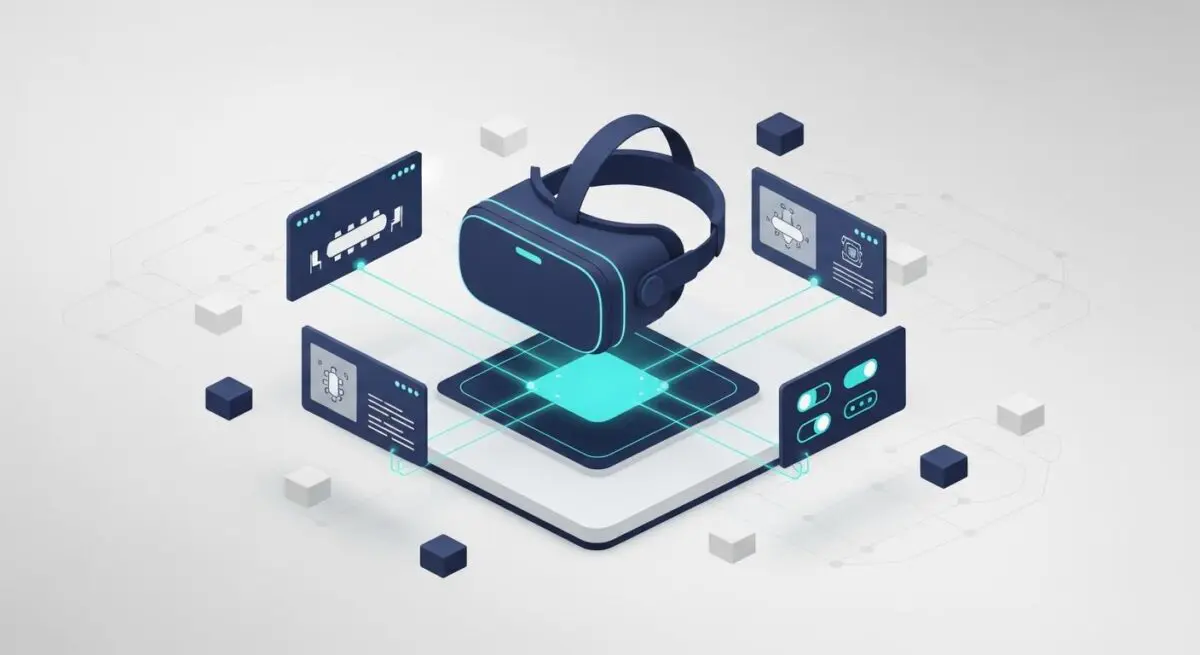
The backbone of this capability is Distributed Hybrid Infrastructure. In this model, the heavy computational lifting is offloaded to the cloud—specifically utilizing frameworks like NVIDIA CloudXR.js—and then streamed to the headset. This architecture is critical because it allows lightweight, wearable devices to display high-fidelity environments that would otherwise require a localized supercomputer. By maintaining a motion-to-photon latency of less than 20ms, these systems ensure that the user experience remains fluid, preventing the physiological discomfort that once hindered long-term VR adoption.
The Rise of Autonomous AI Agent Orchestration
The most profound change in virtual meetings is the integration of autonomous AI agents. These are not mere chatbots; they are orchestration layers that operate within the virtual workspace. During a high-level strategic briefing, these agents can listen to the discussion, identify action items, and autonomously update CRM records or map out budget projections in Excel in real-time. This agentic cloud architecture transforms the meeting from a passive conversation into an active production session, where the administrative overhead is handled by the system itself.
Think of Distributed Hybrid Infrastructure as a gourmet restaurant. The heavy lifting—the chopping, simmering, and complex prep—happens in a massive, high-tech kitchen in the back. The waiter then brings the finished, elegant plate to your table in seconds. You enjoy the five-star experience without needing a furnace and a sous-chef in your dining room.
Economic Benchmarks and the ROI of Immersion
From a capital allocation perspective, the move to VR collaboration is increasingly justified by hard metrics. Data indicates that replacing half of face-to-face quarterly meetings with immersive sessions yields a 50% ROI over a two-year period. This is primarily achieved through the reduction of travel budgets, which can exceed $1,220 per person annually. However, the true value lies in efficiency gains. VR-based training has shown a 76% increase in effectiveness over traditional methods, with retention rates hovering around 80% after one year.
Enterprise SaaS providers in this space are currently benchmarking a 3:1 LTV:CAC ratio, with top-tier platforms reaching 5:1. This profitability is driven by the high stickiness of immersive environments; once a team integrates their workflow into a spatial platform, the cost of switching back to 2D tools becomes prohibitively high due to the loss of integrated AI agents and spatial data pipelines.
Navigating Technical Debt and Talent Scarcity
Despite the clear advantages, the path to implementation is fraught with structural challenges. A significant skill gap exists, with 75% of organizations reporting a shortage of engineers capable of managing the intersection of agentic AI and spatial data. Furthermore, the maintenance of legacy technical debt—specifically siloed, on-premise ERP systems—remains a primary bottleneck. Integrating these aging systems with modern spatial environments requires a level of cloud modernization that many firms have yet to achieve.
Data integrity also remains a concern. For virtual meetings to truly reflect physical reality, platforms are now turning to city-scale 3D mapping to provide the necessary spatial reference data. This allows autonomous agents to navigate the overlap between physical assets and virtual representations, a requirement for industries like logistics and manufacturing where the virtual meeting often centers on a physical product or site.
Regulatory Constraints: The EU AI Act
The regulatory landscape is also tightening, particularly with the full implementation of the EU AI Act. This legislation classifies many spatial-sensing and biometric VR agents as high-risk systems. For businesses, this means that transparency and human-in-the-loop oversight are no longer optional. Compliance requires rigorous data governance, as failure to meet these standards can result in fines of up to 7% of global turnover. Strategically, this necessitates a privacy-first approach to VR infrastructure, ensuring that biometric data captured during meetings is encrypted and processed according to strict jurisdictional rules.
Andres’ Analysis: The Big Picture
In my analysis of the spatial computing market, I see a clear distinction between companies that view VR as a communication tool and those that view it as a competitive moat. The real winners are not just buying headsets; they are rebuilding their operational workflows around the concept of the spatial data pipeline. By integrating autonomous agents directly into the virtual boardroom, these firms are effectively automating the middle-management layer of project coordination. This is a macro-strategic shift that moves the needle on EBITDA by reducing the time-to-decision across global teams.
We believe the most significant undervalued asset in this space is the data generated within these environments. Unlike a Zoom call, which is largely unstructured, a VR meeting produces a rich stream of spatial and behavioral data that, when processed through Generative Engine Optimization (GEO), becomes a searchable, actionable knowledge base. For the forward-thinking CEO, the goal should be to move beyond the ‘meeting’ and toward a continuous, AI-augmented collaborative state. This is where the sustainable ROI of the next decade will be found.
The Future of Executive Collaboration
The transition to VR for collaborative work and virtual meetings is an inevitable evolution of the digital workplace. As the hardware becomes lighter and the AI orchestration more sophisticated, the friction between physical distance and operational speed will continue to dissolve. The organizations that master this medium today will be the ones that define the pace of innovation tomorrow.
Navigating the intersection of generative search and operational efficiency requires more than just tools—it requires a roadmap. If you’re ready to evolve your strategy through specialized SEO, GEO, Advanced Hosting Environments, or AI-driven automation, connect with Andres at Andres SEO Expert. Let’s build a future-proof foundation for your business together.