


Executive Summary
- Lead Gen (Lead Generation) is a systematic data-acquisition process that utilizes multi-channel touchpoints to identify and qualify prospects for CRM ingestion.
- Modern frameworks prioritize high-intent data signals and automated lead scoring to optimize the Customer Acquisition Cost (CAC) and Sales Velocity.
- Integration with advanced MarTech stacks and LLM-driven analytics is essential for maintaining data integrity and regulatory compliance in a post-cookie landscape.
What is Lead Gen?
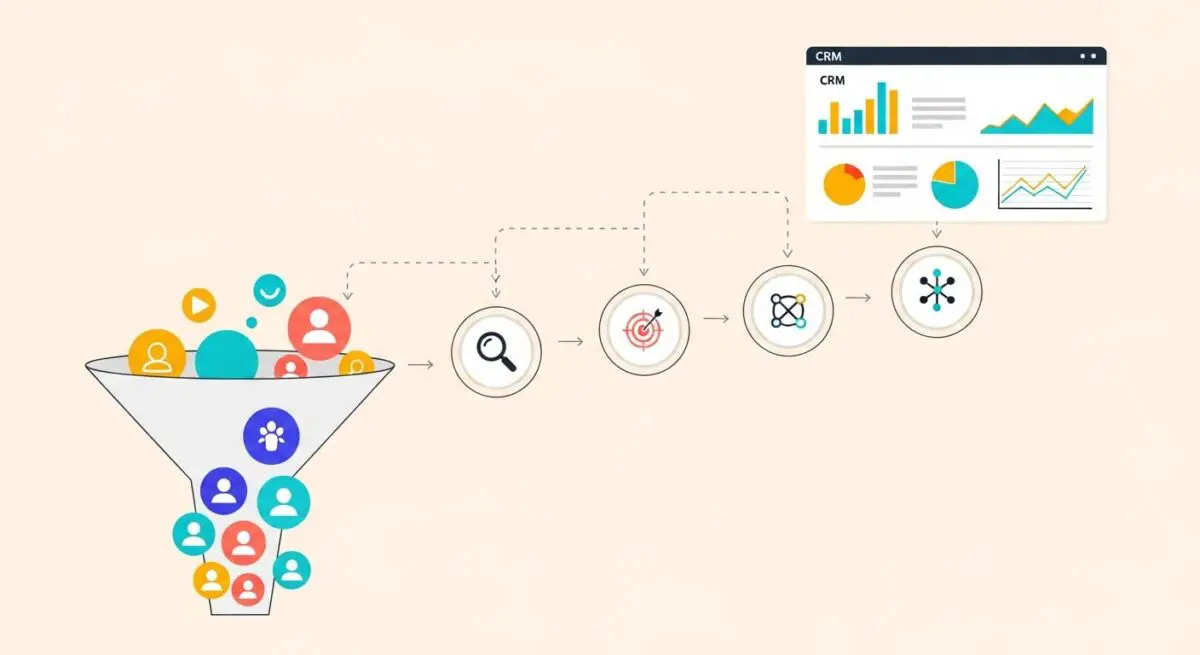
Lead Gen, or Lead Generation, is the technical and strategic process of identifying, attracting, and converting anonymous web traffic or targeted prospects into qualified entries within a centralized Customer Relationship Management (CRM) system. In the context of a modern MarTech stack, Lead Gen serves as the primary data ingestion engine, bridging the gap between top-of-funnel (TOFU) awareness and bottom-of-funnel (BOFU) sales conversion. It involves the deployment of sophisticated tracking mechanisms, gated content architectures, and API-driven data transfers to ensure that every prospect interaction is logged, attributed, and scored according to its potential value to the enterprise.
From a technical perspective, Lead Gen is not merely about contact collection; it is about the validation and enrichment of zero-party and first-party data. This process requires a robust infrastructure capable of handling asynchronous data streams from various sources, including organic search (SEO), paid media (PPC), and programmatic advertising. By leveraging Generative Engine Optimization (GEO) and traditional SEO, organizations can capture high-intent signals, ensuring that the leads generated are not just numerous, but highly relevant to the specific product or service offering. This alignment is critical for maintaining a healthy pipeline and minimizing friction between marketing and sales departments.
The Real-World Analogy
To understand Lead Gen at an enterprise level, imagine a high-precision industrial filtration and refinement system. In this analogy, the raw material is the vast, unrefined ocean of global internet traffic. The Lead Gen infrastructure acts as a series of specialized filters and chemical sensors. As the water flows through the system, the filters (content, landing pages, and forms) catch specific particles (prospects) that meet certain density and quality criteria. The sensors (tracking pixels and cookies) analyze the composition of these particles in real-time. Only the most valuable minerals—those that meet the exact specifications for the final product—are extracted and sent to the refinery (the sales team) for final processing. Without this filtration system, the refinery would be overwhelmed by useless silt, wasting energy and resources on material that can never be converted into a finished good.
How Lead Gen Impacts Marketing ROI & Data Attribution?
The efficiency of a Lead Gen framework directly dictates the Marketing Return on Investment (ROI) by influencing the Customer Acquisition Cost (CAC) and the Lifetime Value (LTV) modeling. When Lead Gen is optimized through technical precision, the cost per lead (CPL) decreases while the lead-to-close ratio increases. This is achieved through rigorous data attribution models—such as linear, time-decay, or position-based attribution—which allow marketers to identify exactly which touchpoints are driving the highest quality conversions. By understanding the path to conversion, firms can reallocate budget from underperforming channels to those that yield high-intent Marketing Qualified Leads (MQLs).
Furthermore, Lead Gen plays a pivotal role in data integrity and attribution accuracy. In an era of increasing privacy regulations (GDPR, CCPA) and the deprecation of third-party cookies, technical Lead Gen strategies must rely on robust first-party data collection. Implementing server-side tracking and advanced API integrations (such as the Facebook Conversions API or Google’s Enhanced Conversions) ensures that lead data is accurately attributed even when client-side tracking fails. This high-fidelity data allows for more accurate predictive modeling, enabling the marketing team to forecast revenue with greater certainty and justify increased spend on high-performing campaigns.
Strategic Implementation & Best Practices
- Implement Automated Lead Scoring: Utilize machine learning algorithms to assign numerical values to leads based on behavioral data (e.g., page views, whitepaper downloads) and firmographic data (e.g., company size, industry). This ensures that the sales team prioritizes prospects with the highest propensity to convert.
- Optimize for Zero-Party Data Collection: Design interactive elements such as quizzes, calculators, or assessment tools that encourage users to voluntarily share specific preferences and pain points. This data is far more valuable than inferred data for personalization and segmentation.
- Ensure Seamless CRM Integration: Use middleware like Zapier, Make, or custom-built API connectors to ensure that lead data flows instantly from the point of capture to the CRM. Real-time data synchronization prevents lead decay and allows for immediate automated follow-up sequences.
- Deploy Progressive Profiling: Instead of overwhelming users with long forms, use progressive profiling to collect data incrementally over multiple visits. This reduces friction and increases conversion rates while building a comprehensive prospect profile over time.
- A/B Testing of Conversion Elements: Continuously iterate on CTA placement, form fields, and landing page copy using statistically significant split testing. Focus on reducing cognitive load and technical friction (e.g., page load speed) to maximize the conversion rate of the traffic already being generated.
Common Pitfalls & Strategic Mistakes
One of the most prevalent mistakes in enterprise Lead Gen is the prioritization of quantity over quality. Generating a high volume of low-intent leads creates a “data swamp” that exhausts sales resources and skews attribution metrics, leading to inefficient budget allocation. Another critical error is the failure to maintain data hygiene; duplicate entries, outdated contact information, and fragmented data silos across different marketing tools can lead to a disjointed customer experience and inaccurate ROI reporting. Finally, many organizations neglect the post-capture lead nurturing phase, failing to implement automated workflows that keep the brand top-of-mind for prospects who are not yet ready to purchase, thereby losing potential revenue to competitors with more robust follow-up systems.
Conclusion
Lead Gen is the foundational architecture of modern revenue operations, requiring a sophisticated blend of data science, technical SEO, and automated workflow integration. By focusing on high-intent data acquisition and seamless CRM synchronization, enterprises can build a scalable engine that consistently drives high-value conversions and sustainable growth.