Executive Summary
- BDRs focus on outbound lead generation and cold prospecting to build top-of-funnel pipeline through data-driven outreach.
- Integration with MarTech stacks like CRM and Sales Engagement Platforms (SEP) is critical for multi-touch attribution and data integrity.
- Effective BDR frameworks optimize Customer Acquisition Cost (CAC) by filtering high-intent prospects for Account Executives using frameworks like BANT or MEDDIC.
What is Business Development Representative (BDR)?
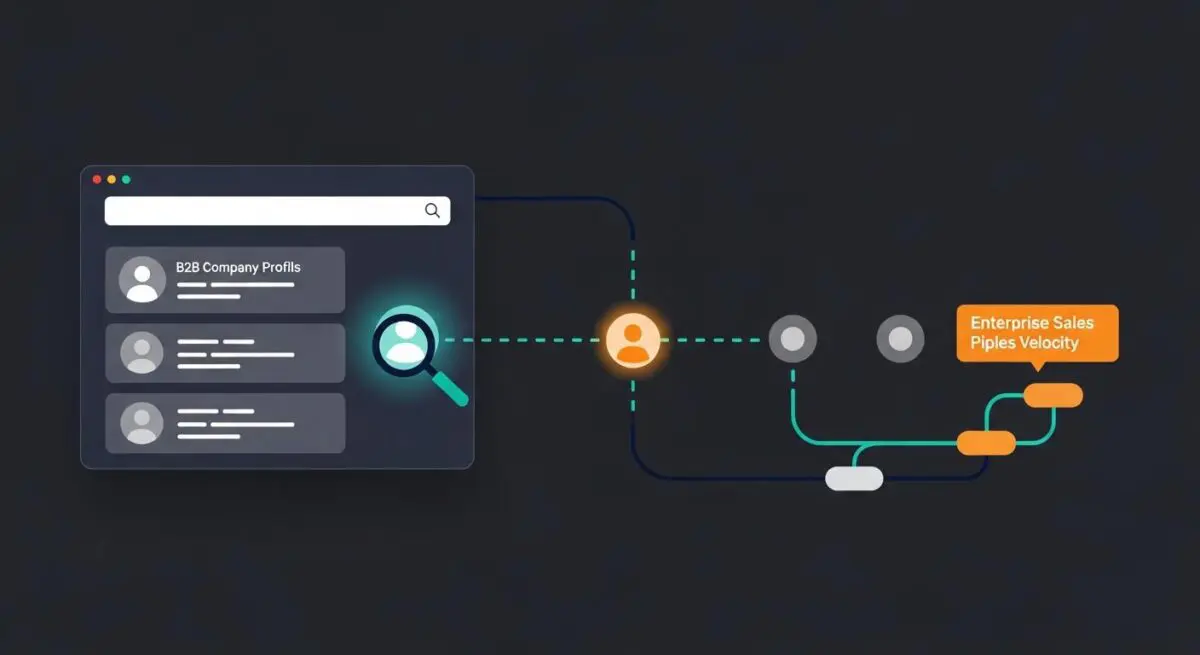
A Business Development Representative (BDR) is a specialized sales professional focused on outbound lead generation and the identification of new business opportunities within a target market. Unlike Sales Development Representatives (SDRs) who typically handle inbound leads, BDRs operate at the top of the sales funnel (ToFu) through proactive prospecting, cold outreach, and strategic account-based marketing (ABM) tactics. In a modern MarTech stack, the BDR role is data-centric, relying on CRM systems, intent data providers, and sales engagement platforms to identify and qualify potential customers before transitioning them to Account Executives (AEs). From a technical perspective, the BDR function is a critical component of Revenue Operations (RevOps). It involves the systematic processing of cold data into Sales Qualified Leads (SQLs) or Sales Accepted Leads (SALs). This process requires rigorous lead scoring, sequence automation, and multi-channel attribution to ensure that outreach efforts are measurable and scalable. BDRs utilize tools like LinkedIn Sales Navigator, ZoomInfo, and Outreach.io to execute high-volume, personalized communication strategies that align with broader organizational growth objectives.
Furthermore, the BDR role is defined by its focus on the Total Addressable Market (TAM). By identifying high-value accounts that fit the Ideal Customer Profile (ICP) but have not yet entered the marketing funnel, BDRs expand the reach of the sales organization beyond the limits of organic and paid search. This proactive approach is essential for penetrating enterprise-level accounts where the decision-making process is complex and involves multiple stakeholders. The BDR acts as the initial point of contact, conducting deep research into an organization’s pain points, technological stack, and fiscal priorities to craft a value proposition that resonates at the executive level. In the era of AI-driven marketing, BDRs also leverage predictive analytics to prioritize accounts based on behavioral signals and intent data, ensuring that their outreach is both timely and relevant.
The Real-World Analogy
Consider the Business Development Representative as a specialized geological surveyor for a large-scale mining operation. The mining company (the enterprise) has the heavy machinery and refining capabilities (Account Executives and Product) to extract and process valuable minerals (revenue). However, the company cannot simply dig anywhere; doing so would be prohibitively expensive and inefficient. The surveyor is sent out into unexplored territories (the cold market) equipped with advanced sensors and geological maps (MarTech and Data). Their job is to drill small test holes and analyze the soil samples to determine if there is a high enough concentration of ore to justify a full-scale mining operation. They do not do the heavy mining themselves, but without their precise data and preliminary verification, the entire operation would be a gamble. The BDR ensures that the heavy machinery is only deployed where there is a proven, high-value opportunity, thereby maximizing the efficiency of the entire extraction process.
How Business Development Representative (BDR) Impacts Marketing ROI & Data Attribution?
The integration of a BDR team significantly enhances Marketing ROI by optimizing the transition from Marketing Qualified Leads (MQLs) to Sales Qualified Leads (SQLs). While marketing departments focus on broad-reach demand generation, BDRs provide the human-centric qualification necessary to filter out low-intent noise. This refinement process directly impacts the Customer Acquisition Cost (CAC) by ensuring that expensive Account Executive resources are only allocated to opportunities with a high likelihood of closing. Furthermore, BDRs help shorten the Sales Cycle Length by identifying and addressing potential objections early in the prospecting phase, leading to a more streamlined path to purchase. By proactively engaging with prospects who match the ICP, BDRs can generate high-value opportunities that might otherwise remain dormant in the market, thereby increasing the overall pipeline density and revenue potential.
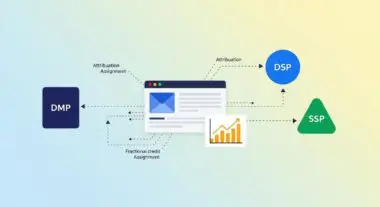
From a data attribution perspective, the BDR role introduces a critical layer of granularity into the customer journey. In a multi-touch attribution model, BDR activities—such as a specific sequence of cold emails or a series of LinkedIn engagements—are recorded as distinct touchpoints. This allows organizations to measure the effectiveness of outbound strategies relative to inbound efforts. By analyzing the Lead-to-Opportunity conversion rate driven by BDRs, marketing and sales leaders can determine the optimal balance of resource allocation between demand generation and proactive prospecting. Additionally, BDRs provide qualitative feedback from the market that quantitative data alone cannot capture, such as common pain points or competitive intelligence, which can be used to refine marketing messaging and product positioning. This feedback loop is essential for maintaining a dynamic and responsive marketing strategy that adapts to evolving market conditions and buyer behaviors.
Strategic Implementation & Best Practices
- Data-Driven Territory Management: Assign BDRs to specific territories or verticals based on historical performance data and market potential. This allows for deeper specialization and more relevant outreach, as BDRs become experts in the specific challenges faced by their assigned segment.
- Advanced Sequence Optimization: Use A/B testing within Sales Engagement Platforms to refine email subject lines, call scripts, and social touchpoints. Continuous optimization based on open rates, reply rates, and meeting-set rates ensures that the outbound engine remains efficient and adaptive to market changes.
- Tight Feedback Loops with Marketing: Establish regular cadence meetings between BDR and Marketing teams to share insights on lead quality and messaging resonance. This alignment ensures that marketing collateral is being used effectively in outbound sequences and that BDR feedback informs future content creation.
- Rigorous CRM Hygiene: Enforce strict data entry standards for BDRs to ensure that every interaction is logged accurately. High-quality data is the foundation of effective attribution and allows for the automation of follow-up tasks and lead scoring updates.
- Leverage Intent Data for Prioritization: Integrate third-party intent data into the BDR workflow to prioritize accounts that are actively researching relevant solutions. This increases the relevance of the outreach and improves the probability of securing a discovery call.
Common Pitfalls & Strategic Mistakes
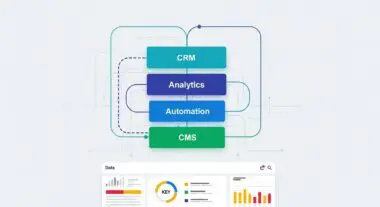
One of the most frequent errors in BDR management is the Volume over Value trap. When BDRs are incentivized solely on the number of meetings set, they may be tempted to push unqualified leads into the pipeline. This results in Lead Inflation, where the pipeline looks healthy on paper, but the actual win rate plummets because Account Executives are wasting time on prospects without real intent or budget. This misalignment creates friction between teams and inflates the CAC. Another significant mistake is the failure to integrate BDR tools with the broader MarTech stack. When BDRs operate in a silo, their activities are not visible to the marketing team, leading to redundant outreach or missed opportunities to leverage existing marketing engagement. Ensuring full API connectivity and data synchronization between SEPs, CRMs, and Marketing Automation Platforms (MAPs) is essential for a unified growth strategy.
Conclusion
The Business Development Representative (BDR) is a fundamental pillar of a scalable outbound growth engine, bridging the gap between raw market data and closed revenue. When supported by a technical MarTech stack and rigorous data attribution, the BDR function significantly enhances enterprise sales efficiency and predictable pipeline growth.