



Executive Summary
- Modular Value Creation: The API Economy enables organizations to deconstruct complex business processes into discrete, reusable services that can be monetized or integrated externally.
- Interoperability Frameworks: It relies on standardized protocols like REST, GraphQL, and gRPC to facilitate seamless data exchange across heterogeneous tech stacks and cloud environments.
- Ecosystem Scalability: By leveraging third-party APIs, enterprises can accelerate time-to-market and reduce R&D overhead while focusing on core proprietary value propositions.
What is the API Economy?
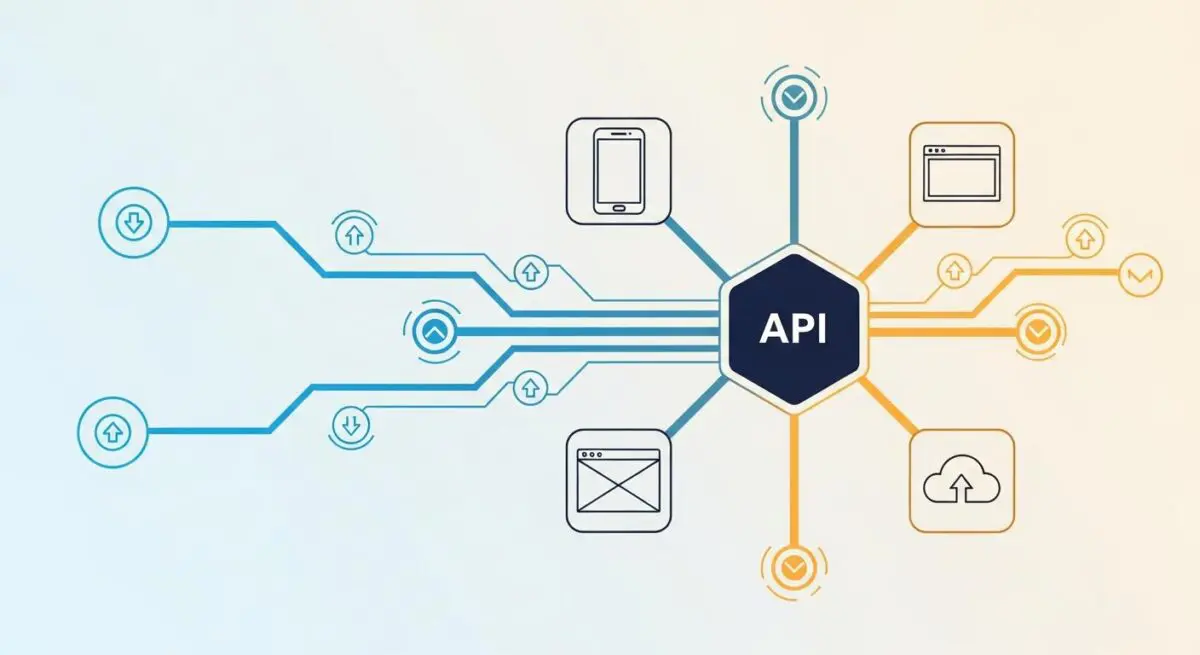
The API Economy refers to the commercial landscape where Application Programming Interfaces (APIs) serve as the primary conduits for value exchange between organizations. It represents a fundamental shift from monolithic software development to a modular, service-oriented architecture where capabilities are exposed as digital products.
In this ecosystem, APIs are no longer merely technical connectors used by internal developers. They function as strategic business assets that allow companies to externalize their data, logic, and infrastructure to third-party developers and partners.
This paradigm relies on standardized communication protocols and security frameworks to ensure that disparate systems can interact without friction. By adopting an API-first approach, businesses can create new revenue streams and foster innovation through external developer communities.
The Real-World Analogy
Consider the global shipping container industry as a parallel to the API Economy. Before the standardization of shipping containers, moving goods required custom handling for every type of cargo, leading to massive inefficiencies and high costs.
The API acts as the standardized shipping container for data and logic. It provides a universal interface that allows different “ships” (software platforms) to carry and exchange “cargo” (data) regardless of what is inside the container or how the ship is built.
Just as the shipping container enabled the modern global supply chain by allowing any crane in any port to move any box, the API Economy allows any application to consume specialized services like payment processing or geolocation without needing to understand the underlying code.
How the API Economy Drives Strategic Growth & Market Competitiveness?
The API Economy significantly reduces the cost of innovation by allowing firms to assemble complex applications using pre-built, best-in-class components. Instead of building a proprietary global payment network, a company can integrate a specialized API to handle transactions instantly.
This modularity directly impacts the Customer Acquisition Cost (CAC) by enabling faster integration into the platforms where target audiences already reside. For instance, a SaaS provider can increase its market reach by offering integrations with popular CRM and ERP systems, making their tool indispensable to the user’s existing workflow.
Furthermore, the API Economy facilitates data monetization. Organizations with unique datasets can expose that information via paid API endpoints, transforming a cost center like data storage into a high-margin revenue stream.
From a strategic perspective, APIs enable the creation of platform ecosystems. By allowing third parties to build on top of their core technology, companies can transition from being a single-product vendor to a foundational platform, which creates high switching costs and long-term market dominance.
In the era of AI-driven marketing and Generative Engine Optimization (GEO), APIs are the essential pipelines that feed high-quality data into Large Language Models (LLMs). This ensures that a brand’s information is accessible and accurately represented across the evolving search landscape.
Strategic Implementation & Best Practices
- Implement Robust Security Protocols: Utilize industry standards such as OAuth 2.0, OpenID Connect, and JSON Web Tokens (JWT) to ensure secure authentication and authorization across all public and private endpoints.
- Prioritize Developer Experience (DX): Provide comprehensive, machine-readable documentation using the OpenAPI Specification (OAS) to reduce integration friction and encourage third-party adoption.
- Adopt Versioning and Lifecycle Management: Use semantic versioning for all API releases to prevent breaking changes for downstream consumers and maintain a clear deprecation policy for legacy endpoints.
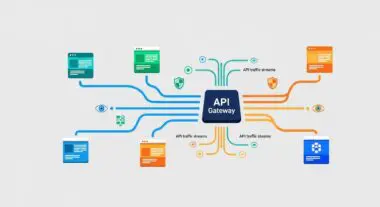
- Utilize API Gateways for Orchestration: Deploy centralized API gateways to manage rate limiting, request throttling, and telemetry, ensuring system stability and providing granular insights into usage patterns.
- Focus on Latency and Performance: Optimize endpoint response times through edge caching, Content Delivery Networks (CDNs), and efficient database indexing to ensure a seamless user experience in distributed architectures.
Common Pitfalls & Strategic Mistakes
One frequent error is the lack of a clear governance model, leading to “API sprawl” where redundant or insecure endpoints are created across different departments. This increases the attack surface and complicates maintenance efforts for the engineering team.
Another significant mistake is ignoring the importance of backward compatibility. When an enterprise updates its internal logic and breaks its public API without a transition period, it destroys trust with partners and can lead to immediate churn in integrated services.
Finally, many organizations fail to treat their API as a product. They focus solely on the technical implementation while neglecting the business metrics, such as uptime SLAs, support channels, and monetization strategies that are critical for long-term viability.
Conclusion
The API Economy is the structural foundation of modern digital business, enabling the rapid assembly of scalable, interoperable, and monetizable services. Organizations that master API orchestration will lead the next wave of architectural innovation and market expansion.