Executive Summary
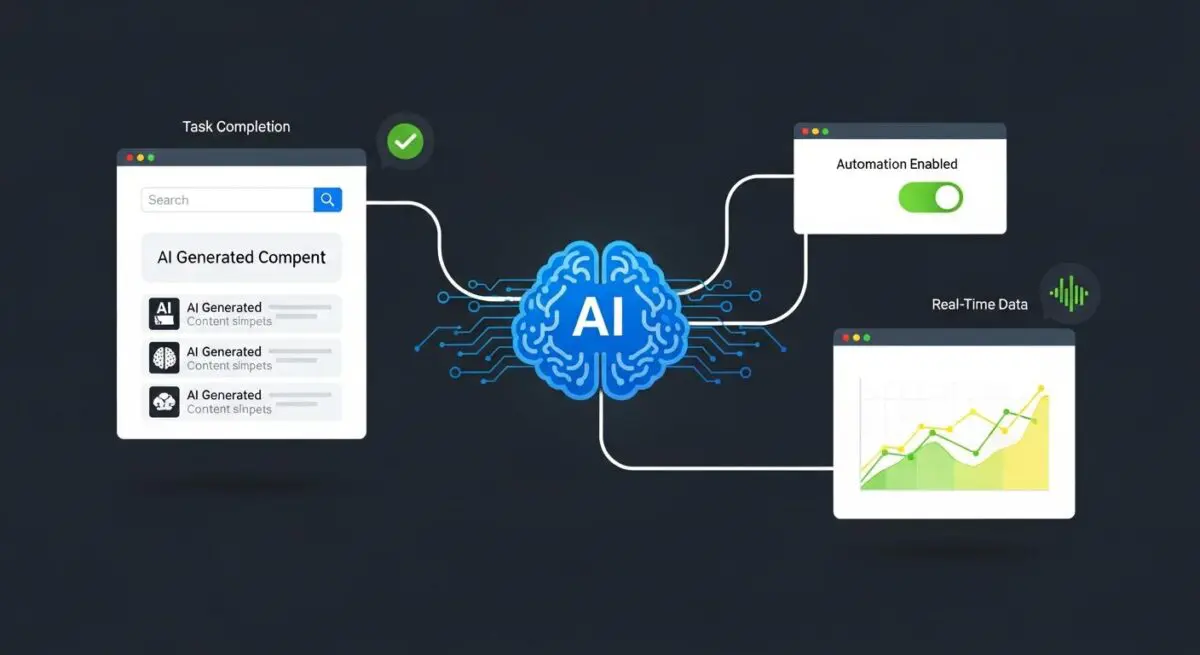
- Contextual Integration: AI Copilots function as embedded generative layers within software environments, utilizing real-time user data to provide task-specific assistance.
- RAG Architecture: These systems leverage Retrieval-Augmented Generation to ground Large Language Models in proprietary datasets, ensuring accuracy and reducing hallucinations.
- Operational Efficiency: By automating high-frequency cognitive tasks, AI Copilots optimize resource allocation and accelerate technical workflows across the enterprise.
What is AI Copilot?
An AI Copilot is a sophisticated generative artificial intelligence interface integrated directly into a software application or operating system. Unlike traditional chatbots that operate in isolation, a Copilot is designed to assist users within their existing workflows by accessing the immediate context of their work. This integration allows the system to provide real-time suggestions, automate repetitive tasks, and synthesize complex information without requiring the user to switch environments.
Technically, an AI Copilot relies on a multi-layered architecture consisting of a user interface, an orchestration layer, and a Large Language Model (LLM). The orchestration layer is critical as it manages the flow of data between the user’s current session and the AI model. It utilizes APIs to fetch relevant metadata, such as open files, recent interactions, or database schemas, which are then injected into the prompt to ground the AI’s response in reality.
In the modern enterprise tech stack, an AI Copilot serves as a force multiplier for data analytics and software development. By utilizing advanced techniques like Retrieval-Augmented Generation (RAG), these systems can query internal knowledge bases to provide answers that are specific to a company’s unique operations. This transforms the AI from a general-purpose tool into a specialized digital assistant capable of handling complex, domain-specific queries with high precision.
The Real-World Analogy
Imagine a professional rally car driver navigating a complex, high-speed course. The driver is the human professional, responsible for the ultimate control and strategic direction of the vehicle. The AI Copilot is the navigator sitting in the passenger seat, holding a detailed map and providing real-time, turn-by-turn instructions based on the terrain ahead.
The navigator does not touch the steering wheel, but their presence allows the driver to move faster and with more confidence than they ever could alone. The navigator has already analyzed the data of the road, anticipated the upcoming obstacles, and prepared the necessary information before the driver even sees the curve. In a business context, the AI Copilot provides this same level of anticipatory support, allowing executives and developers to navigate complex digital landscapes with increased velocity and reduced risk.
How AI Copilot Drives Strategic Growth & Market Competitiveness?
The implementation of an AI Copilot directly impacts a company’s bottom line by significantly reducing the cost of cognitive labor. In departments such as software engineering, a Copilot can automate the generation of boilerplate code and unit tests, which traditionally consume a large percentage of a developer’s time. This efficiency allows teams to focus on high-level architecture and innovation, effectively shortening the product development lifecycle and improving time-to-market.
From a marketing and SEO perspective, AI Copilots enhance competitiveness by enabling rapid data synthesis and content optimization. These tools can analyze vast amounts of search engine results pages (SERPs) and internal performance metrics to suggest real-time adjustments to digital strategies. By lowering the manual effort required for data processing, firms can maintain a higher cadence of experimentation, leading to lower Customer Acquisition Costs (CAC) and more refined conversion paths.
Furthermore, AI Copilots improve data integrity and strategic decision-making across the organization. By providing a unified interface for interacting with disparate data silos, they allow stakeholders to extract insights through natural language queries. This democratization of data ensures that decisions are based on comprehensive, real-time information rather than fragmented reports, fostering a culture of precision and agility that is essential in the era of AI-driven market dynamics.
Strategic Implementation & Best Practices
- Implement Robust RAG Pipelines: To ensure the AI Copilot provides accurate and relevant information, organizations must build a Retrieval-Augmented Generation framework. This involves indexing internal documents into a vector database, allowing the Copilot to retrieve specific facts before generating a response.
- Prioritize Data Privacy and Security: Enterprise-grade Copilots must be implemented with strict adherence to SOC2 and GDPR standards. This includes setting up data masking to prevent Personal Identifiable Information (PII) from being sent to the LLM and ensuring that the model does not train on sensitive corporate data.
- Establish Human-in-the-Loop Protocols: While AI Copilots are highly capable, they are not infallible. Strategic workflows should require human verification for critical outputs, such as financial projections or production-level code, to mitigate the risks associated with model hallucinations.
- Optimize Prompt Engineering Layers: Develop a standardized library of system prompts that define the Copilot’s persona, constraints, and output format. This ensures consistency across the organization and improves the quality of the AI’s assistance in specialized technical tasks.
Common Pitfalls & Strategic Mistakes
One frequent error is the over-reliance on AI-generated outputs without sufficient technical oversight. Enterprise brands often fall into the trap of assuming that because a Copilot provides a confident answer, that answer is factually correct. This can lead to the propagation of technical debt or the publication of inaccurate content, which can damage brand authority and SEO rankings.
Another significant mistake is failing to address data silos before deploying a Copilot. If the AI does not have access to a clean, centralized data source, its utility will be severely limited, and it may provide conflicting information based on outdated records. Organizations must invest in data orchestration and governance to ensure the Copilot is drawing from a single source of truth.
Conclusion
An AI Copilot is a transformative component of the modern digital architecture, bridging the gap between human intent and machine execution. By integrating these systems strategically, businesses can achieve unprecedented levels of operational efficiency and data-driven agility.