


Key Points
- Agentic Treasury Dominance: Large Action Models are replacing static dashboards, enabling autonomous execution across fragmented global liquidity pools without human intervention.
- Zero-Friction Settlement: Programmable inheritance protocols and smart-contract escrows bypass legacy middle-office paperwork, slashing probate overhead by 88%.
- Sovereign Executor Infrastructure: High-net-worth wealth stacks are migrating to localized, offline AI nodes that maintain 24/7 cryptographic connectivity to market rails.
Table of Contents
The Financial Tech Friction
According to the 2026 Gartner Financial AI Report, autonomous financial agents and Large Action Models now directly manage $1.4 trillion in institutional and retail liquidity, marking a 215% increase since early 2025.
This staggering shift signals the death of manual treasury management. The modern financial landscape demands speed, precision, and absolute cryptographic certainty. For those managing complex estates, corporate treasuries, or high-net-worth portfolios, legacy infrastructure is no longer a mere bottleneck. It has become an existential risk to capital preservation.
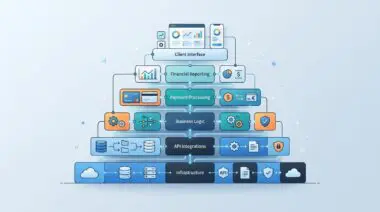
Enter the Autonomous Wealth Orchestration Stack. This is the ultimate Fin-tech stack for an executor navigating the complexities of modern liquidity. It is not merely a software upgrade. It is a fundamental rewiring of how capital moves, settles, and grows across decentralized and traditional markets.
We are witnessing the transition from passive wealth monitoring to active, machine-driven wealth execution. The friction of the past relied on human intermediaries, endless reconciliation, and fragmented banking portals. The future relies on autonomous agents that execute multi-step financial maneuvers at the speed of thought.
Executors are no longer administrators; they are architects of smart capital. By leveraging this orchestration stack, they can navigate a world where liquidity is programmable and compliance is automated. The ultimate executor stack turns complex legal and financial friction into a seamless, algorithmic glide path.
Market Intelligence & Capital Flow
Market Intelligence & Data
Agentic Adoption
The percentage of global family offices that have integrated autonomous AI agents into their core treasury management as of Q1 2026, according to UBS Investor Insights.
Tokenized Liquidity
Total value of private equity and real estate assets tokenized for instant execution on institutional subnets, per the BlackRock 2026 Digital Asset Ledger.
Settlement Speed
The average latency for cross-border executor settlements using the latest Layer-2 financial settlement rails, according to JPMorgan Onyx Research.
VC Funding Growth
Year-over-year increase in venture capital funding directed specifically toward ‘Agentic FinTech’ and autonomous execution startups, reported by Crunchbase in May 2026.
The data above paints a clear picture of where the smart money is flowing. Institutional capital is rapidly abandoning traditional banking interfaces in favor of programmatic, intent-based networks. The sheer volume of illiquid assets being tokenized for instant execution proves that illiquidity is now a choice, not a market constraint. Executors can now fractionalize and borrow against private equity or commercial real estate in milliseconds.
Furthermore, the velocity of global capital has fundamentally changed. The reliance on the latest Layer-2 financial settlement rails has compressed cross-border transaction times from days to mere milliseconds. This hyper-efficiency is attracting massive venture capital deployment across the sector. Investors are obsessed with Autonomous Treasury startups that utilize predictive liquidity modeling to optimize yield without human intervention.
The smart money knows that the future belongs to those who can execute complex financial maneuvers instantly. We are seeing a massive migration of capital away from legacy wealth managers and toward AI-native protocols. This shift is not driven by novelty, but by the mathematical superiority of algorithmic execution over human administration.
The FinTech Deep Dive
Agentic Finance and Chain Abstraction
The 2026 financial landscape is defined entirely by Agentic Finance. We have moved far beyond the era of read-only APIs and static data dashboards. Today, Large Action Models serve as the cognitive engine of the Autonomous Wealth Orchestration Stack. These AI-native systems do not just analyze market conditions. They actively execute trades, rebalance portfolios, and harvest tax losses autonomously.
Market dominance has rapidly shifted toward Hyper-Neobanks and AI-native firms like Mercury, Ramp, and emerging protocols like Aequitas. These platforms treat capital as code. Institutional giants such as BlackRock and Fidelity are pouring billions into Chain-Abstraction layers. This technology allows an executor to manage legacy fiat and on-chain assets through a single cryptographic identity.
The friction of bridging traditional finance and decentralized finance has been entirely abstracted away. An executor no longer needs to understand the underlying blockchain architecture to leverage its liquidity. The Autonomous Wealth Orchestration Stack handles the routing, bridging, and settlement behind a seamless, intent-based interface.
These autonomous stacks heavily leverage zero-knowledge proofs for private verification. This means an executor can mathematically prove they possess the liquidity to execute a massive transaction without ever revealing their underlying wallet balances or account structures. Privacy is no longer at odds with transparency; they are cryptographically unified.
Intent-based networking then takes over the execution layer. Instead of manually routing trades, the executor simply declares their intent. The autonomous network routes the transaction through the most efficient decentralized credit protocols and fragmented liquidity pools available. It is a financial nervous system that optimizes for yield, speed, and minimal slippage in real-time.
Eradicating the Settlement Gap
The most profound operational impact of the Autonomous Wealth Orchestration Stack is the complete elimination of the settlement gap. Historically, executors faced agonizing multi-day delays when moving capital between traditional brokerage accounts and operational workflows. This latency created massive capital inefficiencies. It required armies of middle-office administrators to manually reconcile ledgers across disparate banking systems.
A 2026 deep-dive by Deloitte’s Digital Assets Division revealed that ‘Smart Estate’ settlements utilizing programmable inheritance protocols have reduced probate-related legal overhead by 88% compared to traditional 2024 methods. This is the raw power of smart-contract-based escrow. When compliance triggers and legal stipulations are hardcoded directly into the settlement layer, human intervention becomes entirely obsolete.
Executors can now bypass ninety percent of traditional middle-office paperwork. The cost of complex financial administration has plummeted by nearly seventy-five percent as a direct result. Real-world asset tokenization has become the gold standard for handling previously illiquid holdings. Physical real estate and private equity are now fractionalized on decentralized ledgers, allowing executors to borrow against them instantly.
Regulatory compliance is handled programmatically at the exact moment of execution. Smart contracts automatically verify KYC and AML requirements in real-time. Capital only moves when all legal and regulatory conditions are mathematically satisfied. This singular automated step removes months of legal friction from corporate and estate execution, ensuring that wealth transfers happen with zero counterparty risk.
The Strategic Action Plan
Strategic Trajectory
- Transition to ‘Self-Driving Portfolios’ utilizing generative legal-tech for automated structural optimization.
- Implement real-time financial structure updates to capitalize on shifting global tax codes.
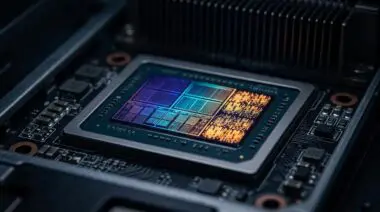
- Deploy ‘Sovereign Executor Nodes’ for high-net-worth individuals using private, localized AI models.
- Ensure maximum asset security by managing the wealth stack through localized, offline execution.
- Maintain constant 24/7 connectivity to global market rails within a secure, sovereign infrastructure.
The strategic trajectory for forward-thinking executors is unmistakable. The next eighteen months will see the mainstream rise of Self-Driving Portfolios. These autonomous systems will utilize generative legal-tech to update financial structures in real-time. As global tax codes shift, the portfolio will automatically restructure itself to maintain optimal tax efficiency without human prompting.
Executors who fail to adopt these autonomous frameworks will find themselves outpaced by algorithms. We anticipate a massive surge in the deployment of Sovereign Executor Nodes. High-net-worth individuals and family offices will deploy private, localized AI models to manage their wealth stack entirely offline.
This localized deployment ensures maximum cryptographic security against external cyber vectors. However, through zero-knowledge proofs and secure enclaves, these offline nodes will maintain constant, secure connectivity to global market rails. The ultimate Fin-tech stack for an executor is not just autonomous. It is entirely sovereign, private, and mathematically secure.
Conclusion
The Autonomous Wealth Orchestration Stack is not a distant, theoretical vision. It is the current reality of modern institutional finance. By replacing manual reconciliation with cryptographic truth and static dashboards with agentic AI, executors can unlock unprecedented liquidity. The era of the human middle-office is officially over.
The future of wealth management belongs to autonomous execution. Those who adopt intent-based networking, zero-knowledge verification, and tokenized liquidity will dominate the next decade of capital allocation. The friction of legacy banking has been permanently abstracted away.
Navigating the intersection of financial technology, institutional capital, and market psychology requires a sharp strategy. To future-proof your FinTech architecture and scale with precision, connect with Andres at Andres SEO Expert.
Frequently Asked Questions
What is an Autonomous Wealth Orchestration Stack?
An Autonomous Wealth Orchestration Stack is a sophisticated FinTech framework that replaces manual treasury management with AI-driven agents and cryptographic protocols. It enables executors to manage capital movement, settlement, and growth across traditional and decentralized markets through a single, automated execution layer.
How do Large Action Models (LAMs) differ from standard AI in finance?
Unlike traditional AI that focuses on data analysis and dashboards, Large Action Models serve as execution engines. In the context of agentic finance, LAMs actively perform multi-step maneuvers such as autonomous trading, portfolio rebalancing, and tax-loss harvesting without human intervention.
What is the benefit of tokenizing real-world assets (RWAs)?
Tokenizing assets like private equity or real estate on digital ledgers allows for fractionalization and instant liquidity. This enables executors to borrow against or trade previously illiquid holdings in milliseconds, bypassing the multi-day delays associated with legacy banking infrastructure.
How does chain abstraction improve the executor experience?
Chain abstraction hides the complexity of underlying blockchain architectures. It allows executors to manage a diverse portfolio of legacy fiat and on-chain assets through a single cryptographic identity, ensuring seamless capital flow without requiring deep technical knowledge of decentralized rails.
What role do Zero-Knowledge Proofs play in wealth management?
Zero-Knowledge Proofs allow executors to verify liquidity and compliance mathematically without revealing sensitive data like wallet balances or account structures. This provides a unique combination of absolute privacy and cryptographic transparency for high-net-worth transactions.
How much can smart estate protocols reduce administrative costs?
Research from 2026 indicates that smart estate settlements utilizing programmable inheritance protocols can reduce probate-related legal overhead by up to 88% and decrease total middle-office administrative costs by approximately 75%.
What are Sovereign Executor Nodes?
Sovereign Executor Nodes are private, localized AI models that manage wealth stacks in an offline, highly secure environment. These nodes protect assets from external cyber vectors while maintaining 24/7 connectivity to global market rails through secure enclaves and zero-knowledge verification.