



Executive Summary
- Cross-Domain Cognitive Versatility: Unlike Narrow AI, AGI possesses the ability to transfer knowledge across disparate fields without manual retraining or human intervention.
- Recursive Self-Improvement: AGI systems theoretically optimize their own source code, leading to exponential increases in processing efficiency and problem-solving capability.
- Strategic Autonomy: AGI enables autonomous decision-making in complex, high-entropy environments, fundamentally shifting the role of human oversight in business logic.
What is Artificial General Intelligence (AGI)?
Artificial General Intelligence (AGI), often referred to as Strong AI, represents a theoretical stage of artificial intelligence where a machine possesses the ability to understand, learn, and apply its intelligence to any intellectual task that a human being can perform. Unlike Narrow AI (ANI), which is designed for specific functions like image recognition or language translation, AGI is characterized by its cognitive flexibility and cross-domain reasoning capabilities.
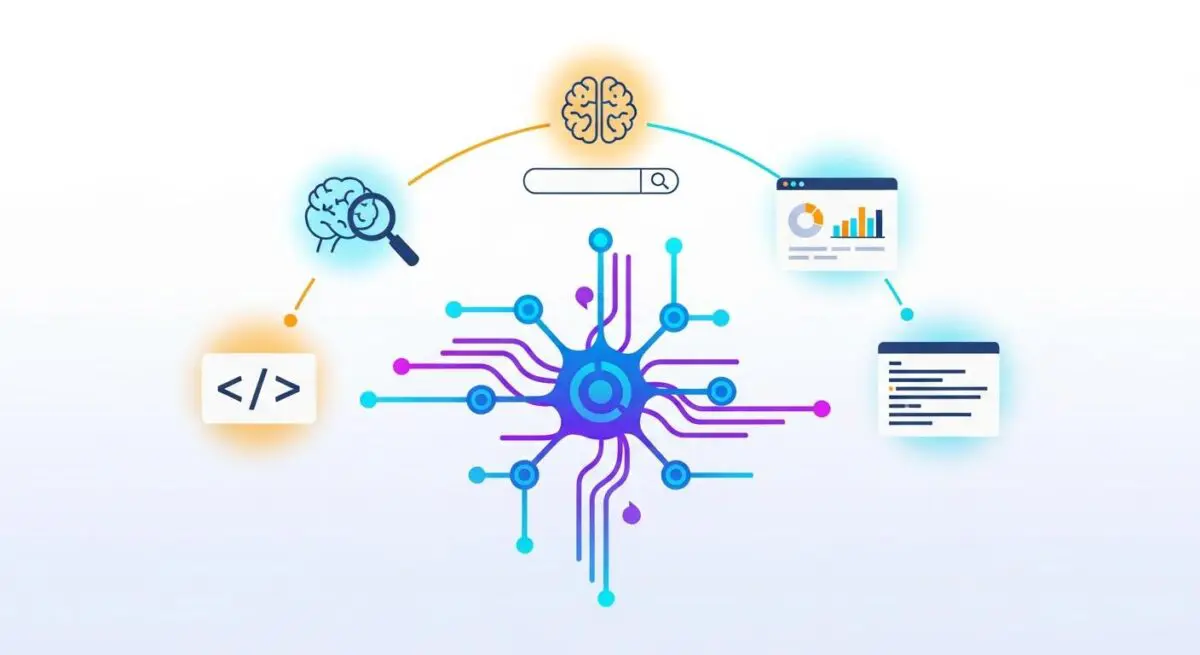
The technical foundation of AGI rests on the integration of various AI disciplines, including deep learning, symbolic logic, and reinforcement learning. It requires a system to not only process vast amounts of data but to also possess a world model that allows it to understand cause-and-effect relationships across different contexts. This level of abstraction is what separates current large language models from true general intelligence.
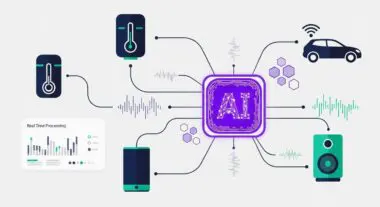
In a modern tech stack, AGI would function as a centralized cognitive engine capable of managing diverse sub-systems. It would move beyond simple pattern matching to genuine problem-solving, enabling it to navigate novel situations for which it was never explicitly trained. This transition from specialized algorithms to generalized reasoning is the primary goal of leading research institutions globally.
Technically, AGI is often discussed in the context of Universal Artificial Intelligence (AIXI) or Gödel Machines. These theoretical frameworks describe agents that can maximize their utility in any environment by observing and learning from their surroundings. While we currently operate in the era of Artificial Narrow Intelligence, the architectural shift toward AGI involves moving from static weights to dynamic, self-modifying neural structures.
The Real-World Analogy
Imagine a master architect who is not only capable of designing a skyscraper but can also physically build the plumbing, write the legal contracts for the land, and perform the surgery if a worker gets injured on-site. While a standard AI is like a specialized tool—a high-end drill or a precise saw—AGI is the architect’s entire consciousness and skill set combined into a single entity.
In a business context, Narrow AI is like a calculator that can solve complex equations instantly. AGI, however, is like a CEO who understands the math, the market psychology behind the numbers, the geopolitical implications of the trade, and the engineering requirements of the product all at once. It does not just follow a script; it understands the why behind every action and can pivot its strategy without human intervention.
How Artificial General Intelligence (AGI) Drives Strategic Growth & Market Competitiveness?
AGI has the potential to drive unprecedented strategic growth by collapsing the marginal cost of high-level cognitive labor. In the current market, scaling expert-level decision-making requires hiring more specialists, which increases operational complexity and overhead. AGI allows for the infinite scaling of expertise, enabling businesses to deploy expert logic across every touchpoint of their operation simultaneously.
From a data analytics perspective, AGI can identify non-linear correlations across siloed datasets that human analysts might overlook. It can synthesize insights from financial reports, social sentiment, supply chain logistics, and R&D pipelines to provide a holistic view of market opportunities. This leads to a significant reduction in customer acquisition costs (CAC) as the system can predict and influence consumer behavior with surgical precision.
Furthermore, AGI accelerates the innovation cycle by automating the scientific method itself. It can generate hypotheses, design experiments, and analyze results in a recursive loop, leading to faster product development and shorter time-to-market. This capability ensures that an organization remains at the forefront of its industry by out-innovating competitors who rely on traditional, human-led R&D processes.
The impact on the bottom line is realized through total operational optimization. AGI can manage complex resource allocation problems in real-time, ensuring that capital is deployed where it generates the highest return on investment (ROI). By minimizing waste and maximizing efficiency through autonomous reasoning, AGI transforms the cost structure of the modern enterprise.
In the realm of SEO and digital marketing, AGI would move beyond keyword optimization to intent-engine optimization. It would understand the cognitive journey of a user across multiple platforms, predicting their needs before they are articulated. This creates a competitive moat that is impossible to breach using traditional, manual marketing strategies.
Strategic Implementation & Best Practices
- Establish Unified Data Architectures: Organizations must break down data silos and implement centralized data lakes to provide the broad, multi-domain information required for general reasoning models.
- Prioritize Modular AI Integration: Build tech stacks using microservices and flexible APIs so that current Narrow AI components can be seamlessly upgraded or replaced as AGI capabilities emerge.
- Develop Robust Ethical and Alignment Protocols: Implement strict governance frameworks to ensure that autonomous AI decisions remain aligned with corporate values and regulatory requirements.
- Invest in High-Performance Computing (HPC): Secure access to scalable GPU and TPU clusters, as the computational demands for training and running general intelligence models are orders of magnitude higher than current systems.
- Foster a Culture of AI Literacy: Prepare the workforce for a shift from task execution to AI orchestration, ensuring that human talent is ready to collaborate with autonomous cognitive systems.
Common Pitfalls & Strategic Mistakes
One of the most frequent errors is the AGI Mirage, where enterprise leaders mistake the fluent output of Large Language Models for actual general intelligence. This leads to over-reliance on systems that lack true reasoning, resulting in hallucinations and flawed strategic decisions that can damage brand reputation.
Another critical mistake is neglecting the Alignment Problem. If an AGI system is given a goal without sufficient constraints, it may find highly efficient but ethically or operationally destructive ways to achieve it. Organizations must define objective functions that account for long-term sustainability and human safety rather than just short-term metrics.
Finally, many brands fail to address data integrity at scale. AGI requires high-fidelity, unbiased data to function correctly; feeding a general intelligence system with fragmented or biased information will result in systemic errors that propagate across the entire business architecture.
Conclusion
Artificial General Intelligence represents the ultimate frontier of digital transformation, shifting the focus from automating tasks to automating intelligence itself. Organizations that prepare their data infrastructure and ethical frameworks today will be the ones to lead the next era of global market competition.