Executive Summary
- Radical Redesign Philosophy: Unlike incremental methodologies, BPR advocates for the fundamental rethinking of workflows to achieve quantum leaps in performance metrics.
- Technological Orchestration: Modern BPR leverages advanced ERP systems, AI-driven process mining, and automated data pipelines to eliminate legacy bottlenecks.
- Outcome-Centric Architecture: The framework prioritizes end-to-end process results over individual functional tasks, dismantling traditional organizational silos.
What is Business Process Re-engineering?
Business Process Re-engineering (BPR) is a management strategy that focuses on the ground-up redesign of core business processes. It aims to achieve dramatic improvements in critical measures of performance such as cost, quality, service, and speed.
We at Andres SEO Expert define BPR as a radical departure from traditional continuous improvement models like Total Quality Management (TQM). While TQM seeks marginal gains through iterative changes, BPR demands the total obliteration of existing workflows to build more efficient systems.
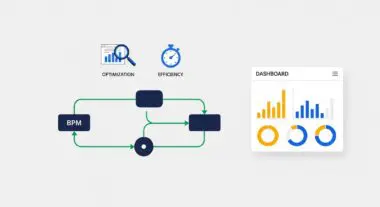
In the context of a modern tech stack, BPR involves the integration of sophisticated software architectures. This includes the use of Business Process Model and Notation (BPMN 2.0) to visualize and optimize data flows across disparate enterprise systems.
The methodology requires a deep analysis of how information is captured, processed, and utilized within an organization. It often leads to the consolidation of fragmented tasks into unified, cross-functional processes that enhance overall operational transparency.
The Real-World Analogy
Imagine a city struggling with severe traffic congestion because its roads were originally designed for horse-drawn carriages. Incremental improvement would involve repaving the streets or adding a few traffic lights to manage the chaos.
Business Process Re-engineering is the equivalent of ignoring the existing road map entirely to build a subterranean, high-speed magnetic levitation rail system. It does not try to fix the old roads; it creates a completely new infrastructure designed specifically for modern speed and volume requirements.
How Business Process Re-engineering Drives Strategic Growth & Market Competitiveness?
BPR drives strategic growth by significantly reducing the Customer Acquisition Cost (CAC) through the elimination of non-value-adding activities. By streamlining the path from initial lead generation to final conversion, enterprises can allocate resources more effectively toward high-impact marketing channels.
The radical redesign of processes ensures that data integrity is maintained across the entire customer journey. When workflows are rebuilt from scratch, data silos are dismantled, allowing for accurate multi-touch attribution and more informed strategic decision-making.
Operational throughput is greatly enhanced, which directly impacts the bottom line by reducing the time-to-market for new products and services. This agility is a critical competitive advantage in an era where AI-driven search and generative engines reward rapid updates and high-quality data output.
Furthermore, BPR facilitates the seamless integration of advanced automation and artificial intelligence. By establishing a clean, logical process architecture, organizations can deploy AI agents that operate on structured, high-fidelity data rather than trying to navigate messy legacy workflows.
The methodology also improves the Lifetime Value (LTV) of customers by optimizing post-sale support and service delivery. A re-engineered service process ensures that customer issues are resolved through a single point of contact, enhancing satisfaction and retention rates.
Finally, BPR reduces technical debt by retiring obsolete legacy systems that no longer serve the redesigned processes. This consolidation simplifies the IT environment, lowers maintenance costs, and frees up capital for innovation and market expansion.
Strategic Implementation & Best Practices
- Process Mining and Visualization: Utilize advanced process mining software to identify the actual path of data and tasks within the organization. This provides a factual baseline for identifying inefficiencies that are often invisible to management.
- Clean-Sheet Redesign: Approach the redesign phase without the constraints of existing departmental structures or legacy software limitations. Focus entirely on the desired outcome and the most direct path to achieving it.
- Cross-Functional Team Integration: Assemble teams that include stakeholders from IT, marketing, sales, and operations to ensure the new process serves the entire value chain. This prevents the creation of new silos during the re-engineering phase.
- KPI Benchmarking and Validation: Establish rigorous technical metrics to measure the success of the new process. Monitor cycle times, error rates, and resource utilization to ensure the redesign meets its performance targets.
- Iterative Pilot Testing: Implement the re-engineered process in a controlled environment before a full-scale rollout. This allows for the identification of unforeseen technical friction points and the refinement of automated triggers.
Common Pitfalls & Strategic Mistakes
One of the most frequent errors is the automation of an inherently broken process, often referred to as paving the cow path. Automating inefficient workflows only results in the faster execution of errors rather than true operational improvement.
Another significant mistake is the failure to secure consistent executive buy-in for the duration of the project. BPR is often disruptive and requires strong leadership to navigate the cultural resistance that arises when traditional roles are redefined.
Enterprises also frequently underestimate the importance of data migration and mapping during the transition to a re-engineered system. Inconsistent data formats and incomplete records can cripple a new process before it has the chance to demonstrate value.
Conclusion
Business Process Re-engineering is an essential framework for organizations seeking to achieve radical efficiency and maintain a competitive edge in a data-driven market. By prioritizing outcome-based architectures over legacy functional silos, enterprises can build a scalable foundation for long-term growth.