Key Points
- Telemetry Sprawl Management: The exponential growth of AI-generated code requires Intelligent Data Tiering to prevent cloud cost overruns and severe alert fatigue.
- Autonomous Self-Healing: Modern platforms are evolving beyond reactive dashboards to utilize Agentic AI for executing code-level remediation protocols in real-time.
- Predictive Business Observability: The next frontier directly correlates technical telemetry with real-time revenue impact and user sentiment to optimize enterprise resource consumption.
Table of Contents
The Core Friction of Telemetry Sprawl
According to recent industry market guides, a vast majority of global enterprises are transitioning to AI-driven SRE tools. They must manage a massive surge in telemetry data produced by autonomous AI agents. This influx has created a severe market friction known as telemetry sprawl.
The explosion of AI-generated code and microservices has made traditional data ingestion costs economically unsustainable. Application Performance Monitoring and Full-Stack Observability are no longer just dashboards for IT teams to monitor uptime. They have evolved into critical business entities that dictate operational survival and enterprise valuation.
Legacy reactive monitoring systems are completely failing under the immense weight of modern cloud-native architectures. To survive this paradigm shift, organizations must move toward autonomous observability to maintain their competitive edge. This requires deploying intelligent systems that do much more than simply trigger alerts.
The modern enterprise demands proactive, self-healing infrastructure. These advanced systems must resolve bottlenecks long before they impact end-user sentiment.
Market Intelligence and Smart Capital
Market Intelligence & Data
Global Market Valuation
The global observability tool market is valued at approximately $4.35 billion as of mid-2026, driven by a 16.5% CAGR in cloud-native adoption, according to Business Research Insights.
Budget Resilience
LogicMonitor’s 2026 trend report indicates that 96% of IT organizations are maintaining or increasing their observability spending despite broader macroeconomic volatility.
Downtime Reduction
Data from Gartner reveals that enterprises adopting advanced APM platforms with integrated AIOps see an average 30% reduction in unplanned downtime.
Median Outage Impact
According to Mordor Intelligence, the median annual cost of system outages reached $19.07 million in 2026, serving as the primary catalyst for proactive observability investments.
The financial data reveals a clear narrative about exactly where smart money is flowing within the modern observability sector. Consolidation remains a primary market force, headlined by massive integrations among industry giants. Major tech corporations are aggressively expanding their platforms with generative AI observability features to capture lucrative enterprise market share.
However, top-tier venture capital firms are placing heavy bets on disruptive startups. These agile innovators focus heavily on predictive observability and cost-transparent native architectures. This capital movement indicates a clear market demand for solutions that prevent runaway cloud costs while maximizing data utility.
We are simultaneously witnessing a brutal clearing event where horizontal AI tools fail to deliver actionable insights. In their place, vertical AI observability solutions tailored for high-stakes industries are commanding premium market valuations. Smart money recognizes that generalized monitoring is dead, making deep, context-aware telemetry the new enterprise standard.
The Strategic Deep Dive into Autonomous Observability
The aggressive deployment of Agentic AI is fundamentally changing how engineering teams interact with their core infrastructure. These advanced systems move far beyond simple alerting to execute self-healing protocols directly at the code level. Organizations are increasingly adopting advanced packet filter technology for zero-overhead, kernel-level instrumentation.
This powerful technology allows for deep visibility into distributed microservices and LLM-integrated pipelines. It achieves this without the severe performance penalties associated with legacy sidecar agents. This architectural shift is rapidly turning raw telemetry data into highly actionable intelligence through sophisticated decision engines.
These engines automate complex root-cause analysis in real-time. As a result, they drastically reduce the cognitive load on exhausted engineering teams.
Overcoming the Insight Gap
Current APM solutions are actively solving telemetry sprawl by introducing intelligent data tiering and real-time token auditing. These crucial features act as a financial safeguard to prevent runaway cloud costs and mitigate severe operational alert fatigue. Furthermore, modern platforms are aggressively addressing the insight gap that has historically plagued frustrated IT leaders.
A recent deep-dive report from Datadog reveals that nearly 60% of production failures in AI-powered applications are caused by model capacity limits rather than code errors. This specific vulnerability is prompting a majority of enterprise CTOs to implement APM-based throttling to protect system stability.
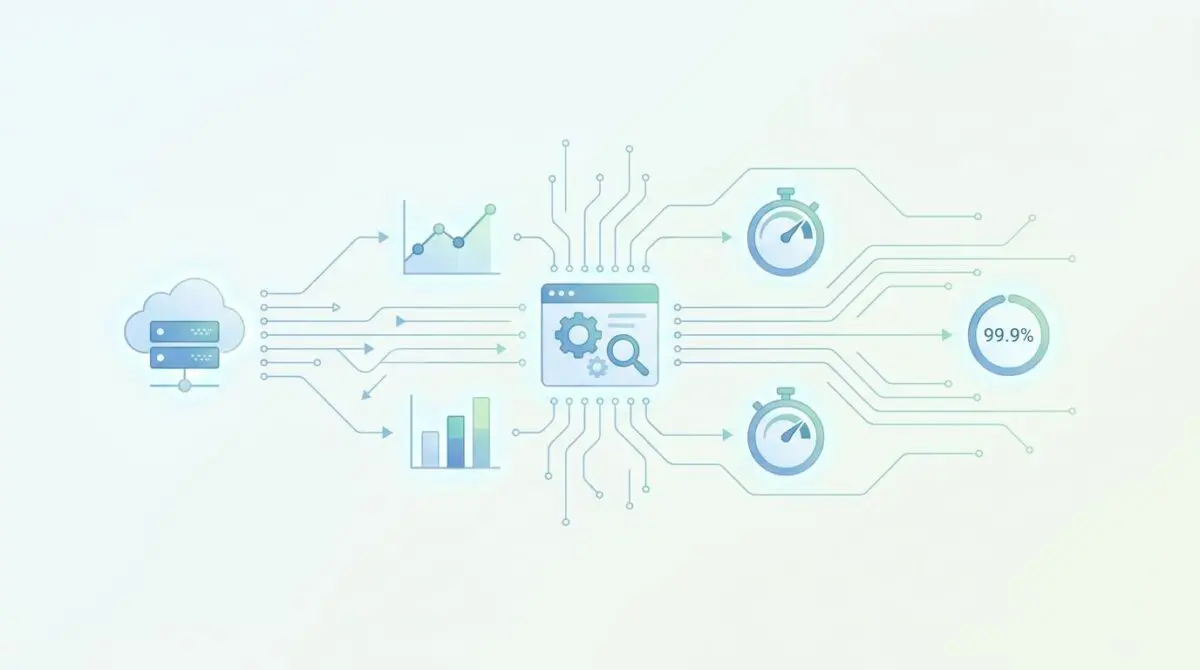
By unifying logs, metrics, and traces into a single contextualized graph, these platforms ensure that enterprise data is actually actionable.
AI-Driven Triage and MTTR
The unprecedented ability to automate the war room triage process is a massive competitive advantage for scaling businesses. When a critical system fails, the exact speed of resolution directly impacts immediate revenue and long-term brand reputation. Modern observability platforms leverage decision intelligence to instantly pinpoint the exact microservice or database query causing the friction.
By automating the war room triage process, modern platforms are helping organizations achieve an average 30% reduction in unplanned downtime. This dramatic reduction in mean time to resolution transforms IT from a traditional cost center into a highly resilient business driver.
The strategic focus has entirely shifted from finding the needle in the haystack to burning down the haystack entirely.
The Executive Action Plan for a Silicon Workforce
Strategic Trajectory
- Transition to a ‘Silicon Workforce’ model using autonomous SRE agents to manage the full infrastructure lifecycle.
- Implement ‘Predictive Business Observability’ to correlate performance metrics with real-time revenue and user sentiment.
- Architect ‘invisible’ observability protocols embedded directly at the compiler level.
- Enable self-adjusting application architectures that optimize resource consumption based on predicted traffic patterns.
- Operationalize carbon-aware sustainability mandates through automated architectural resource management.
The absolute next evolution for visionary founders and chief executives is the rapid adoption of a silicon workforce. This represents a highly efficient hybrid human-AI operation where autonomous site reliability engineering agents manage the entire infrastructure lifecycle.
Human engineers will permanently pivot from manual debugging to designing the strategic parameters that govern these powerful AI agents. The entire tech industry is shifting completely toward predictive business observability.
Critical performance metrics will no longer be isolated in technical silos hidden away from the boardroom. Instead, they will be directly correlated to real-time revenue impact, customer churn predictions, and overall brand user sentiment.
Conclusion and the Future of Invisible Observability
Forward-thinking corporate leaders are actively preparing for a near future where observability is completely invisible to the human eye. Telemetry protocols will be embedded directly at the compiler level, enabling applications to automatically adjust their own resource consumption in real-time.
This dynamic self-adjusting architecture will scale seamlessly based on predicted traffic patterns and strict carbon-aware sustainability mandates. The agile organizations that master this complex transition will operate with unprecedented financial efficiency and market agility.
Conversely, those clinging to reactive legacy dashboards will find themselves overwhelmed by massive data ingestion costs and crippling system fragility. The era of autonomous, self-healing enterprise infrastructure has officially arrived.
Navigating the intersection of technology, capital, and market psychology requires a sharp strategy. To future-proof your business architecture and scale with precision, connect with Andres at Andres SEO Expert.
Frequently Asked Questions
What is telemetry sprawl in modern observability?
Telemetry sprawl refers to the massive 400% surge in data produced by autonomous AI agents and microservices. This influx makes traditional data ingestion costs economically unsustainable, forcing enterprises to transition from reactive monitoring to AI-driven Site Reliability Engineering (SRE) tools.
How does autonomous observability reduce enterprise downtime?
Autonomous observability platforms use AI-driven triage and decision intelligence to automate root-cause analysis in real-time. This technology helps organizations achieve an average 30% reduction in unplanned downtime by resolving system bottlenecks before they impact end-user sentiment.
What are the financial costs of system outages in 2026?
By mid-2026, the median annual cost of system outages reached $19.07 million. This significant financial impact serves as the primary catalyst for the 96% of IT organizations that are maintaining or increasing their investments in proactive observability platforms.
What causes the majority of production failures in AI-powered applications?
According to 2026 industry data, nearly 60% of production failures in AI applications are caused by model capacity limits rather than traditional code errors. This has led many Fortune 500 CTOs to implement APM-based LLM throttling and real-time token auditing to protect system stability.
What is a Silicon Workforce in the context of SRE?
A Silicon Workforce is a hybrid operational model where autonomous SRE agents manage the full infrastructure lifecycle. In this model, human engineers pivot from manual debugging to designing the strategic parameters and governance that oversee self-healing AI systems.
What is invisible observability and how does it work?
Invisible observability involves embedding telemetry protocols directly at the compiler level. This allows applications to automatically adjust their own resource consumption in real-time based on predicted traffic patterns and carbon-aware sustainability mandates without manual intervention.