Key Points
- Zero-Copy Architecture: Modern systems eliminate batch delays by querying data directly from warehouses like Snowflake without duplication.
- Autonomous Agentification: AI agents now handle the heavy lifting of data cleaning and micro-segmentation without requiring manual prompts.
- Generative Engine Optimization: Future segmentation strategies must target AI shopping assistants rather than traditional human website browsing.
Table of Contents
- The Silent Cost of Disconnected Audiences
- The Real Value Hiding in Your Telemetry
- Closing the Brand Reality Gap
- The Rise of Autonomous Data Agents
- Translating Petabytes into Immediate Action
- Proving the ROI of Intelligent Profiling
- Escaping the Static Persona Trap
- Preparing for the Generative Commerce Era
- Predicting the Next Major Life Event
The Silent Cost of Disconnected Audiences
Picture this scenario. Your marketing team just launched a massive, six-figure campaign targeting your highest-value buyers. You then realize the audience list was pulled from a three-week-old spreadsheet.
While your team was busy manually exporting and filtering rows, your customers’ actual preferences shifted. This renders the entire effort completely tone-deaf. It is the harsh reality for organizations trapped in outdated, manual workflows that cannot keep pace with modern consumer velocity.
The root of this chaos is the dark data paradox. Global data volumes are projected to reach a staggering 173 zettabytes by late 2025. However, approximately 90% of enterprise-generated data remains unstructured and completely unused.
This massive blind spot causes customer experience quality to drop to record lows. Brands are simply failing to leverage the telemetry they already own.
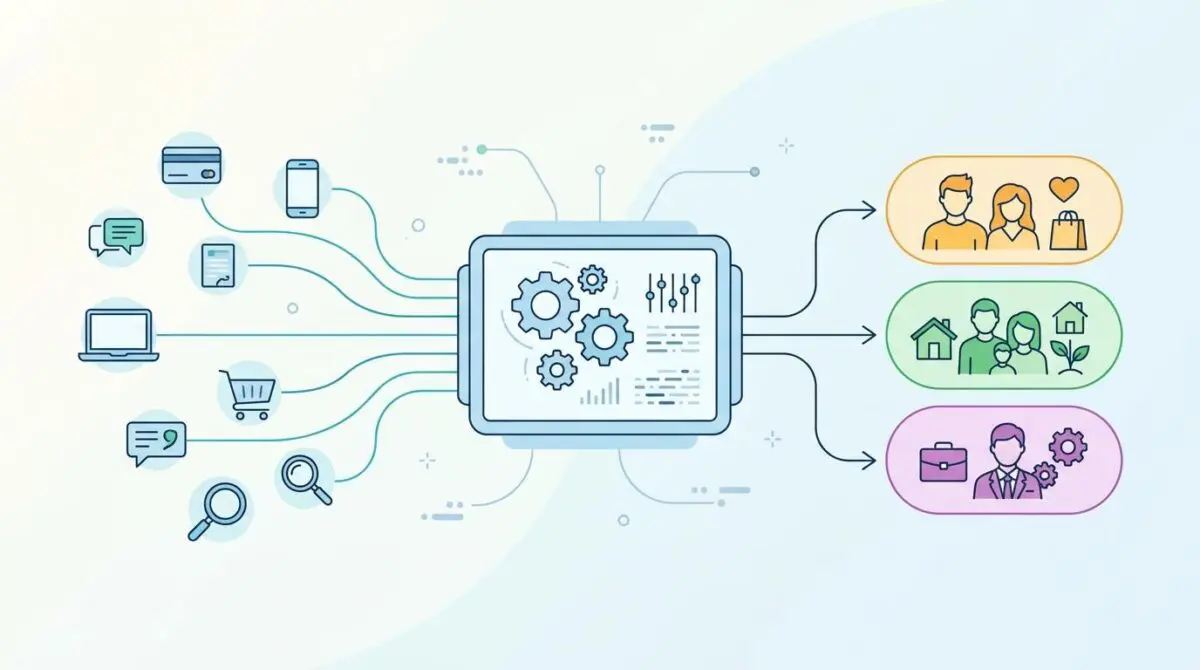
The ultimate solution to this operational nightmare is adopting Agentic Customer Data Platforms (CDPs). These intelligent architectures do much more than just store information.
They actively deploy autonomous agents to clean, organize, and activate your data in real time. By modernizing your stack with an Agentic CDP, you transform a chaotic sea of raw metrics into a precise, automated revenue engine.
The Real Value Hiding in Your Telemetry
Market Intelligence & Data
Global Market Valuation
According to 2026 projections by MarketsandMarkets, the global big data market is reaching this value as enterprise demand for advanced analytics peaks.
The Demographic Trap
Research from Affinsy in 2026 indicates that relying solely on demographic data for segmentation reduces campaign effectiveness by this margin compared to behavioral methods.
Unified Experience Growth
A 2025 Forrester report reveals that companies effectively aligning brand promise with cross-segment experiences unlock revenue growth up to this multiplier.
The Dark Data Problem
According to 2026 industry insights from Fortune Business Insights, an estimated 90% of enterprise-generated data remains unused or improperly utilized in segmentation efforts.
The staggering USD 324.59 billion valuation of the global big data market by 2026 is not just a vanity metric. It represents a massive shift in how enterprises prioritize advanced analytics over gut-feeling marketing.
Companies are realizing that scaling operations requires more than just collecting information. It demands infrastructure capable of processing continuous streams of user behavior.
Meanwhile, the 30% drop in campaign effectiveness caused by the demographic trap highlights a critical flaw in legacy marketing. Relying solely on a customer’s age or zip code is no longer enough to drive meaningful conversions.
Modern consumers expect brands to understand their specific purchasing habits and real-time intent. This makes behavioral segmentation an absolute necessity for survival.
Aligning your brand promise with these precise behavioral segments can unlock up to 3.5x in revenue growth. However, failing to deliver this unified experience carries severe consequences.
In fact, North American consumer perceptions of CX quality hit an all-time low. Organizations are clearly struggling to connect their executive strategies with actual customer touchpoints.
The root cause of this disconnect is the staggering volume of ignored telemetry within enterprise systems. Industry research shows that 90% of enterprise-generated data remains unstructured and entirely unused in daily operations.
This dark data represents a massive missed opportunity. It leaves valuable insights buried in silos while teams guess at what their customers actually want.
Closing the Brand Reality Gap
The disparity between intended brand experience and actual customer perception is widening at an alarming rate. This disconnect has led to a 25% decline in brand loyalty across major US sectors.
Companies are finding that their legacy systems simply cannot keep up with the speed of modern consumer behavior. To combat this, enterprises are aggressively moving away from outdated batch-based segments.
Instead, they are adopting zero-copy architectures within robust data warehouses like Snowflake and Databricks. This approach allows marketing platforms to query live data directly without moving or duplicating it across servers.
By eliminating the need to sync massive databases, organizations drastically reduce latency. Marketers can now trigger campaigns based on real-time actions rather than waiting for overnight batch updates.
This architectural shift is the first critical step in closing the reality gap.
The Rise of Autonomous Data Agents

The year 2026 marks a definitive era of agentification in enterprise software. A major shift identified recently is the bifurcation of the CDP market into platformization and agentification.
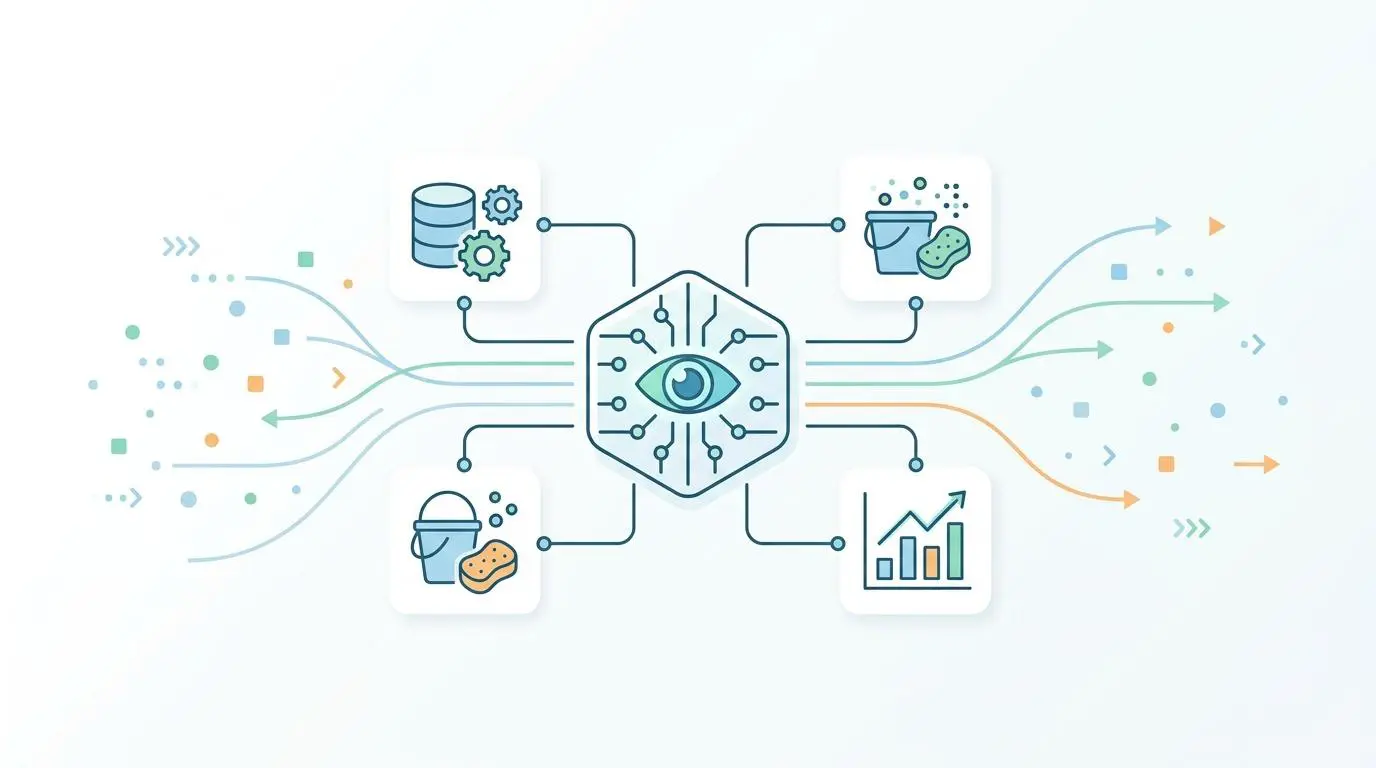
Leading vendors now provide autonomous AI agents that handle cross-functional orchestration without human intervention. Manual data preparation currently consumes over 60% of data scientist workloads.
This massive operational bottleneck stalls the execution of personalized campaigns and drains expensive technical resources. AI is no longer just a trendy feature. It is baseline infrastructure required for survival.
Agentic CDPs like Salesforce and Hightouch are leading this charge. These systems deploy AI agents to autonomously clean data, detect pipeline anomalies, and build micro-segments.
They operate continuously in the background. This completely removes the need for manual prompt engineering from your team.
Translating Petabytes into Immediate Action
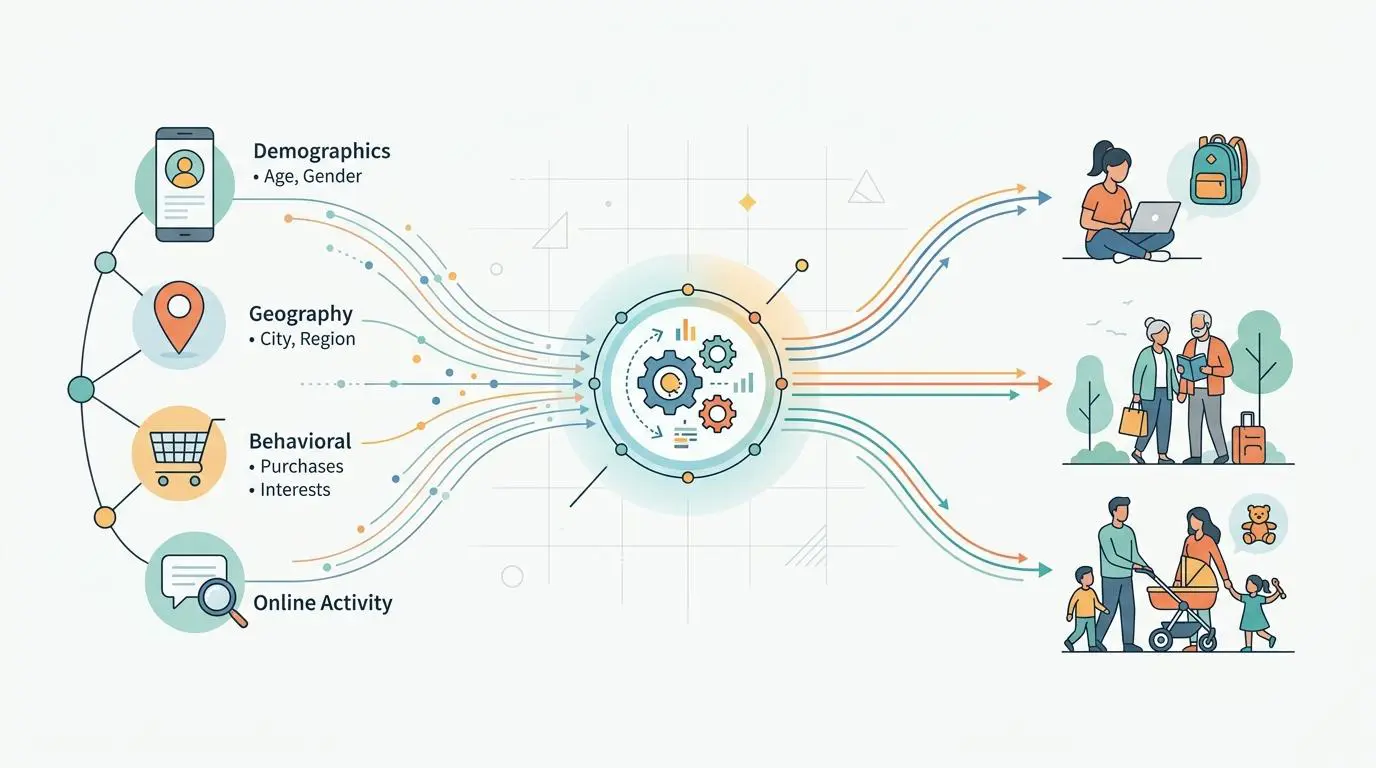
Platforms are rapidly moving away from the outdated concept of a static single view project. The new standard is building connected data models that adapt instantly to incoming telemetry.
Traditional batch processing creates a multi-hour delay between a customer action and a brand response. This delay causes businesses to completely miss the critical window of buyer intent.
To solve this, modern tools utilize real-time streaming analytics to process billions of events daily. They translate petabytes of raw telemetry into immediate next-best-action triggers.
This means a customer adding an item to their cart and abandoning it can receive a highly personalized intervention within seconds.
The architecture seamlessly connects behavioral triggers to automated marketing workflows. It turns previously overwhelming volumes of big data into a precise, automated revenue engine.
Proving the ROI of Intelligent Profiling

Financial leaders are scrutinizing tech budgets closer than ever before. CFOs are increasingly pausing capital spending on experimental AI projects that lack clear business cases.
They are demanding undeniable proof of impact on revenue cycles and customer lifetime value. Fortunately, the financial impact of intelligent profiling is highly measurable.
Companies leveraging AI across at least three core marketing functions report a 32% increase in overall ROI. The ability to target the right user at the exact right moment dramatically lowers customer acquisition costs.
Netflix remains a gold standard in this arena. They utilize advanced segmentation analytics to save an estimated $1 billion annually in retention costs.
By proving that Agentic CDPs directly reduce churn and increase operational efficiency, technical leaders can easily justify the infrastructure investment.
Escaping the Static Persona Trap
A primary industry misconception is that demographic data like age and location is sufficient for audience targeting. Modern research shows that relying on these basic identifiers reduces campaign performance significantly.
Over-reliance on static personas leads to a 15% lower engagement rate over time. Customer needs evolve much faster than manual profiles can ever be updated.
Failing to integrate purchase behavior and RFM metrics severely limits your marketing potential. Recency, frequency, and monetary data provide a much more accurate picture of a buyer’s true intent.
Agentic CDPs automatically refresh these behavioral profiles with every new interaction. They ensure that your messaging is always aligned with the user’s current context rather than an outdated demographic assumption.
This dynamic approach completely eliminates the static persona trap.
Preparing for the Generative Commerce Era
The digital market is rapidly shifting toward a new model known as Agentic Commerce. In 2026, AI assistants are becoming the primary shoppers for everyday goods and services.
In fact, these intelligent bots are now consulted by 60% of consumers for initial product research. This means traditional website navigation is being replaced by conversational dialogues.
Old-school cookie-based tracking is rendering itself obsolete in this new ecosystem. Your segmentation strategies must now account for Generative Engine Optimization to influence these AI intermediaries.
Marketers are no longer just segmenting human behaviors. They are segmenting the preferences of AI shopping agents.
Agentic CDPs are uniquely positioned to feed structured, highly relevant data to these external AI systems. This ensures your products remain visible in a world where bots do the buying.
Predicting the Next Major Life Event
By late 2026, standard customer segmentation will evolve into Predictive Life-Event Orchestration. Technologies like federated learning and privacy-safe data clean rooms will allow brands to anticipate major consumer life changes.
Systems will predict events like job shifts or relocations long before they are signaled through direct transactions. This level of foresight requires an incredibly robust, autonomous data foundation.
Businesses that fail to modernize their architecture will be left reacting to past behaviors while competitors anticipate future needs. Embracing Agentic CDPs is the only way to scale this level of predictive personalization securely.
Navigating the intersection of modern technology, software architecture, and business growth requires a sharp strategy. To future-proof your tech stack and scale with precision, connect with Andres at Andres SEO Expert.
Frequently Asked Questions
What is an Agentic CDP and how does it improve data utility?
An Agentic Customer Data Platform (CDP) is an intelligent architecture that uses autonomous AI agents to actively clean, organize, and activate data in real time. Unlike traditional storage-focused systems, it transforms unstructured “Dark Data” into an automated revenue engine by handling orchestration without manual human intervention.
Why is behavioral segmentation more effective than demographic targeting?
Relying solely on demographic data like age or location can reduce campaign effectiveness by 30%. Behavioral segmentation focuses on real-time intent and purchasing habits, which allows brands to align their promise with actual customer touchpoints and unlock up to 3.5x revenue growth.
How does zero-copy architecture impact marketing campaign performance?
Zero-copy architecture allows marketing platforms to query live data directly from warehouses like Snowflake or Databricks without moving or duplicating it. This eliminates the latency of overnight batch updates, enabling marketers to trigger highly personalized interventions within seconds of a customer action.
What is Agentic Commerce and how will it change shopping by 2026?
Agentic Commerce is a model where AI assistants become the primary shoppers for consumers. By 2026, an estimated 60% of consumers will use these bots for product research, shifting marketing priorities from traditional website navigation toward Generative Engine Optimization to influence AI intermediaries.
What is the ROI of implementing AI-driven marketing infrastructure?
Companies that leverage AI across at least three core marketing functions report a 32% increase in overall ROI. Additionally, advanced segmentation can lead to massive operational savings, as demonstrated by Netflix, which saves an estimated $1 billion annually in retention costs.
What is Predictive Life-Event Orchestration?
Predictive Life-Event Orchestration is an advanced segmentation strategy that uses federated learning and privacy-safe data rooms to anticipate major consumer changes, such as job shifts or relocations, before they are signaled through direct transactions, allowing for proactive rather than reactive marketing.