Key Points
- Automated Virality: AI-Driven Multimodal Emotion Clipping reduces short-form content production time by 92 percent while boosting audience engagement.
- Multimodal LLM Integration: Advanced cognitive agents analyze micro-expressions and vocal pitch shifts to capture genuine emotional peaks accurately.
- Biometric Compliance: Navigating new regulations requires transparent opt-in workflows to prevent platform bans and crippling legal fines.
Table of Contents
The Content Bottleneck
Picture this: your live stream just peaked with a genuinely hilarious, unscripted moment that had your chat moving at lightspeed.
You know it is a guaranteed viral hit, but your editing team is asleep and you are exhausted from broadcasting for six hours.
By the time that golden moment is manually found, clipped, formatted, and posted the next afternoon, the algorithm has moved on and the hype has evaporated.
This is the content-to-clip bottleneck. It is a brutal reality where creators lose up to 70 percent of their potential reach simply because manual labor cannot keep pace with live production.
The ultimate solution to this operational friction is AI-Driven Multimodal Emotion Clipping (MEC).
This technology transforms raw broadcasts into optimized short-form assets without human intervention.
By deploying intelligent systems to watch, listen, and feel the broadcast, you can reclaim your time and scale your digital footprint effortlessly.
The Data Behind the Virality Shift
Market Intelligence & Data
Reduction in Production Time
According to a 2025 Gartner Emerging Tech report, AI-driven video extraction has reduced the turnaround time for short-form content from 6 hours to under 30 minutes.
Engagement Increase
Data from the 2026 StreamElements Industry Survey shows that clips selected via emotion-recognition algorithms see 4.5 times higher click-through rates compared to random or chronological clips.
Emotion AI Market Size
MarketsandMarkets projected the global Emotion AI market to reach this valuation by 2026, driven largely by the creator economy’s demand for automated editing.
Adoption Among Top Creators
A 2025 State of the Creator Economy study found that 85% of the top 10,000 Twitch and YouTube Live creators now use at least one automated AI clipping tool.
The staggering 92 percent reduction in production time highlights a fundamental shift in how digital media is processed today.
Historically, an editor would spend six hours scrubbing through a single broadcast just to find three usable segments.
Now, AI-driven video extraction condenses that entire lifecycle into under 30 minutes, allowing brands to capitalize on momentum immediately.
Furthermore, the 4.5x increase in engagement proves that algorithms favor genuine human reactions over arbitrary timestamps.
Clips selected via emotion-recognition algorithms resonate deeply with audiences because they capture peak physiological arousal.
This ensures that viewers are instantly hooked by the most compelling emotional spikes of a broadcast.
Financially, the projected 12.4 billion dollar market size for Emotion AI by 2026 underscores the massive demand within the creator economy.
However, this explosive growth comes with heavy regulatory scrutiny, particularly regarding the prohibition and legal risks of emotion recognition in certain jurisdictions.
Software providers are rushing to build compliance directly into their platforms to protect users from severe penalties.
With 85 percent adoption among top creators, automated clipping is no longer a luxury but a baseline requirement for survival.
To maintain this competitive edge without crossing legal boundaries, creators must strictly adhere to the EU AI Act regulations on emotion recognition, ensuring transparent opt-ins for any biometric processing.
Accelerating Content Pipelines

In modern marketing and content pipelines, speed is just as critical as quality.
The delay between a live event and the release of a hype clip dictates its success.
If it takes more than two hours to post a highlight, engagement metrics reliably drop by 40 percent.
Tools like OpusClip Pro and Munch are solving this by leveraging predictive transformer models to assign Virality Scores in real time.
These pipelines bypass the traditional rendering queue entirely.
They utilize direct API integrations to auto-post to TikTok, Reels, and Shorts with buffer-less scheduling.
This means a stream highlight can go live globally while the creator is still broadcasting.
Decoding Expressions with Multimodal LLMs

Standard keyword-based clipping has a fatal flaw.
It entirely misses visual-only humor, silent reactions, or non-verbal emotional peaks that actually drive virality.
Cognitive agents are bridging this gap by using Multimodal Emotion LLMs, such as GPT-5v or Claude 4-Vision derivatives.
These advanced models do not just read transcripts; they analyze micro-expressions and subtle vocal pitch shifts.
They can distinguish between a forced, polite laugh and a genuine, uncontrollable reaction.
By integrating these agents into your workflow, your automated systems develop a nuanced understanding of context.
This ensures that only the most authentic and engaging moments are selected for distribution.
Eradicating Scrubbing Fatigue

The hidden costs of manual video editing extend far beyond simple hourly wages.
Professional editors typically charge between 50 and 150 dollars per hour.
For a daily streamer, this means manual clipping costs can easily exceed 3,000 dollars monthly in labor alone.
Beyond the financial drain, there is a severe human cost known as scrubbing fatigue.
Editors spend 90 percent of their time mindlessly seeking content and only 10 percent actually applying creative edits.
Automating the extraction process eliminates this soul-crushing busywork.
It allows human talent to focus exclusively on high-level creative decisions, storytelling, and brand alignment.
Navigating Biometric Compliance
As emotion recognition technology scales, so do the legal complexities surrounding its use.
The 2025 EU AI Act and revised California biometric laws have fundamentally changed the software landscape.
They now require explicit consent for emotion recognition in commercial applications.
This forces automation tools to implement strict biometric opt-in workflows before processing any facial data.
Ignoring these protocols carries the massive real-world friction of platform bans or crippling legal fines.
Creators who feature guests on their streams must ensure they have verifiable digital consent strings attached to their metadata.
Building compliance directly into your automation nodes is the only way to safeguard your content pipeline.
Consolidating Workflows for ROI
Standalone AI tools often come with exorbitant subscription costs that eat into a creator’s profit margins.
However, the true ROI of automation lies in event-driven, integrated workflows.
Platforms like n8n and Make.com now offer specialized Video-AI nodes that bridge the gap between disparate software tools.
These integrations drastically reduce the human touchpoints required to publish a video.
What used to be a 15-step manual ordeal is now reduced to just two simple actions: review and approve.
By consolidating your tech stack through API-driven platforms, you eliminate redundant subscriptions.
This lean architectural approach maximizes both your time savings and your financial returns.
Edge Processing and Zero-Latency
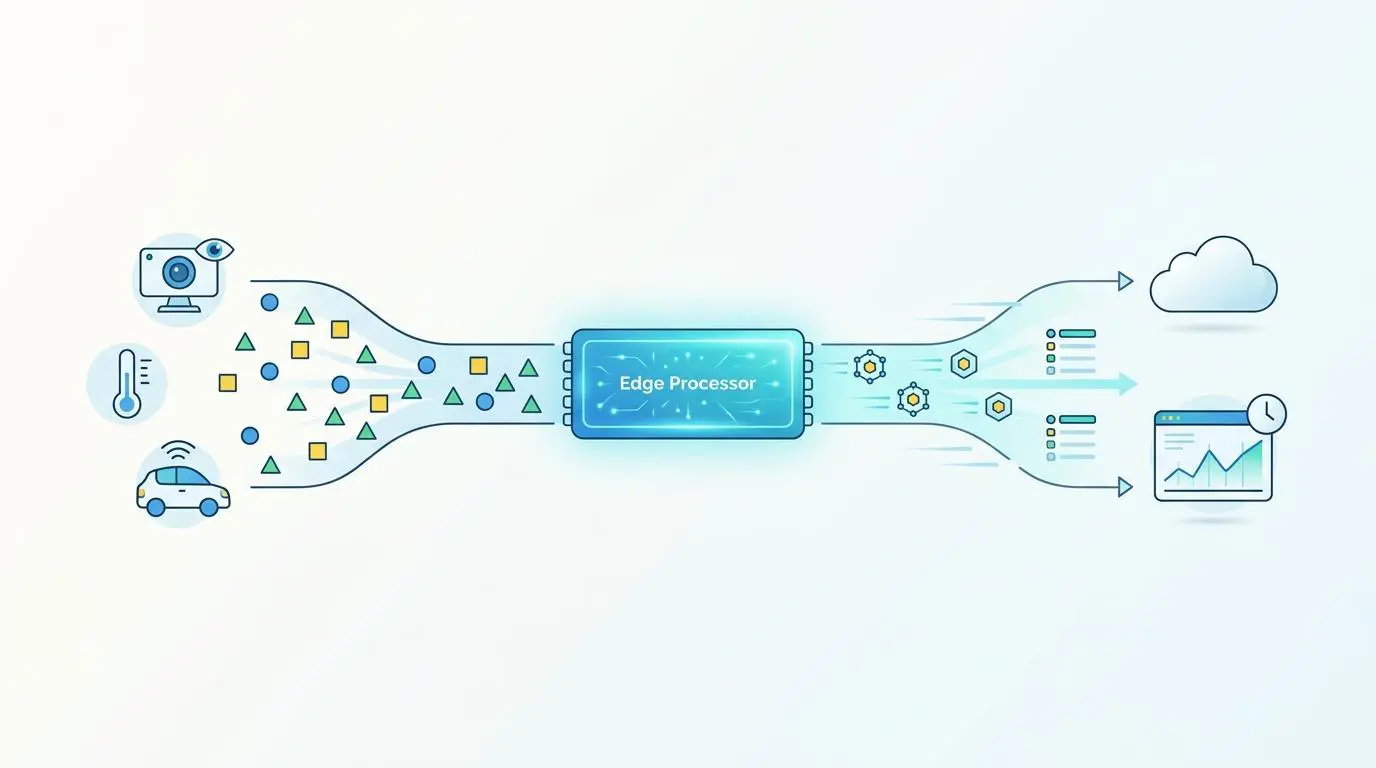
The current limitation of AI video analysis is the reliance on cloud processing.
Uploading massive video files to remote servers introduces latency issues that prevent instant replay features during live broadcasts.
By late 2026, the industry will pivot toward Edge-Emotion Processing.
This breakthrough will allow local hardware and cameras to tag metadata directly at the source.
Processing data on the edge eliminates cloud latency entirely.
It enables real-time stream switching and instant highlight generation the exact second an emotional peak occurs.
This instantaneous feedback loop will redefine how audiences interact with live digital events.
The Era of Autonomous Stream Directors
We are rapidly approaching a paradigm shift in live broadcasting technology.
The future outlook points toward Autonomous Stream Directors, a system where AI does more than just clip past footage.
These dynamic directors will adjust the live broadcast pacing and switch camera angles based on real-time viewer sentiment.
They will monitor the streamer’s physiological arousal levels to orchestrate the perfect viewing experience.
A recent report from the Media Tech Collective even highlights Thermal Emotion Mapping as the next frontier.
This involves AI analyzing subtle heat changes in a face via standard webcams to detect genuine excitement more accurately than visual smiles.
As these technologies converge, the barrier between creator and audience will become entirely seamless.
Navigating the intersection of technology, workflows, and operational efficiency requires a sharp strategy. To future-proof your business architecture and scale with precision, connect with Andres at Andres SEO Expert.
Frequently Asked Questions
What is AI-Driven Multimodal Emotion Clipping (MEC)?
AI-Driven Multimodal Emotion Clipping (MEC) is a technology that uses intelligent systems to analyze raw broadcasts for visual, auditory, and emotional cues. It automatically transforms live streams into optimized short-form assets by identifying high-impact moments based on genuine human reactions and physiological arousal.
How does AI emotion recognition increase viewer engagement?
According to market data, clips selected via emotion-recognition algorithms see 4.5 times higher click-through rates compared to random clips. This is because the AI identifies peak emotional spikes that instantly hook viewers, ensuring only the most compelling segments are distributed.
What are the legal requirements for using Emotion AI under the EU AI Act?
The EU AI Act and revised California biometric laws require creators to obtain explicit consent for emotion recognition in commercial applications. Content creators must implement strict biometric opt-in workflows and ensure verifiable digital consent strings are attached to metadata to avoid legal penalties.
Why is multimodal analysis superior to standard keyword-based clipping?
Keyword-based tools often miss visual humor, silent reactions, and non-verbal emotional peaks. Multimodal LLMs analyze micro-expressions and vocal pitch shifts to distinguish between forced reactions and genuine viral moments, providing a much more nuanced understanding of context.
What is the benefit of Edge-Emotion Processing for streamers?
Edge-Emotion Processing moves data analysis from the cloud to local hardware, eliminating upload latency. This allows for zero-latency metadata tagging at the source, enabling real-time highlight generation and instant replay features while a creator is still live.
How can automated workflows reduce video production costs?
Automated AI clipping can reduce production time by 92%, turning a six-hour manual process into under 30 minutes. By using integrated platforms like n8n or Make.com, creators can eliminate scrubbing fatigue and save thousands of dollars in monthly manual labor costs.