Key Points
- Programmatic Post-Click Personalization (PPCP) Orchestration bridges the context gap by dynamically aligning landing page content with specific Meta ad creatives.
- Integrating server-side tracking and AI agents eliminates browser pixel loss and visually reconfigures page aesthetics in real-time.
- The shift toward Zero-State Landing Pages utilizing edge computing ensures ultra-fast, disposable web environments tailored to individual user intent.
Table of Contents
The Silent Revenue Leak in High-Ticket Acquisition
Thousands of high-ticket ad dollars evaporate daily when brilliant creatives dump users onto static, uninspired landing pages. This jarring disconnect, known as the post-click context gap, creates immediate buyer hesitation in premium funnels. When a high-value lead clicks a highly targeted Meta ad, they expect a seamless continuation of that exact narrative.
Instead, they are frequently met with a generic corporate homepage that forces them to hunt for the specific offer. This friction instantly degrades trust and signals to the buyer that your operational backend is disjointed. The traditional agency model of manually building a few variant pages is no longer sufficient to capture sophisticated buyers.
The ultimate solution to reclaim lost time and scale operations is Programmatic Post-Click Personalization (PPCP) Orchestration. By dynamically aligning the destination with the ad’s exact promise, you eliminate manual page building while drastically reducing lead abandonment. This architectural shift transforms your funnel from a static brochure into an adaptive, high-converting ecosystem.
Quantifying the Cost of Generic Destinations
Market Intelligence & Data
Personalized CTA Conversion
According to a 2026 Colorlib report, personalized call-to-action buttons convert 202% better than generic versions in high-ticket lead generation funnels.
Meta CAPI Cost Reduction
Research from Meta and Segwise AI in 2026 indicates that advertisers utilizing the Conversions API achieve a 17.8% lower cost per result compared to traditional pixel-only tracking.
High-Volume Page Impact
A 2026 SEO Sherpa analysis found that increasing the number of dedicated landing pages from 10 to over 40 results in a 500% gain in conversions for B2B enterprises.
Ultra-Fast Load Performance
The 2026 Digital Applied Benchmark Report shows that landing pages loading in under 1.5 seconds convert 2.4x better than those loading in 4 seconds, highlighting the performance tax of complex personalization scripts.
The first critical metric reveals a staggering truth about user psychology in premium sales funnels. When you align your destination page’s primary action with the user’s exact intent, the results speak for themselves. In fact, personalized call-to-action buttons convert 202% better than their generic counterparts. This massive uplift occurs because the user feels instantly understood, removing the cognitive friction that normally causes immediate bounces.
Beyond on-page elements, the underlying tracking architecture plays a pivotal role in budget optimization and sustained campaign performance. Modern privacy updates have severely crippled traditional pixel tracking, making server-side data synchronization non-negotiable for serious media buyers. By implementing robust server-to-server connections, advertisers can achieve a 17.8% lower cost per result across their campaigns. This efficiency gain stems from feeding the ad algorithm pristine, first-party signals that accurately predict high-value user behavior.
Scaling this level of personalization historically required massive manual effort, but the data proves it is absolutely worth the technical investment. B2B enterprises that transition from a handful of static templates to over 40 dedicated, dynamically generated landing pages see a 500% growth in overall conversions. This high-volume page strategy ensures that every micro-segment of your audience receives a hyper-relevant pitch. It completely eliminates the outdated one-size-fits-all approach that routinely kills high-ticket deals before they even begin.
However, all this dynamic personalization becomes entirely useless if the page takes too long to render in the browser. The 2.4x conversion multiplier associated with ultra-fast load times highlights a critical performance tax that many automation engineers overlook. If your dynamic scripts delay the page load beyond 1.5 seconds, the prospect’s attention is already lost to a competitor. This is exactly why modern post-click orchestration relies heavily on edge computing rather than heavy, blocking client-side JavaScript.
Thematic Deep Dives into Post-Click Orchestration
Automating Content Pipelines for Instant Relevance
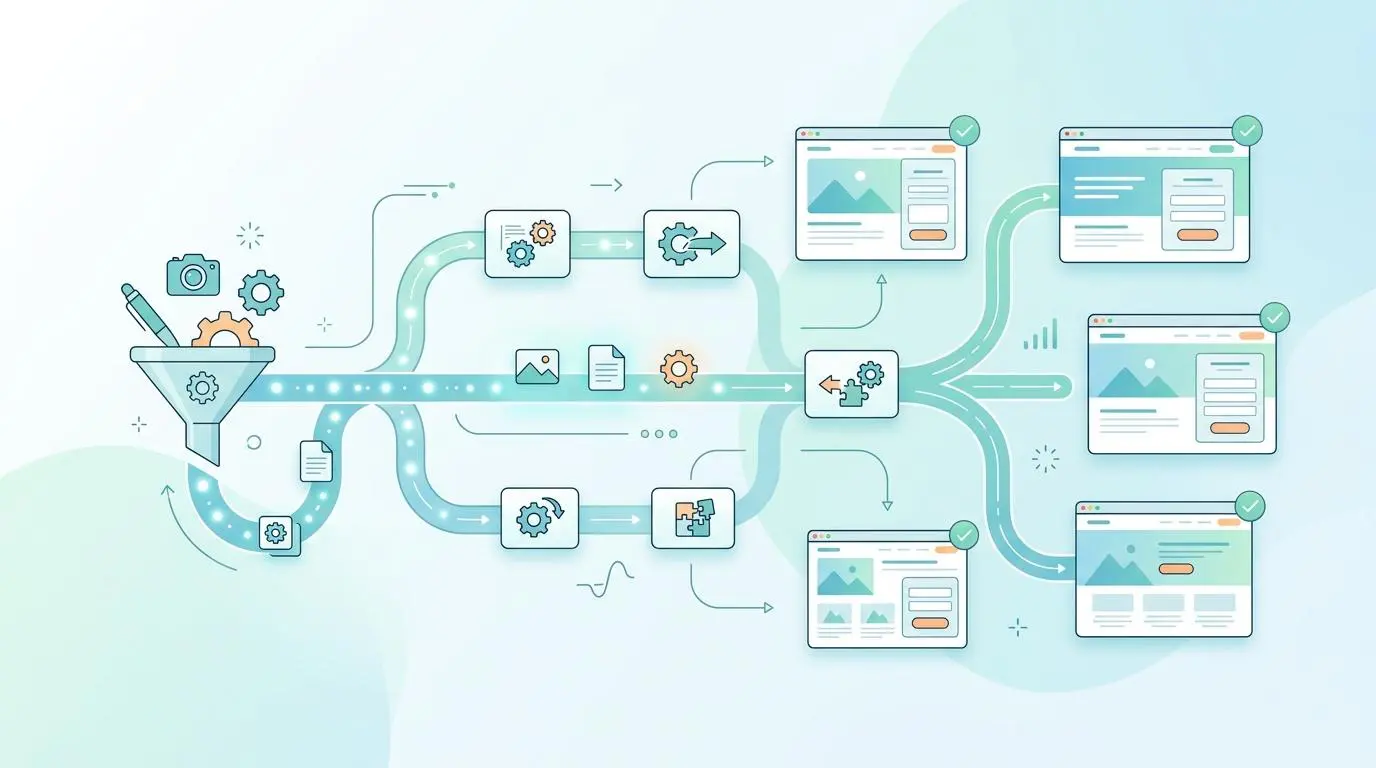
Historically, marketing teams faced massive manual labor when trying to build fifty or more variations of a high-ticket sales page. Matching each unique ad segment required hours of tedious copywriting, manual page duplication, and endless quality assurance checks. Today, Headless CMS platforms like Webflow, Framer, and Contentful solve this bottleneck by programmatically spinning up landing pages via API.
Automated pipelines now utilize sophisticated tools like Jasper or Copy.ai to rewrite primary headlines and core benefits entirely on the fly. These systems instantly read the ad_id or utm_content parameters passed directly from the Meta click URL. The result is a perfectly tailored marketing message that loads instantly, requiring absolutely zero manual intervention from your creative team.
Reclaiming Lost Signals in Advertising Workflows
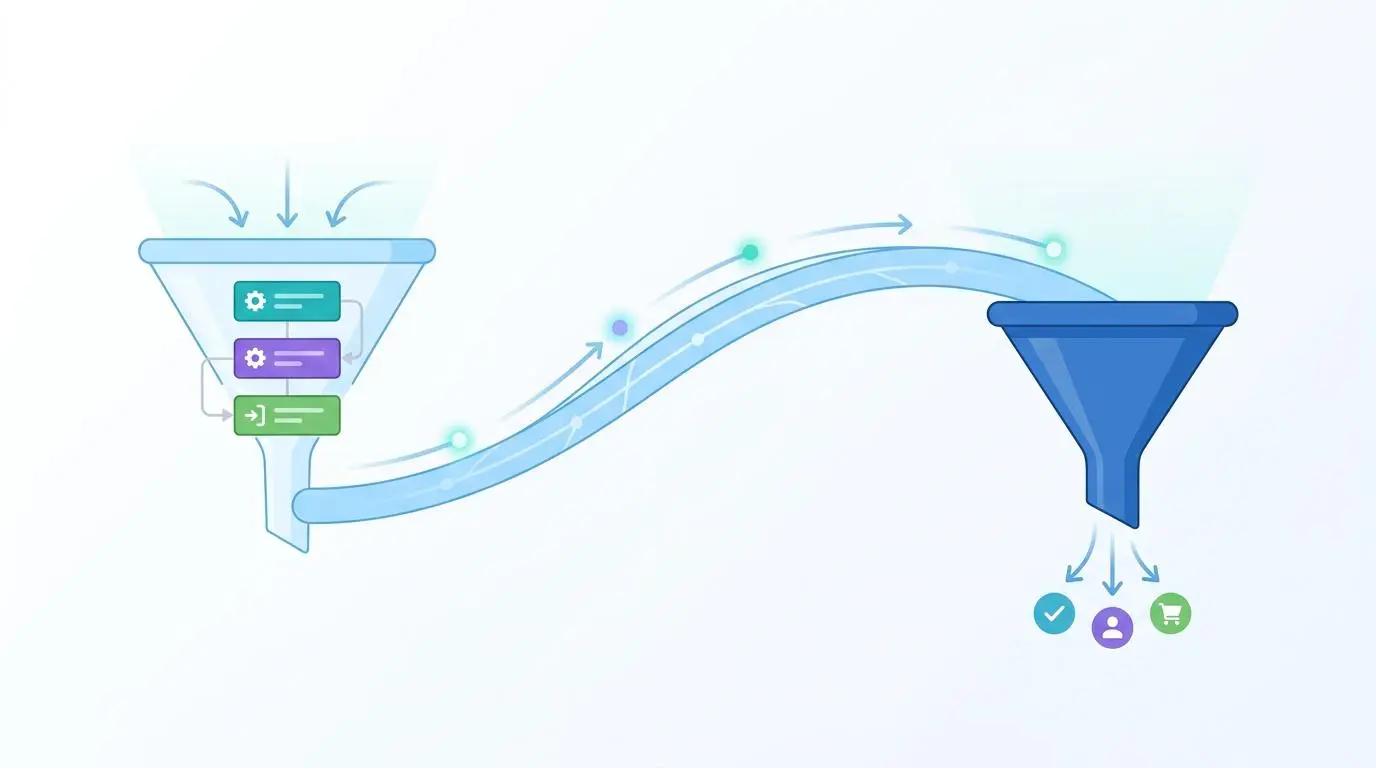
A major real-world friction point is browser-based pixel loss, where up to 30% of high-intent clicks go completely untracked due to aggressive ad blockers. This data blackout leads to fragmented personalization and broken user journeys that ruin the premium brand experience. To combat this, modern architectures integrate the Meta Conversions API directly with server-side Google Tag Manager.
This advanced setup passes deeper, more reliable customer signals back to the advertising platform securely. Furthermore, Meta’s recent updates for the AI-Enriched Pixel now automatically extract metadata from the clicked ad and pass it as a first-party intent signal to the destination site. This allows platforms like Webflow to re-render page components instantly without complex custom API middleware.
Bridging Systems with the No-Code Revolution

In the past, building custom dynamic-routing engines for complex marketing funnels required expensive engineering teams and months of development time. The no-code revolution has completely shattered this barrier for modern growth teams. Platforms like Make.com and Zapier now seamlessly bridge the gap between Facebook Lead Ads and dynamic site builders with visual workflows.
Modern workflows take this automation a step further by deploying specialized Zapier AI Agents. These agents can research a lead’s LinkedIn profile in real-time the moment a form is partially filled or a click is registered. They instantly inject those personalized professional insights into the landing page copy before the page even finishes loading.
Deploying AI Agents for Visual Harmony
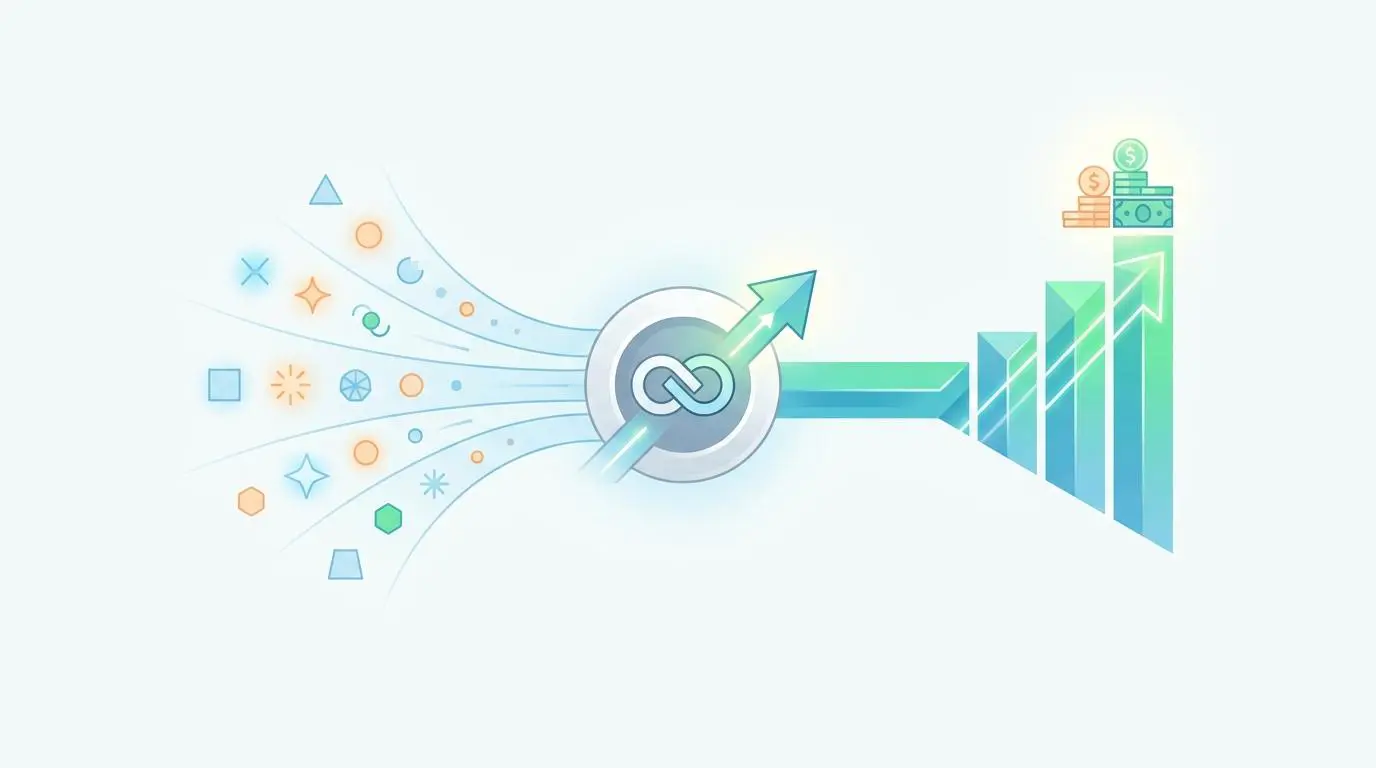
Visual cognitive dissonance is a silent conversion killer in premium funnels that rely heavily on brand aesthetics. Imagine a lead clicking a moody, dark-mode luxury ad, only to land on a blindingly bright, generic corporate site. This aesthetic mismatch breaks trust instantly and causes immediate abandonment from high-ticket prospects.
To solve this, forward-thinking teams deploy Cognitive UI Agents using frameworks like n8n or LangChain. These agents analyze the creative visual assets of the exact ad the user clicked in real-time. They then visually reconfigure the landing page’s hero image and color palette to maintain perfect aesthetic continuity from click to conversion.
Maximizing ROI with Ultra-Fast Message Matching
Wasting ad spend on high-ticket clicks that bounce within three seconds is a painful reality for many ambitious advertisers. This usually happens because the landing page failed to immediately repeat the specific offer or pain point mentioned in the ad. Automated personalization solves this by drastically increasing the message match score instantly.
Recent data shows that this dynamic alignment reduces the time to lead qualification significantly. It allows leads to self-segment through dynamic forms that adapt based on their initial click data. As a direct result, the overall Cost per Acquisition drops while lead quality skyrockets, preserving your marketing budget.
Navigating the Future Horizon of Zero-State Pages
Template fatigue is becoming a serious obstacle, as high-ticket buyers easily recognize standard landing page structures and quickly disengage. To combat this visual boredom, the industry is shifting rapidly toward Zero-State Landing Pages. These are digital environments that do not exist as static templates on a server anywhere.
Instead, Vercel Edge Functions allow developers to build pages that are generated entirely in the browser’s edge cache. These pages are spun up specifically for a single Meta click ID, known as the fbclid parameter. This means every single visitor experiences a completely unique, disposable web environment tailored to their exact psychological profile.
The Dawn of Individuated User Interfaces
The future of high-ticket lead generation goes far beyond simply swapping out a headline or a hero image. We are entering the era of Individuated UI, where AI agents rebuild the entire page layout in under 100 milliseconds. Testimonials, video blocks, and pricing tables will dynamically shift based on whether the lead’s predicted psychological profile is detail-oriented or results-driven.
This level of orchestration transforms static websites into living, breathing sales mechanisms that adapt to human behavior. By embracing these programmatic workflows, you eliminate manual bottlenecks and create a frictionless path to conversion. The post-click context gap will soon be a relic of the past for those who adopt this architecture.
Navigating the intersection of technology, workflows, and operational efficiency requires a sharp strategy. To future-proof your business architecture and scale with precision, connect with Andres at Andres SEO Expert.
Frequently Asked Questions
What is Programmatic Post-Click Personalization (PPCP)?
Programmatic Post-Click Personalization (PPCP) is an architectural framework that uses automation to dynamically align a landing page’s destination content with the specific promise of an ad. It eliminates the manual effort of building variants while ensuring a seamless, high-converting narrative for premium leads.
How does the Meta Conversions API (CAPI) reduce lead acquisition costs?
By implementing a server-side connection rather than relying solely on browser pixels, Meta CAPI reduces costs per result by an average of 17.8%. This setup bypasses ad blockers and provides the advertising algorithm with pristine, first-party data signals to better predict high-value user behavior.
Why is the post-click context gap detrimental to high-ticket sales?
The post-click context gap occurs when a specific ad leads to a generic corporate homepage. This disconnect creates immediate cognitive friction and buyer hesitation, signaling to high-ticket prospects that the operational backend is disjointed, which significantly increases lead abandonment.
How many landing pages should a B2B enterprise utilize to maximize growth?
Data indicates that increasing the volume of dedicated landing pages from 10 to over 40 can result in a 500% gain in conversions. This high-volume strategy ensures that every micro-segment of an audience receives a hyper-relevant pitch rather than a one-size-fits-all template.
How much does page load speed impact conversion rates for premium offers?
Page speed is a critical conversion multiplier; landing pages that render in under 1.5 seconds convert 2.4x better than those taking 4 seconds. In high-ticket funnels, any delay beyond 1.5 seconds often leads to lost attention and immediate bounces to competitors.
What are Zero-State landing pages in modern marketing?
Zero-State landing pages are disposable web environments generated entirely in the browser’s edge cache for a specific click ID (fbclid). These pages do not exist as static templates and are tailored in real-time to the individual visitor’s psychological profile and specific ad intent.