Key Points
- Transitioning from manual research to multi-agent orchestration is the top skill demanded by modern employers.
- AI proficiency and autonomous system management generate a massive wage premium for recent business graduates.
- Leveraging no-code AI tools allows students to build self-healing business pipelines without deep technical knowledge.
Table of Contents
The Execution Gap
Picture this: a highly ambitious business student stays up until 3 AM manually copying and pasting financial data from twenty different PDF reports into a massive, fragile Excel spreadsheet. This is the classic execution gap plaguing modern academia.
Legacy training still focuses heavily on manual data processing and siloed research tasks. However, the modern labor market expects graduates to step into roles where they manage autonomous AI agents that handle the vast majority of routine corporate operations.
The ultimate solution to bridge this operational divide is AI-Native Business Workflow Orchestration. This technology transforms students from mere task executors into high-level system directors.
By learning to connect disparate software tools into a unified, intelligent pipeline, young professionals can eliminate hours of tedious data entry. Mastering this orchestration layer is the fastest way to modernize your skill set and secure a top-tier corporate position.
Quantifying the Automation Advantage
Market Intelligence & Data
AI Wage Premium
According to PwC’s 2025 Global AI Jobs Barometer, roles requiring AI skills command a 56% wage premium over traditional positions, a figure that has doubled since 2024.
Agent-Integrated Apps
A 2026 Gartner report predicts that 40% of all enterprise applications will feature autonomous task-specific AI agents by the end of the year.
Job Vacancy Gap
LinkedIn’s 2026 Jobs on the Rise report indicates there are currently 3.2 open AI-focused business roles for every qualified graduate applicant.
Academic AI Adoption
A Q1 2026 study by Vention reveals that 86% of educational organizations have now integrated generative AI into their daily learning and planning operations.
The financial implications of mastering these autonomous systems are staggering for new graduates. According to recent market intelligence, roles requiring advanced AI skills are seeing a massive surge in baseline compensation.
In fact, PwC’s Global AI Jobs Barometer confirms that this wage premium has doubled since 2024. This proves that employers are willing to pay top dollar for candidates who can orchestrate complex workflows rather than just execute manual tasks.
This shift in compensation is directly tied to the rapid evolution of enterprise software architecture. A recent Gartner report highlights that a massive portion of all business applications will soon feature autonomous task-specific AI agents.
Companies are no longer buying static software tools; they are investing in dynamic, self-executing platforms. Graduates must be prepared to interact with these agent-integrated apps from day one.
Despite the clear direction of the technology sector, there is a massive shortage of talent capable of managing these new systems. The current job vacancy gap stands at an astonishing 3.2 open roles for every qualified graduate applicant.
Insights from the LinkedIn Workplace Learning Report emphasize that multi-agent orchestration is now the top-demanded skill across the corporate landscape. Businesses are desperate for young professionals who understand how to connect disparate AI models to solve unified corporate problems.
Fortunately, the academic world is beginning to wake up to this operational reality. Studies show that a vast majority of educational organizations have integrated generative AI into their planning operations.
However, simply using AI to generate text is no longer enough to secure a competitive advantage. The real value lies in teaching students how to build self-sustaining, automated pipelines that mirror real-world corporate environments.
Conquering the Research Avalanche
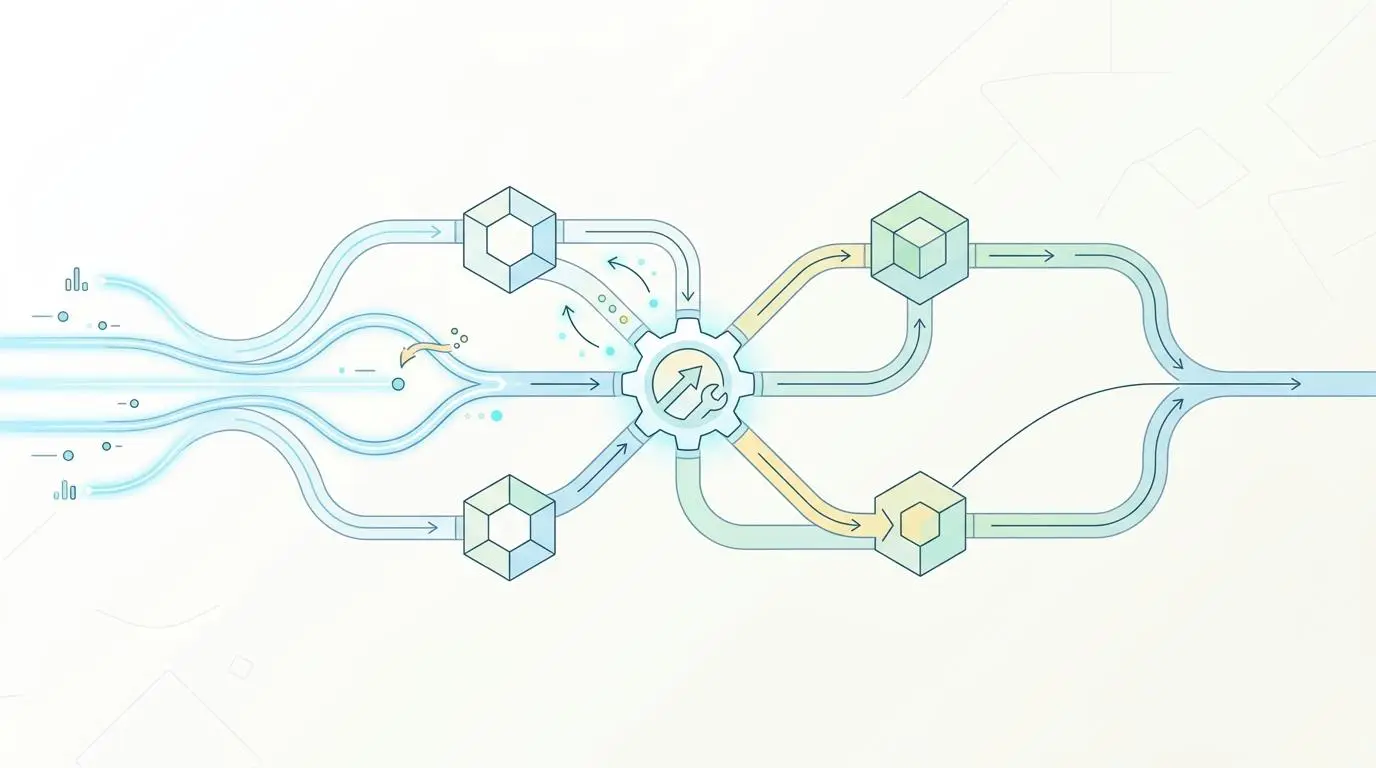
Modern business students are drowning in a sea of fragmented information. They are expected to produce high-frequency, sourced market reports for top-tier internships on tight deadlines.
Siloed manual research takes hours and often results in outdated or incomplete data.
This is where advanced orchestration tools become invaluable digital research employees. Platforms like Perplexity Computer can summarize dozens of real-time sources with perfect citations in mere seconds.
This eliminates the friction of digging through endless browser tabs to find a single reliable data point.
Furthermore, intelligent language models provide structural logic feedback for strategic memo writing. This allows students to focus on synthesizing insights rather than hunting for basic facts.
By automating the data-gathering phase, graduates can deliver boardroom-ready analyses at unprecedented speeds.
Building Self-Healing Pipelines

The corporate world has officially transitioned from simply chatting with AI to fully automating complex workflows. Manual data entry and repetitive formatting are universally viewed as obsolete human tasks.
Employers today consider anyone lacking automation skills to be functionally digitally illiterate.
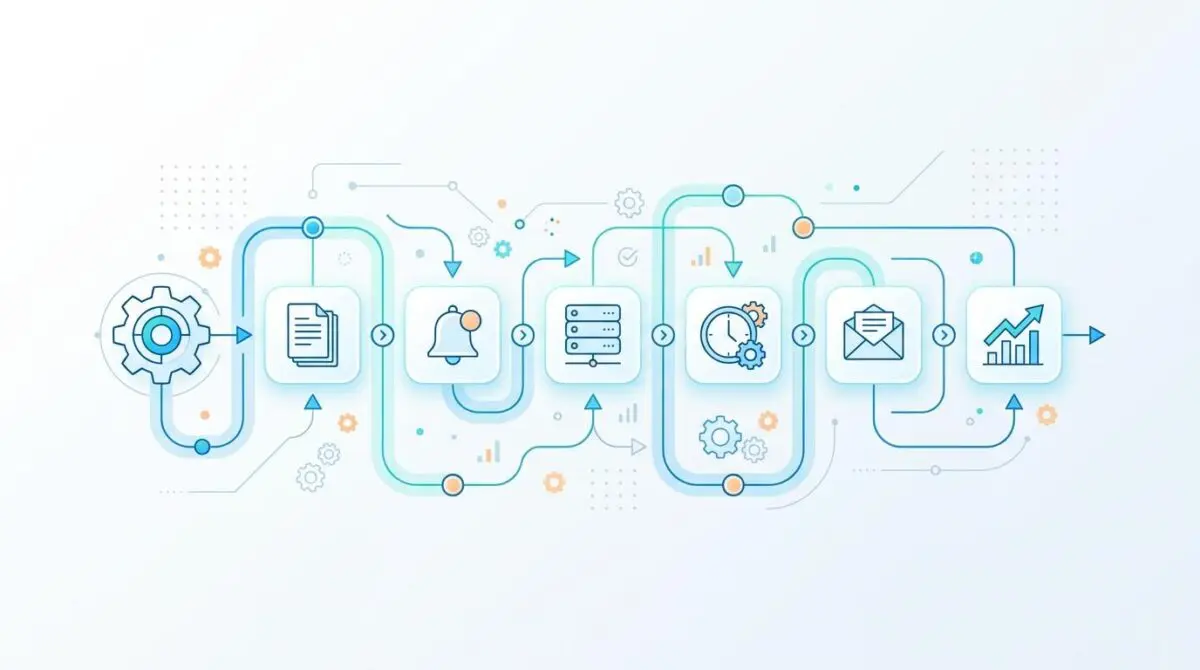
To combat this, ambitious students are turning to robust integration platforms like n8n and Zapier Central. These tools allow graduates to build self-healing business pipelines without writing a single line of traditional code.
Data flows seamlessly from an email inbox into a CRM, and finally into a formatted financial report without any manual intervention.
Additionally, modern copilot software now performs real-time revenue projections and rapid application prototyping. This concept of vibe coding allows non-technical business majors to spin up functional internal tools in minutes.
The ability to architect these automated bridges is what separates a standard employee from a highly valued operational leader.
The Rise of Judgment-First Roles
Entry-level business jobs have fundamentally pivoted away from raw content creation. Today, these positions are entirely judgment-first roles that require intense critical thinking and strategic oversight.
The greatest risk in the modern corporate stack is poorly vetted or low-quality automated output.
Critical human oversight has become the most valuable skill a junior staff member can possess. Students are utilizing specialized software for advanced decision support to ensure their automated pipelines are producing logical results.
They act as the final quality control checkpoint before data is deployed to stakeholders.
Professionals also rely on advanced grammar and brand-voice alignment platforms to verify AI accuracy. The goal is no longer to write the first draft, but to elevate the machine-generated baseline into a polished, persuasive final product.
This shift places a premium on analytical thinking over raw typing speed.
The ROI of Automation Fluency

The financial impact of AI proficiency cannot be overstated in the current labor market. Graduates entering the workforce with specific workflow orchestration fluencies enjoy a massive competitive advantage.
This specific technical knowledge acts as a highly lucrative annual starting salary accelerator.
Specialized certifications in agentic AI and workflow orchestration are currently yielding a higher return on investment than many traditional secondary master’s degrees. Employers recognize that a candidate who can automate three jobs is inherently more valuable than a candidate who can only perform one.
This leverage translates directly into aggressive compensation packages.
Conversely, those who fail to adapt face a grim reality. Graduates without these orchestration skills are currently experiencing severe underemployment compared to their AI-augmented peers.
The market simply does not have room for professionals who insist on doing robotic work manually.
Democratizing High-End Visual Strategy
Clunky legacy design software used to create a massive technical barrier for business leads. Producing high-end visual collateral required specialized skills and hours of tedious pixel-pushing.
This often bottlenecked the entire strategic planning process.
Today, no-code creativity platforms have completely leveled the playing field for non-design business majors. Intelligent presentation tools allow students to generate stunning, board-ready slide decks effortlessly.
Preparation time has plummeted from eight grueling hours to a mere fraction of that time.
This dramatic shift in user experience allows students to refocus their energy entirely on verbal delivery and strategic defense. When the software handles the aesthetics automatically, the professional can focus entirely on the substance of the pitch.
This is the true power of adopting smart software without the headache.
Managing the Agentic Workforce
The agentic workforce is rapidly becoming the absolute standard across all global corporate operations. Static software tools simply cannot scale with the demands of a modern, interconnected business environment.
Autonomous system management is now a baseline expectation for forward-thinking entry-level hires.
Proactive students are already preparing for this reality by building digital twins of their future business roles. Using advanced orchestration platforms, they deploy autonomous agents to handle calendar management, deep research, and client onboarding.
This creates a scalable personal infrastructure that operates around the clock.
This paradigm shift transforms the student from a simple task manager into a visionary system architect. By mastering these tools before graduation, they prove they are capable of leading the next generation of corporate innovation.
The future belongs to those who can manage the machines, not those who compete with them.
Directing the Fleet of Tomorrow
The business career path has irrevocably shifted toward multi-agent orchestration. Success is no longer measured by how well you perform individual, isolated functions.
Instead, your professional value is dictated by your ability to direct a fleet of task-specific AI agents.
Embracing AI-Native Business Workflow Orchestration is the ultimate key to unlocking a thriving corporate future. By replacing manual friction with automated intelligence, students can secure high-leverage roles that drive real business impact.
Navigating the intersection of modern technology, software architecture, and business growth requires a sharp strategy. To future-proof your tech stack and scale with precision, connect with Andres at Andres SEO Expert.
Frequently Asked Questions
What is AI-Native Business Workflow Orchestration?
AI-Native Business Workflow Orchestration is a technology that transforms professionals from manual task executors into high-level system directors. By connecting disparate software tools into a unified, intelligent pipeline, it allows for the automation of routine corporate operations and eliminates manual data entry friction.
What is the wage premium for roles with AI skills?
According to PwC’s 2025 Global AI Jobs Barometer, roles requiring advanced AI skills command a 56% wage premium over traditional positions. This financial advantage has doubled since 2024, as employers increasingly prioritize candidates who can manage complex autonomous workflows.
Which tools are best for building no-code automation pipelines?
Business professionals are increasingly using robust integration platforms like n8n and Zapier Central to build self-healing pipelines without traditional coding. These tools facilitate the seamless flow of data between email, CRMs, and financial reports, enabling non-technical users to architect sophisticated automated systems.
What is a judgment-first role in the AI-driven economy?
A judgment-first role is a position that prioritizes critical thinking and strategic oversight over raw content creation. As AI handles the baseline output, human workers act as essential quality control checkpoints, vetting automated data for logic, accuracy, and brand alignment before it is deployed to stakeholders.
How large is the talent gap for AI-focused business roles?
The current job vacancy gap is significant, with 3.2 open AI-focused business roles for every one qualified graduate applicant. This shortage reflects a high corporate demand for young professionals who understand how to orchestrate multi-agent systems and unified AI models.
How does AI automation improve market research efficiency?
Advanced orchestration tools like Perplexity Computer can summarize dozens of real-time sources with precise citations in seconds. By automating the data-gathering and synthesis phase, professionals can bypass siloed manual research and deliver high-quality, boardroom-ready analyses at much higher frequencies.