Key Points
- AI-Enhanced CLM transforms static “dark data” into active, searchable streams, preventing the 9% annual revenue loss caused by the contracting gap.
- Modern platforms act as the “Legal Layer” of the tech stack, enabling bi-directional syncing between CRM and ERP systems for instant billing triggers.
- Generative redlining and Agentic AI are shifting legal teams from administrative bottlenecks to strategic hubs, boasting 94% risk assessment accuracy.
Table of Contents
- The Hidden Tax of Unmanaged Agreements
- The Economics of Smart Agreements
- Rescuing Static PDFs from Digital Purgatory
- Generative Redlining and Agentic Reasoning
- Turning a Cost Center into Revenue Recovery
- Building the Legal Layer of Your Tech Stack
- The Rise of the Legal Copilot
- Preparing for Autonomous Negotiation Bots
- The Era of Predictive Agreement Management
The Hidden Tax of Unmanaged Agreements
Most businesses hemorrhage an average of 9% of their annual revenue simply because they cannot track what they have already signed. This invisible drain is known as the contracting gap. It thrives on value erosion, manual oversight, and disconnected legacy repositories that hide mission-critical obligations.
When legal agreements remain static files, companies lose visibility into auto-renewals, pricing escalations, and overlapping vendor services. The sheer volume of paperwork quickly outpaces human monitoring capacity. This creates a massive operational bottleneck that slows down sales and delays revenue recognition.
The ultimate solution to this chaos is AI-Enhanced Contract Lifecycle Management (CLM). By deploying intelligent software to read, organize, and monitor agreements, organizations modernize their entire legal operation. This technology secures sensitive data while scaling seamlessly alongside enterprise growth.
The Economics of Smart Agreements
Market Intelligence & Data
Total Market Value
According to the Loio 2026 Contract Management Trend Report, the global CLM market is projected to reach this valuation by year-end due to rapid AI integration.
AI Review Velocity
Performance benchmarking in the 2026 Loio report reveals that AI can now review a standard NDA in under half a minute, compared to a 92-minute human average.
Enterprise Adoption
A 2026 Conga and Salesforce trend report found that nearly all surveyed organizations have integrated AI into their CLM workflows as a baseline requirement.
Operational Efficiency
According to a 2026 Aavenir industry analysis, legal departments leveraging AI-native CLM tools report saving over 80% of the time previously spent on routine administrative tasks.
The rapid valuation of the CLM market to $12 billion is not a speculative bubble. It represents a fundamental shift in how enterprises handle risk. Modern platforms are now robust enough to assist lawyers with contract redlining using large language models. This massive influx of capital funds the next generation of predictive legal tools that protect corporate margins.
Speed is the most immediate benefit realized by these intelligent systems. Performance benchmarking reveals that AI analyzes legal contracts in seconds, dropping the review time of a standard NDA from 92 minutes to under half a minute. This velocity allows legal teams to unblock sales pipelines without compromising compliance or risk management.
It is no surprise that 95% of surveyed organizations now consider AI integration a baseline requirement for their CLM workflows. The days of treating artificial intelligence as an experimental luxury are entirely over. Enterprises failing to adopt these smart systems find themselves unable to compete with the agility of modernized peers.
Ultimately, this technology drives a staggering 82% increase in operational efficiency for legal departments. By eliminating the need to manually hunt down expiration dates or cross-reference clauses, highly paid attorneys refocus on strategic negotiations. This shift drastically reduces administrative burnout while maximizing the output of existing legal talent.
Rescuing Static PDFs from Digital Purgatory

Most businesses treat signed contracts as dark data. These are static PDFs locked in forgotten cloud folders where renewal dates and pricing escalations go completely unmonitored. This creates massive real-world friction, requiring endless manual labor to track thousands of expiration dates across multiple departments.
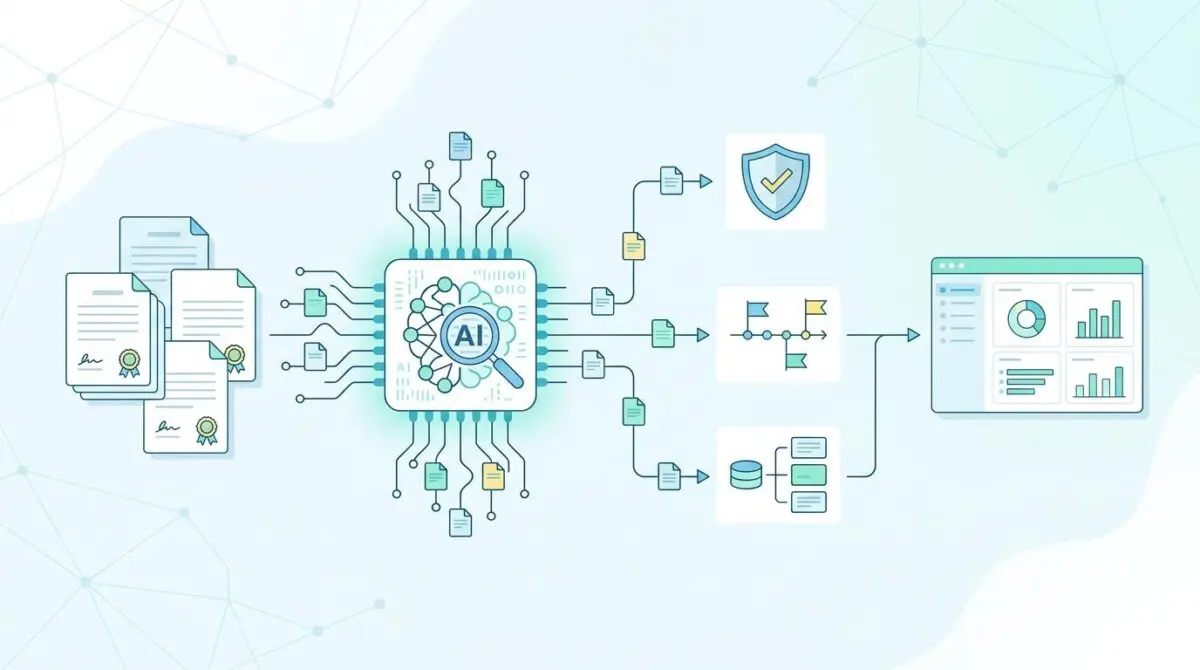
Tools like LinkSquares and Ironclad are stepping in to solve this everyday problem. They use advanced Optical Character Recognition (OCR) and Natural Language Processing (NLP) to digitize these documents. This process transforms static files into highly searchable, active data streams.
Once a contract is digitized, it becomes a living asset rather than a dead document. Automated alerts notify stakeholders months before a critical deadline, eliminating the panic of surprise renewals. This foundational step is crucial for any business looking to modernize its legal operations.
Generative Redlining and Agentic Reasoning
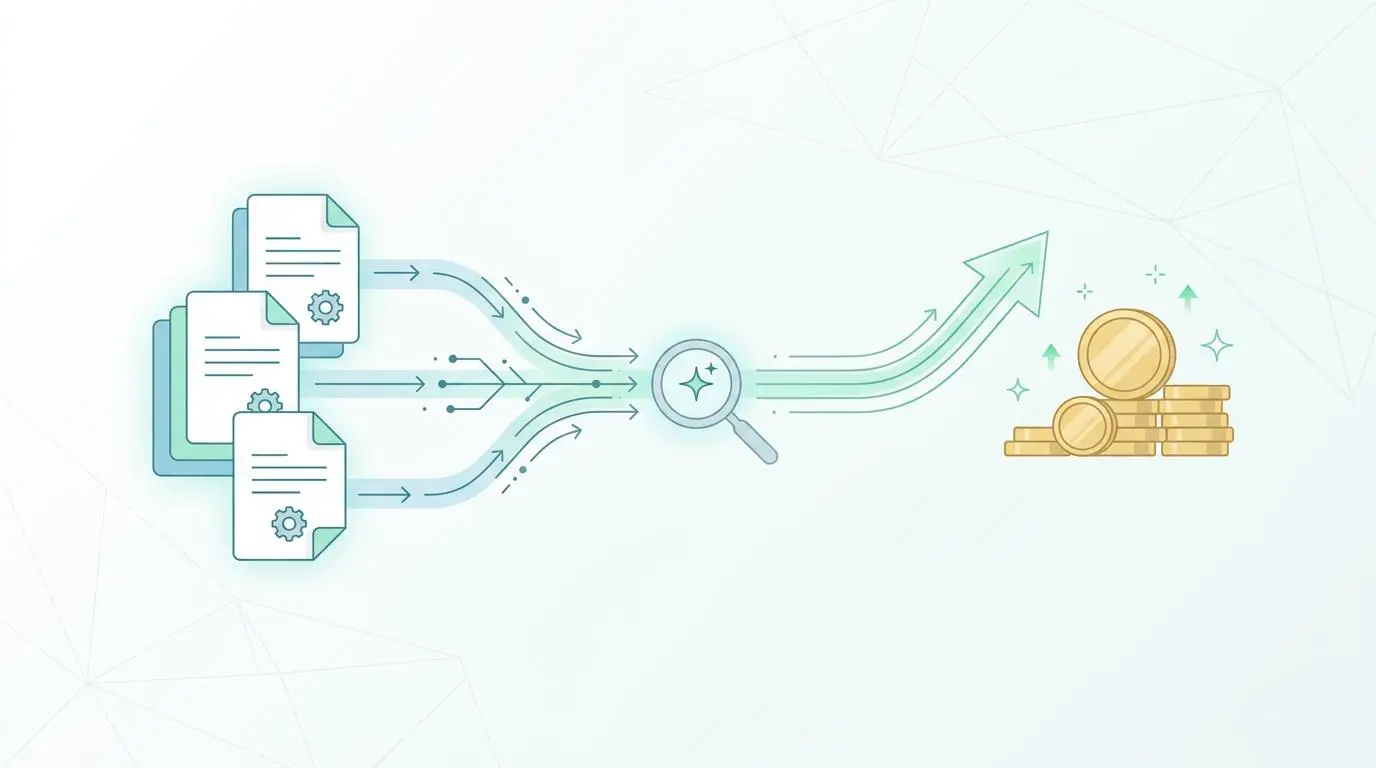
The traditional bottleneck in legal operations occurs when every single contract redline requires a human lawyer’s eyes, regardless of the risk level. This slows down deal velocity and frustrates sales teams eager to close. The 2026 standard for overcoming this is generative redlining.
Under this new model, Large Language Models (LLMs) automatically suggest edits based on a company’s specific legal playbook. Platforms like Sirion and Icertis use Agentic AI to go beyond simple summarization. These intelligent agents actually reason through complex legal deviations and suggest compliant alternatives.
In 2026, a critical shift occurred from generic LLM summaries to practitioner-grade precision. AI agents are now fine-tuned by legal experts to interpret context-specific risk with a 94% accuracy rate. This allows junior staff to process complex agreements with the confidence of a seasoned general counsel.
Turning a Cost Center into Revenue Recovery
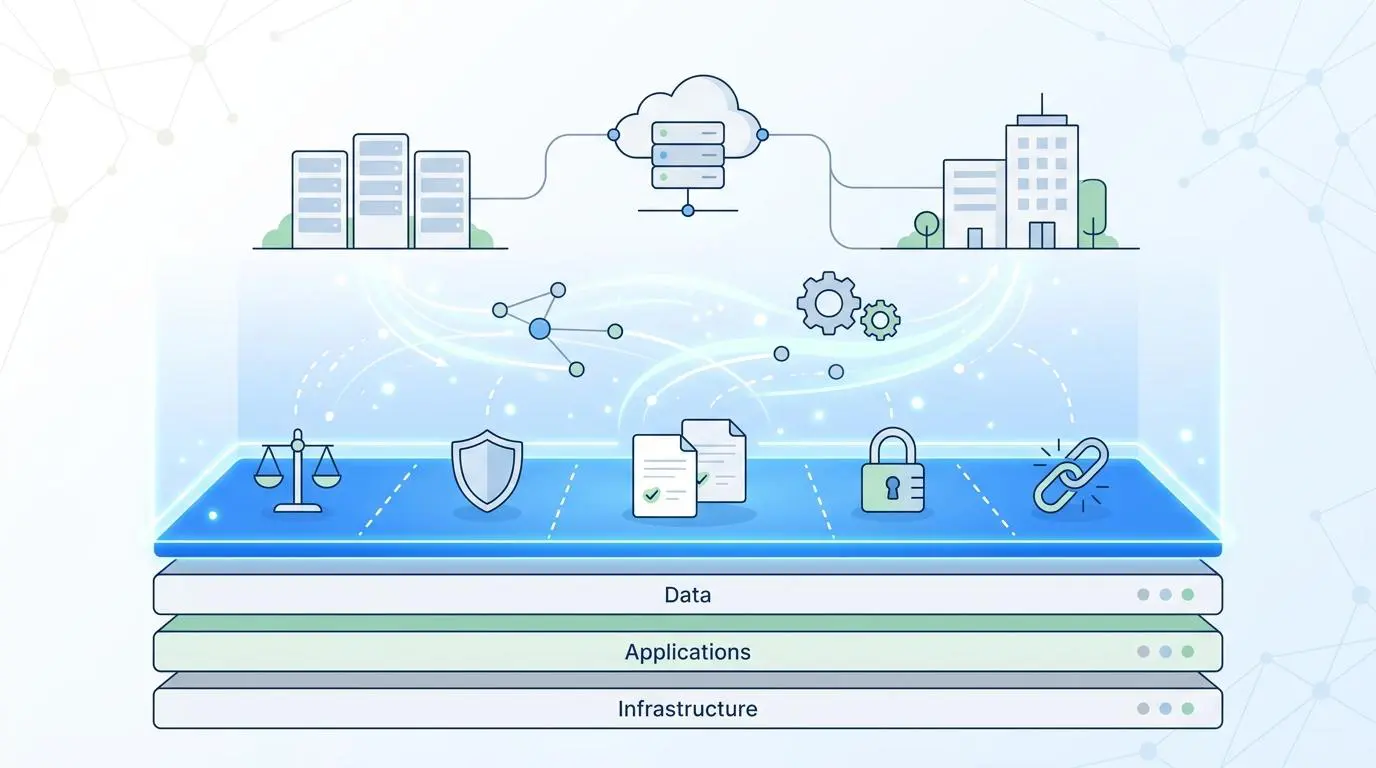
Historically, contract management was viewed strictly as a necessary administrative cost center. Today, adopting AI-native CLM is rapidly shifting into a proactive revenue recovery strategy. Enterprises are uncovering hidden capital previously lost to unmanaged auto-renewals and forgotten commercial milestones.
Intelligent systems scan thousands of active agreements to identify overlapping vendor services and unapplied volume discounts. By surfacing these insights automatically, businesses consolidate vendors and negotiate better terms. This financial vigilance often provides a massive 3x ROI within just 18 months of deployment.
Stopping revenue leakage is the ultimate financial argument for modernizing your legal stack. When AI monitors your commercial milestones, you never miss an opportunity to enforce a penalty clause or claim a rebate. The software essentially pays for itself by catching the financial details human teams overlook.
Building the Legal Layer of Your Tech Stack

Information silos are the enemy of enterprise efficiency. A common point of friction occurs when the sales team thinks a deal is closed in the CRM, while the legal team is still debating a liability clause in a Google Doc. Modern CLMs eliminate this disconnect by acting as the legal layer for the entire tech stack.
These platforms feature deep, bi-directional syncing between critical systems like Salesforce, Workday, and Slack. When a contract is updated in the CLM, the status is instantly reflected across all connected applications. This ensures every department operates from a single source of truth.
The integration ecosystem goes far beyond simple status updates. A signed deal in the CLM can now instantly trigger a billable event in the financial ERP system. This seamless automation accelerates revenue recognition and completely eliminates manual data entry between departments.
The Rise of the Legal Copilot
High burnout and turnover in legal operations are often driven by repetitive, low-value administrative tasks. Highly trained attorneys do not want to spend their days hunting for missing signatures or formatting standard NDAs. AI in 2026 solves this by functioning as a dedicated legal copilot.
This intelligent assistant handles 80% of administrative drafting and initial document review. By offloading the busywork, senior counsel focus their energy on high-stakes strategic negotiations and litigation avoidance. The technology acts as a force multiplier for the existing legal team.
Embracing the human element of AI adoption means empowering your staff, not replacing them. When legal professionals are freed from administrative drudgery, job satisfaction skyrockets. The legal department transforms from a stressed bottleneck into a proactive, strategic business partner.
Preparing for Autonomous Negotiation Bots
The friction of multi-week email threads just to finalize low-risk, standard business agreements is a massive drain on corporate agility. To combat this, the market is aggressively moving toward autonomous negotiation bots. These AI-driven entities are designed to handle routine back-and-forth without human intervention.
These bots securely interact with vendor agents to finalize standard service agreements based on pre-approved parameters. Every interaction is strictly monitored by a unified risk dashboard to ensure compliance. If a vendor requests a term outside the acceptable range, the bot automatically escalates the issue to a human lawyer.
This futuristic approach drastically reduces the time-to-signature for high-volume, low-complexity contracts. It allows businesses to scale their vendor onboarding and partnership agreements at an unprecedented pace. The autonomous horizon promises a frictionless contracting experience for both parties.
The Era of Predictive Agreement Management
By the end of 2026, the industry will evolve from reactive document storage into predictive agreement management. AI agents will not only manage existing contracts but proactively suggest optimal terms based on real-time market shifts. These systems dynamically adjust pricing strategies in response to inflationary indices and supply chain data.
This shift represents the ultimate convergence of legal strategy and business intelligence. Contracts will no longer be static records of past agreements. They will be living, predictive tools that actively protect corporate margins. Organizations embracing this technology will possess a distinct, insurmountable competitive advantage.
Navigating the intersection of modern technology, software architecture, and business growth requires a sharp strategy. To future-proof your tech stack and scale with precision, connect with Andres at Andres SEO Expert.
Frequently Asked Questions
What is the “Contracting Gap” and how does it impact business revenue?
The Contracting Gap is an invisible revenue drain caused by unmanaged legal agreements, leading to an average loss of 9% in annual revenue. This value erosion occurs when companies lose visibility into auto-renewals, pricing escalations, and overlapping vendor services due to disconnected legacy repositories.
How much faster is AI contract review compared to traditional human review?
AI significantly accelerates legal workflows, reducing the review time for a standard NDA from a human average of 92 minutes to just 26 seconds. This velocity allows legal departments to eliminate operational bottlenecks and unblock sales pipelines without compromising compliance.
What is Generative Redlining and how accurate is it?
Generative Redlining uses Large Language Models (LLMs) and Agentic AI to automatically suggest contract edits based on a company’s specific legal playbook. Modern AI agents are now fine-tuned to interpret context-specific risk with a 94% accuracy rate, providing practitioner-grade precision.
Can AI-native CLM tools provide a measurable return on investment (ROI)?
Yes, AI-native CLM platforms often deliver a 3x ROI within 18 months of deployment. They achieve this by identifying hidden capital lost to unmanaged auto-renewals and uncovering unapplied volume discounts across thousands of active agreements.
What are Autonomous Negotiation Bots and how do they function?
Autonomous Negotiation Bots are AI-driven entities designed to finalize standard, low-risk business agreements without human intervention. They negotiate based on pre-approved parameters and automatically escalate to a human lawyer only if a vendor requests terms outside of the acceptable range.
How does a CLM serve as the “Legal Layer” of an enterprise tech stack?
A modern CLM integrates via bi-directional syncing with critical systems like Salesforce, Workday, and Slack. This ensures all departments operate from a single source of truth, where a signed contract can instantly trigger billable events in an ERP system to accelerate revenue recognition.