



Key Points
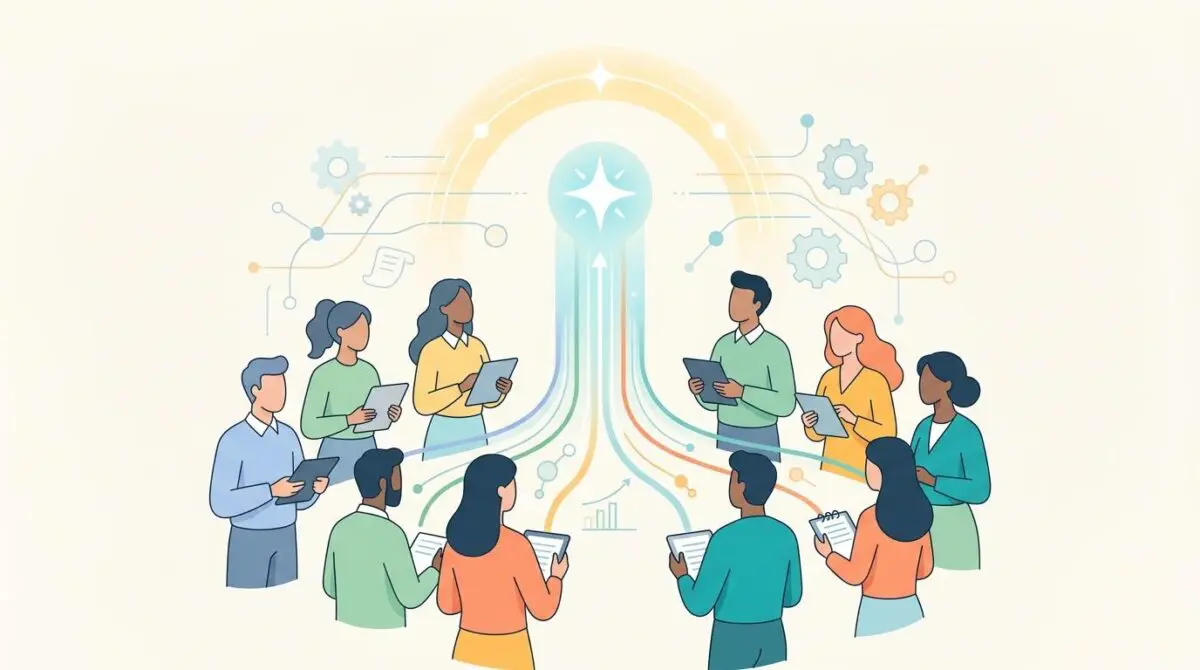
- Cognitive Diversity: Escaping the mirror trap by hiring complementary cognitive profiles is essential to break through innovation ceilings and avoid market stagnation.
- Vision Orchestration: Leaders must actively synthesize diverse technical outputs into a unified strategy to prevent resource-draining information silos and competing metrics.
- Predictive Synergy: Utilizing advanced analytics to engineer team chemistry preemptively reduces operational conflict and accelerates sustainable, long-term growth.
Table of Contents
- The Invisible Cost of Cognitive Redundancy
- Quantifying the Cost of Misalignment
- Escaping the Mirror Trap
- Orchestrating the Unified Strategy
- The New Premium on Horizontal Breadth
- Breaking Founder-Centric Bottlenecks
- Curing Mission Entropy in Distributed Teams
- Engineering Chemistry Before Conflict
- The Future of Fireproof Leadership
The Invisible Cost of Cognitive Redundancy
The invisible tax of cognitive redundancy is quietly draining your operational bandwidth every single day.
When leaders surround themselves with identical thinkers, they create a comfortable echo chamber. This ultimately stifles innovation and accelerates mission drift. Teams may work tirelessly, but they lack the necessary intellectual friction to generate breakthrough market solutions.
This homogeneous approach leads directly to stalled scaling, operational bottlenecks, and frustratingly high employee churn. To break this destructive cycle, modern organizations are aggressively embracing Vision-Aligned Skill Stacking.
This strategic framework intentionally combines complementary cognitive profiles under a single, unified corporate mission. By layering diverse technical expertise with shared strategic goals, companies can finally scale without fracturing their core culture.
Quantifying the Cost of Misalignment
Market Intelligence & Data
Team-Driven Failure
According to the Founders Forum Group’s 2025 research, team issues and skill gaps are the primary drivers for 23% of startup collapses.
Innovation Revenue Premium
A 2026 Deloitte report indicates that companies with high cognitive diversity and shared vision generate 19% more revenue from new products than their peers.
Annual Conflict Drain
Recent 2026 data from HRSpotlight shows that US businesses lose $359 billion annually to productivity drops caused by team friction and unresolved disputes.
Global Engagement Floor
The Gallup State of the Global Workplace 2026 report found that global employee engagement hit a low of 20% in 2025, largely due to a lack of shared vision.
The reality of homogeneous hiring is starkly reflected in venture outcomes across the modern business landscape. Research shows that 23% of startup collapses are directly tied to team issues and glaring skill gaps at the foundational level. When leadership lacks operational diversity, entire organizations hit a cognitive ceiling they simply cannot innovate past.
Conversely, the financial upside of cognitive diversity is undeniable for companies willing to embrace strategic friction. A 2026 Deloitte report reveals that companies prioritizing shared vision alongside varied skill sets generate a massive 19% premium in new product revenue. This proves that intentional friction, when tightly aligned toward a common goal, is a primary driver of market dominance.
Yet, the failure to manage this friction effectively carries a devastating and immediate price tag for scaling enterprises. Current HR data highlights that US businesses lose $359 billion annually to productivity drops caused by unresolved team disputes. Without a unifying vision, diverse skills quickly devolve into tribalism, miscommunication, and toxic resource hoarding.
This widespread misalignment is severely impacting global workforce morale and daily operational cadence. The recent Gallup workplace report noted that global employee engagement plummeted to a floor of 20% in 2025. When teams operate without a cohesive narrative bridging their varied talents, daily tasks lose meaning and costly churn inevitably follows.
Escaping the Mirror Trap

Traditional hiring methodologies often trap organizations in what industry experts accurately call the mirror trap. Executives unconsciously recruit profiles that reflect their own strengths, creating a comfortable but highly vulnerable leadership ecosystem.
This lack of cognitive diversity removes the constructive friction required to solve multi-dimensional market problems. Homogeneous teams simply cannot pivot fast enough when industry dynamics shift unexpectedly. This leaves the company exposed to agile competitors.
To counter this operational vulnerability, forward-thinking companies are deploying advanced tools like Pymetrics and LinkedIn’s 2026 Skills on the Rise engine. These platforms map non-obvious skill gaps and identify candidates who challenge the status quo rather than blindly conform to it.
Orchestrating the Unified Strategy
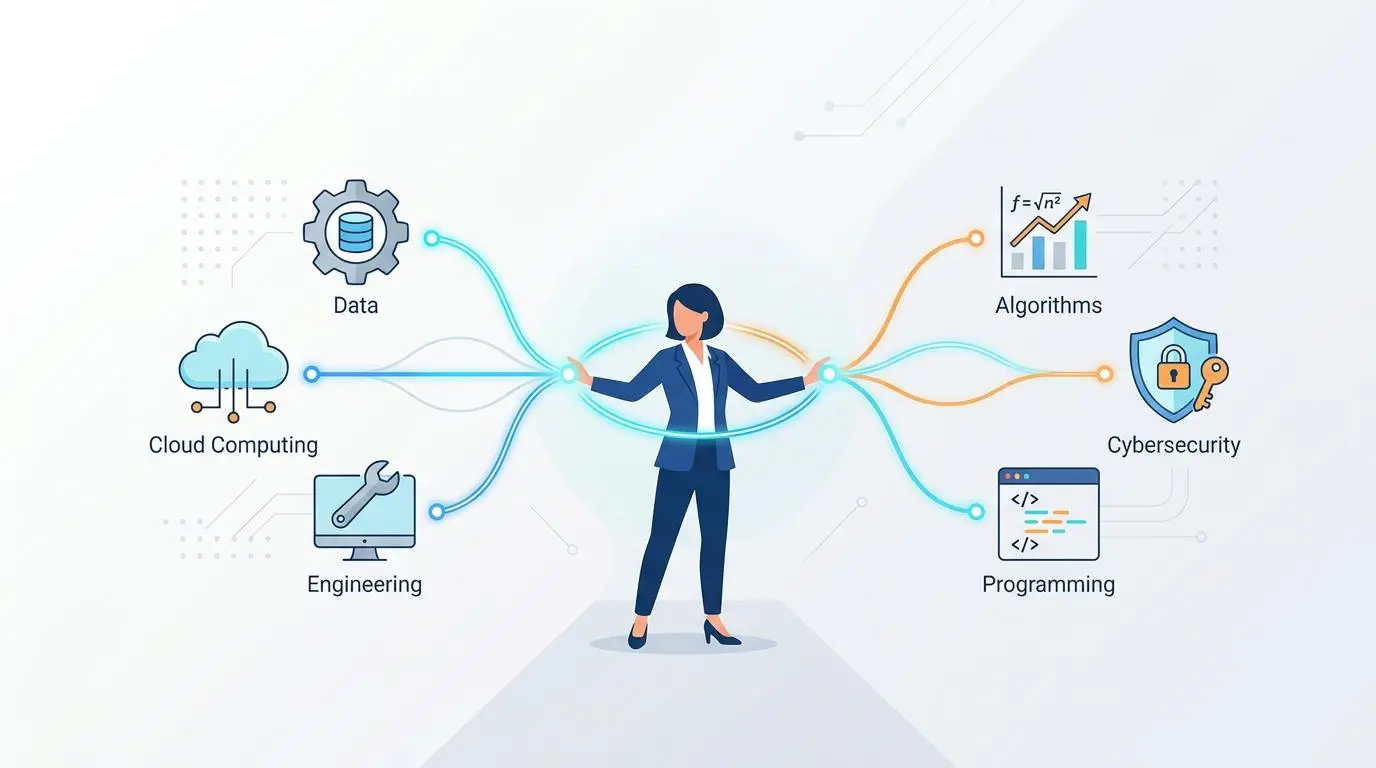
Modern leadership has aggressively pivoted from basic task management to the complex art of vision orchestration. Executives must now synthesize diverse, highly technical outputs into a singular, cohesive market strategy that drives revenue.
Without this deliberate orchestration, impenetrable information silos form rapidly at the executive level. VPs end up pursuing competing key performance indicators. This severely dilutes resource allocation and confuses the broader organization.
The Deloitte Synergy Paradox highlights this exact challenge by showing that diverse teams experience 34% more initial interpersonal conflict. However, they remain the only organizational archetype capable of delivering high-innovation revenue in an AI-accelerated market.
Successful 2026 leaders utilize radical transparency frameworks to navigate this paradox effectively. By maintaining absolute clarity on the overarching mission, they channel initial conflict into highly productive problem-solving.
The New Premium on Horizontal Breadth

The corporate talent pipeline is undergoing a massive structural shift that redefines professional value. Organizations are rapidly moving away from traditional degree-based hiring toward comprehensive skill stacking assessments.
Narrow specialists are increasingly struggling to adapt as AI-driven workflows automate isolated technical tasks. The modern labor market heavily penalizes those who cannot connect their niche expertise to broader, revenue-generating business goals.
According to SUCCESS Magazine, professionals who bridge technical depth with horizontal breadth now command a significant market premium. Data analysts who can also craft compelling strategic narratives are becoming the most sought-after assets in 2026.
This evolution requires a fundamental rethinking of career development and internal training programs. Employees must intentionally stack complementary skills that make them indispensable orchestrators rather than easily replaced technicians.
Breaking Founder-Centric Bottlenecks

Scaling a business requires a painful but absolutely necessary transition from a founder-led model to a delegated-expert model. Founders who refuse to relinquish control inevitably become the primary bottleneck to their own company’s growth.
This founder-centric friction occurs when leadership lacks the specific operational skills needed to support rapid customer acquisition. Passion and initial grit are no longer sufficient when operational complexity multiplies across departments.
Founders Forum Group research demonstrates that startups led by two founders with complementary expertise secure 30% more investment capital. Furthermore, these balanced leadership teams experience customer growth at three times the rate of solo-founder ventures.
True scalability is achieved only when visionary leaders pair themselves with ruthless operational integrators. This dynamic ensures that bold ideas are met with disciplined, sustainable execution frameworks.
Curing Mission Entropy in Distributed Teams
The reality of asynchronous work has introduced a new operational threat known as mission entropy. Individual tasks can easily become disconnected from the unified organizational goal when teams operate in geographic isolation.
To prevent this dangerous vision decay, distributed teams in 2026 rely heavily on context-first documentation. Every project brief and technical update must explicitly tie back to the core strategic roadmap to maintain alignment.
AI-driven collaboration tools are now being deployed to rigorously monitor these digital workspaces. These systems actively flag when technical teams drift away from their core objectives. This allows managers to intervene before quarters are lost.
Maintaining alignment in a remote environment requires relentless communication of the overarching purpose behind the work. Context is the essential glue that holds distributed skill stacks together in a fragmented digital world.
Engineering Chemistry Before Conflict
The traditional reactive approach to team conflict is failing modern enterprises at an alarming rate. Waiting for friction to derail a project before addressing interpersonal dynamics is an outdated and incredibly expensive strategy.
By late 2026, predictive synergy analytics will become the gold standard for building resilient, fireproof teams. Organizations will simulate team performance based on cognitive archetypes long before a critical project even kicks off.
This technological shift means that team chemistry will be intentionally engineered rather than left to chance. Leaders will use predictive data to balance visionaries with pragmatists, ensuring the perfect mix of operational push and pull.
The rise of AI-assisted synergy scouting will allow machine learning models to analyze internal communication patterns in real time. This technology will predict and prevent vision drift before it ever impacts quarterly deliverables or client satisfaction.
The Future of Fireproof Leadership
The era of the solitary corporate genius is officially over. The future belongs to organizations that can masterfully weave disparate talents into a singular, unstoppable market force.
By embracing cognitive diversity and ruthlessly enforcing a shared vision, companies can transcend the limitations of their individual parts. This is the true, undeniable power of strategic skill stacking in a hyper-competitive landscape.
Navigating the complexities of business growth, team leadership, and market positioning requires a sharp strategy. To scale your operations and build a resilient brand architecture, connect with Andres at Andres SEO Expert.
Frequently Asked Questions
What is cognitive redundancy in business leadership?
Cognitive redundancy occurs when leaders recruit individuals with identical thinking patterns, creating a comfortable echo chamber. This lack of intellectual friction leads to mission drift, operational bottlenecks, and an inability to generate the breakthrough solutions required for market innovation.
How does Vision-Aligned Skill Stacking differ from traditional hiring?
Traditional hiring often falls into the “mirror trap,” recruiting based on familiarity or isolated technical degrees. Vision-Aligned Skill Stacking intentionally layers diverse cognitive profiles and complementary technical expertise under a single, unified mission to ensure scalability without losing cultural cohesion.
What is the financial impact of team misalignment and conflict?
Misalignment is a major financial drain; research shows US businesses lose $359 billion annually to productivity drops caused by team friction. Additionally, 23% of startup failures are attributed to team issues, while companies prioritizing shared vision and cognitive diversity generate 19% more revenue from new products.
Why is horizontal breadth becoming more valuable than narrow specialization?
In an AI-accelerated market, narrow technical tasks are increasingly automated. Professionals who possess “horizontal breadth” can bridge niche expertise with strategic, revenue-generating goals. These indispensable orchestrators command a market premium over technicians who cannot connect their work to the broader business strategy.
How can companies prevent mission entropy in remote or distributed teams?
Mission entropy is managed through context-first documentation and AI-driven collaboration tools. These systems monitor digital workspaces to ensure every project brief is explicitly aligned with the strategic roadmap, preventing technical teams from drifting away from core objectives in asynchronous environments.
What role does predictive synergy analytics play in building teams?
By late 2026, predictive synergy analytics will allow organizations to simulate team performance based on cognitive archetypes before a project starts. This data-driven approach moves team chemistry from a matter of chance to an engineered discipline, balancing visionaries with pragmatists to optimize quarterly deliverables.