
Key Points
- The Liquidity Illusion exposes how multi-billion-dollar fortunes built on high-leverage AI speculation can vanish in a single quarter.
- Extreme financial losses trigger primitive survival responses in the ultra-wealthy, leading to devastating panic-selling loops.
- The 2026 market volatility proves that ten-digit wealth requires aggressive defensive diversification to survive geopolitical shifts.
Table of Contents
- The Liquidity Illusion Trap
- Tracking the Trillion-Dollar Evaporation
- The Neurology of Panic Selling
- Vanishing Billions and Rogue Advisors
- The Billionaire Bounce Back
- Crypto Slumps and Hidden Assets
- Tariffs and Market-Shaking Oscillations
- Defensive Diversification and Tomorrow
- The Future of Ten-Digit Fortunes
The Liquidity Illusion Trap
Paper wealth is a dangerous hallucination that can evaporate before your morning coffee gets cold. For the ultra-rich, the line between immense financial power and devastating loss remains razor-thin.
We often view ten-digit fortunes as impenetrable fortresses of capital. Yet, the reality of billionaire financial ruin is far more common and volatile than the public realizes.
The modern wealth landscape currently suffers from what insiders call the Liquidity Illusion. This systemic vulnerability occurs when massive fortunes are built on paper-thin equity and high-leverage speculation.
When geopolitical tariffs shift or algorithmic trading models panic, these multi-billion-dollar empires can vanish in a single trading quarter. The average person views a billion dollars as infinite security, but in the upper echelons of global finance, it is simply a highly leveraged bet.
Tracking the Trillion-Dollar Evaporation
Market Intelligence & Data
Single-Quarter Contraction
According to a March 2026 Business Insider report, Oracle’s Larry Ellison suffered the largest individual wealth decline in early 2026 due to AI infrastructure skepticism.
Total Wealth Peak
The World Inequality Lab’s 2026 report confirmed that total billionaire wealth hit a record $18.3 trillion in 2025, despite massive individual fluctuations.
Crypto Founder Loss
Between October 2025 and February 2026, Binance founder CZ lost an estimated $29 billion personally during a major digital asset market crash reported by Forbes.
Vanished Legacy Fortune
In late 2025, fifth-generation Hermès heir Nicolas Puech was removed from the Forbes billionaire list entirely after his $14.8 billion in shares allegedly disappeared.
The staggering contraction of Larry Ellison’s wealth serves as a masterclass in modern market fragility. When AI infrastructure skepticism peaked in early 2026, the ripple effects halted capital expenditures across the global tech sector. This massive evaporation of paper wealth demonstrates how quickly operational efficiency stalls when top-tier liquidity suddenly dries up.
Despite these individual crashes, institutional wealth continues to scale at an unprecedented and somewhat terrifying rate. The World Inequality Lab confirmed a total wealth peak of $18.3 trillion in 2025, a figure that masks severe underlying systemic vulnerabilities. Looking ahead to the next decade, industry analysis from April 2026 predicts the billionaire population will grow 25% by 2031. This aggressive growth forces family offices to completely restructure their operational defenses against inevitable market shocks.
The digital asset sector provided some of the most brutal lessons in liquidity management during this volatile economic period. Witnessing a crypto founder lose an estimated $29 billion highlights the extreme, unforgiving volatility inherent in decentralized markets. This massive personal loss forces institutional investors to constantly re-evaluate their exit strategies and tighten operational risk parameters.
Perhaps the most chilling example of wealth destruction stems from a complete lack of internal oversight in legacy family offices. In a shocking turn of events, Hermès heir Nicolas Puech was removed from the Forbes billionaire list entirely after his shares allegedly disappeared. This vanished legacy fortune underscores a critical operational failure, proving that without rigorous asset tracking, even centuries-old wealth remains vulnerable to rogue advisors.
The Neurology of Panic Selling

It is easy to assume that those with billions of dollars possess an unbreakable psychological fortitude. However, the human brain does not differentiate between a physical threat and a massive financial loss.
Neuroscientific research cited in March 2026 reveals a fascinating truth about the ultra-wealthy. Financial losses in the billionaire bracket activate the exact same primitive brain regions as physical survival threats.
This neurological hijack frequently triggers what wealth managers call panic-selling loops. A 2026 Northwestern Mutual study found that 73% of investors drawn to high-risk speculative assets do so because they feel financially behind.
This feeling persists regardless of their current net worth, proving that extreme wealth does not cure financial anxiety. Cognitive biases frequently lead ultra-high-net-worth individuals to make reactionary, wealth-destroying moves during market dips.
- Loss Aversion: The psychological pain of losing a billion dollars vastly outweighs the pleasure of gaining it.
- Recency Bias: Over-weighting recent market downturns as a permanent new reality.
- Herd Mentality: Institutional panic that causes billionaires to dump assets simultaneously.
These cognitive failures act as the invisible architects of billionaire financial ruin. When the brain senses a threat to the empire, logic is often the first casualty.
Vanishing Billions and Rogue Advisors

The sheer scale of modern wealth means that when a downfall happens, it is spectacularly destructive. In early 2026, Oracle’s Larry Ellison saw his wealth slump by an unrivaled $47 billion in a single quarter.
Investors simply grew skeptical of database-centric AI infrastructure, and the market punished the stock mercilessly. Simultaneously, the old-money world was rocked by the disappearance of Nicolas Puech’s $14.8 billion Hermès stake.
Puech alleged that his fortune vanished due to unauthorized sales by a former trusted advisor. This highlights a terrifying reality: the lack of direct oversight in legacy wealth management allows for massive internal theft.
The emotional toll of these rapid devaluations is palpable even among hardened CEOs. During an April 2025 earnings call, Gary Friedman, the billionaire CEO of Restoration Hardware, reportedly blurted out an expletive on live audio.
He was reacting in real-time to live stock data showing a 55% plunge in his company’s shares following a surprise tariff announcement. Forbes later highlighted this as the year’s most candid billionaire ruin moment, exposing the raw vulnerability behind the corporate veil.
The Billionaire Bounce Back

While the falls are epic, the recoveries can be equally staggering, proving the extreme volatility of the 2026 economy. Larry Ellison, after suffering his historic $47 billion loss, engineered a miraculous financial resurrection.
He recovered from that March slump to add a staggering $71 billion to his fortune in May 2026 alone. This unprecedented recovery was driven almost entirely by a massive Department of War contract for AI tools.
Financial analysts refer to this phenomenon as the Billionaire Bounce. However, this bounce relies heavily on an extreme concentration of assets in AI-linked data center infrastructure.
The necessity of being all-in on a single technological narrative creates a high-stakes cycle of ruin and redemption. It is a dangerous game of financial roulette where the chips are global infrastructure contracts.
Crypto Slumps and Hidden Assets
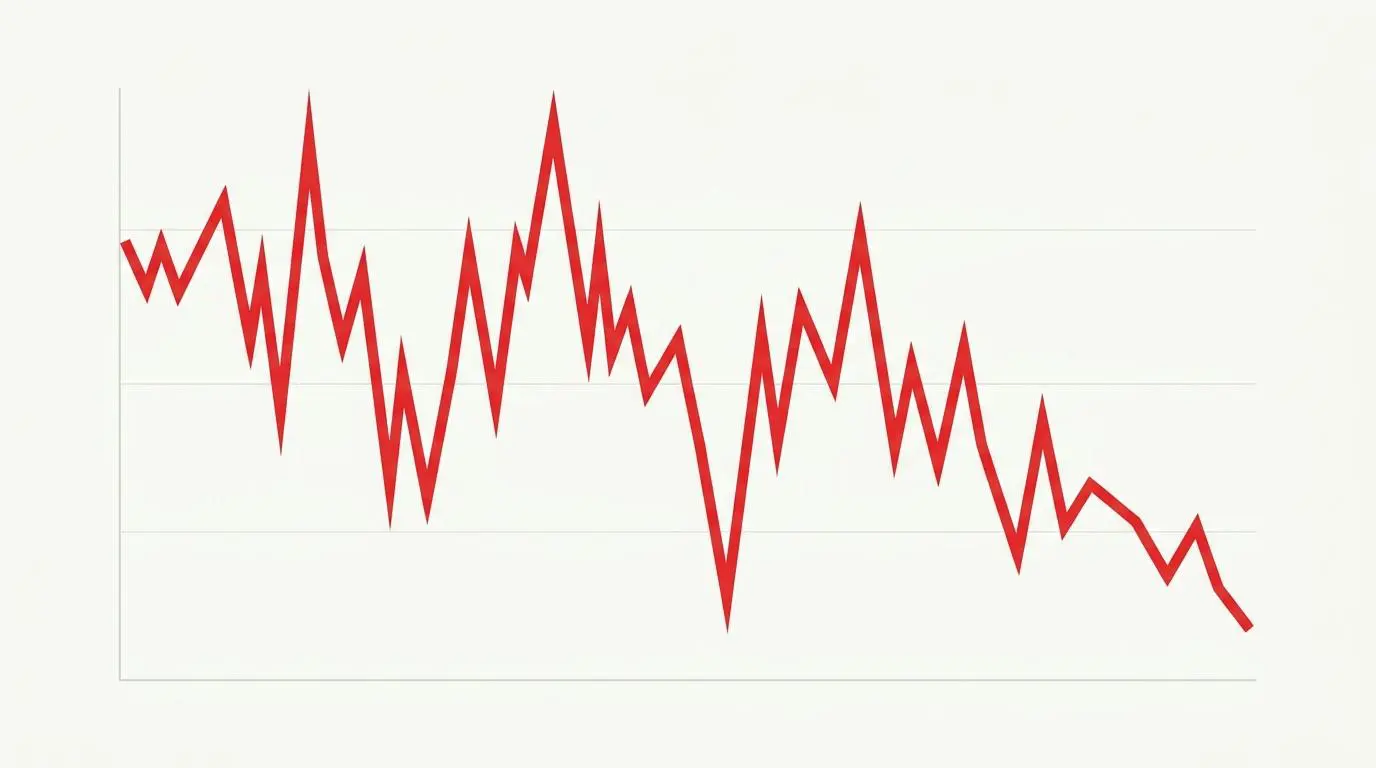
The digital frontier has birthed a new breed of billionaires, but it has also created new mechanisms for catastrophic ruin. The late 2025 and early 2026 crypto slump wiped out an astonishing $2 trillion in broader market value.
This crash led to a personal wealth contraction of $60 billion across the top ten crypto tycoons. This dark period highlighted a deeply cynical market dynamic known as the reverse Robin Hood effect.
In this dynamic, the devastating losses of retail investors often subsidize the liquidity needed for institutional exits. When the whales pull their capital, the everyday trader is left holding the empty bag.
Furthermore, regulatory gaps and cross-border laundering cases complicate these ruin stories. The infamous $100 million Batista laundering case illustrates how hidden, decentralized assets can evaporate into the digital ether.
Tariffs and Market-Shaking Oscillations
The macro-economic environment of 2026 has proven uniquely hostile to concentrated wealth. As of June 1, 2026, the world’s ten richest people held a combined $2.9 trillion.
Yet, shockingly, six of those ten recorded significant net losses in the first half of the year. Market analysts point to a destructive pro-tariff agenda as the primary driver of these multi-billion-dollar oscillations.
High economic and financial pain thresholds among policy officials lead to market-shaking tariff announcements. These geopolitical maneuvers can destroy equity value instantly, leaving corporate titans scrambling to hedge their exposure.
When governments weaponize trade, paper wealth becomes the collateral damage. The billionaires who survive these oscillations are those who can pivot their supply chains faster than the market can react.
Defensive Diversification and Tomorrow
Despite the unprecedented volatility, the machinery of wealth creation continues to grind forward. The World Inequality Report 2026 warns that the structural acceleration of wealth at the very top is creating a dangerous systemic fragility.
This disconnect between asset growth and global economic stability threatens the long-term preservation of ten-digit fortunes. Experts predict this fragility could lead to more frequent and epic billionaire bankruptcies in the near future.
To combat this, the remainder of 2026 will see the rapid rise of defensive diversification among the global elite. Tech titans are quietly pivoting away from concentrated AI bets toward tangible, hard assets.
We are seeing massive capital flights into commodities and gold to shield against the increasing frequency of daily equity swings. In a world driven by global geopolitical conflict, tangible assets are becoming the ultimate safe haven.
The Future of Ten-Digit Fortunes
The stories of billionaire financial ruin serve as a stark reminder that no amount of capital is immune to gravity. Whether destroyed by algorithmic panic, rogue advisors, or geopolitical tariffs, extreme wealth requires extreme vigilance.
The illusion of permanent liquidity has been shattered, forcing a new era of financial paranoia among the world’s elite. Survival in this new economic landscape demands an agile, diversified, and highly defended operational structure.
Understanding the strategies, risks, and mindsets behind extreme wealth can inspire your own business journey. To scale your own empire with precision and smart SEO & GEO architecture, connect with Andres at Andres SEO Expert.
Frequently Asked Questions
What is the Liquidity Illusion in modern finance?
The Liquidity Illusion refers to a systemic vulnerability where massive fortunes are built on paper-thin equity and high-leverage speculation. This creates a fragility where multi-billion-dollar empires can evaporate rapidly during geopolitical shifts or algorithmic trading panics despite appearing as impenetrable fortresses of capital.
How much wealth did Larry Ellison lose in early 2026?
In early 2026, Oracle’s Larry Ellison experienced a record-breaking $47 billion decline in his personal wealth within a single quarter. This contraction was primarily driven by market skepticism surrounding AI infrastructure and database-centric tech investments.
Why did Hermès heir Nicolas Puech lose his billionaire status?
Nicolas Puech was removed from the Forbes billionaire list after his $14.8 billion stake in Hermès allegedly disappeared. The loss was attributed to unauthorized sales by a former trusted advisor, highlighting a critical lack of internal oversight and asset tracking within legacy family offices.
What triggers panic-selling loops among the ultra-rich?
Panic-selling is often triggered by neurological responses where the brain treats massive financial loss as a physical survival threat. This is exacerbated by cognitive biases such as loss aversion, recency bias, and herd mentality, leading billionaires to make reactionary, wealth-destroying moves during market dips.
What is the “Billionaire Bounce” in financial markets?
The Billionaire Bounce is a phenomenon where a massive financial loss is followed by a staggering recovery. For example, after losing $47 billion, Larry Ellison added $71 billion to his fortune in a single month due to a major Department of War contract for AI tools, illustrating the extreme volatility of the 2026 economy.
Why are billionaires pivoting to hard assets like gold in 2026?
To combat systemic fragility and frequent equity swings, many tech titans are utilizing “defensive diversification.” This involves shifting capital from concentrated AI and digital bets into tangible hard assets and commodities to shield their fortunes from geopolitical conflict and market-shaking tariff announcements.