



Key Points
- JWT Authentication: Migrating to Greenhouse Harvest API v3 requires implementing OAuth 2.0 token-refresh sub-scenarios in Make.com to prevent catastrophic data loss by August 2026.
- Schema Normalization: Deploying LLM-based middleware is essential to normalize disparate JobPosting JSON-LD schema across niche boards before CRM injection.
- Vector-Based Matching: Utilizing Retrieval-Augmented Generation (RAG) pipelines enables semantic cosine similarity matching between job requirements and resource links for hyper-personalized outreach.
Table of Contents
The hidden tax of manual SEO execution is the devastating decay of real-time relevance. Traditional link building operates on a glacial timeline, where the median wait for a first backlink stretches to an agonizing 427 days.
This sluggish pace is fundamentally incompatible with the hyper-accelerated 30-60 day lifecycle of niche job postings. By the time a manual outreach email lands in an editor’s inbox, the contextual opportunity has already evaporated.
The hiring manager has filled the role, the job board page has returned a 404 status code, and the topical relevance has completely dissolved. Furthermore, relying on Googlebot to crawl, render, and index JavaScript-heavy job boards introduces massive rendering bottlenecks.
To capture these fleeting moments of relevance, we must engineer millisecond-latency API synchronization.
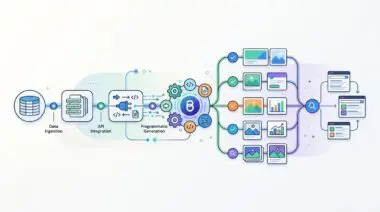
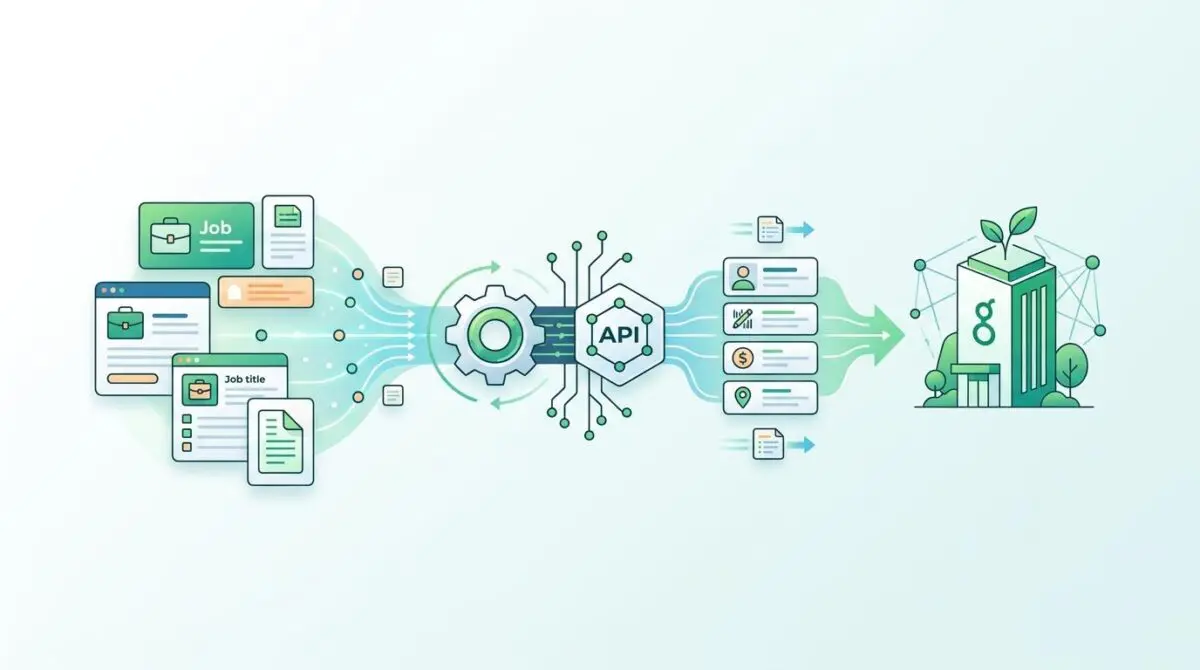
This is where API-driven programmatic outreach for resource link acquisition becomes the ultimate architectural solution. By treating job boards as dynamic data streams rather than static web pages, we can intercept link opportunities the exact second they are published.
We are no longer waiting for search engines to process the DOM. Instead, we are ingesting raw JSON payloads directly from the source server, bypassing traditional crawl budget limitations entirely.
Quantifying the Velocity of Just-in-Time Outreach
Let us examine the raw data driving this architectural shift in automated digital PR. According to industry reports in 2026, agencies utilizing automated prospect database synchronization with real-time data APIs achieve an 85% reduction in total time-to-launch for link-building campaigns.
This acceleration is not just about raw computational speed. It is about striking while the topical fresh-signal status of a target page is at its absolute peak.
When you pitch a resource link for a job post that went live just three minutes ago, the perceived utility of your outreach is exponentially higher. However, speed means nothing if the execution breaks under immense server load.
When scraping high-frequency job boards, engineers must carefully navigate Greenhouse Harvest API rate limiting. Greenhouse implements a strict point-based rate limiting system that can easily trigger 429 Too Many Requests errors during bulk data synchronization.
If your automation hits this ceiling, the entire pipeline crashes, leaving thousands of potential link targets unprocessed in the queue. To mitigate this, Make.com scenarios require sophisticated exponential backoff logic within their error-handling routers.
Furthermore, recent data indicates that personalized outreach referencing specific value-gaps in site content achieves response rates between 10-25%.
This represents a massive leap from the 1-3% conversion rates typical of legacy spray-and-pray methods. Achieving these metrics requires a secure, persistent connection to the data source.
This brings us to the critical transition to OAuth 2.0 for the Greenhouse Harvest API v3. With the impending deprecation of legacy Basic Auth keys, implementing robust token-refresh sub-scenarios is no longer optional for maintaining these high-converting pipelines.
Architecting Persistent Connections in Make.com
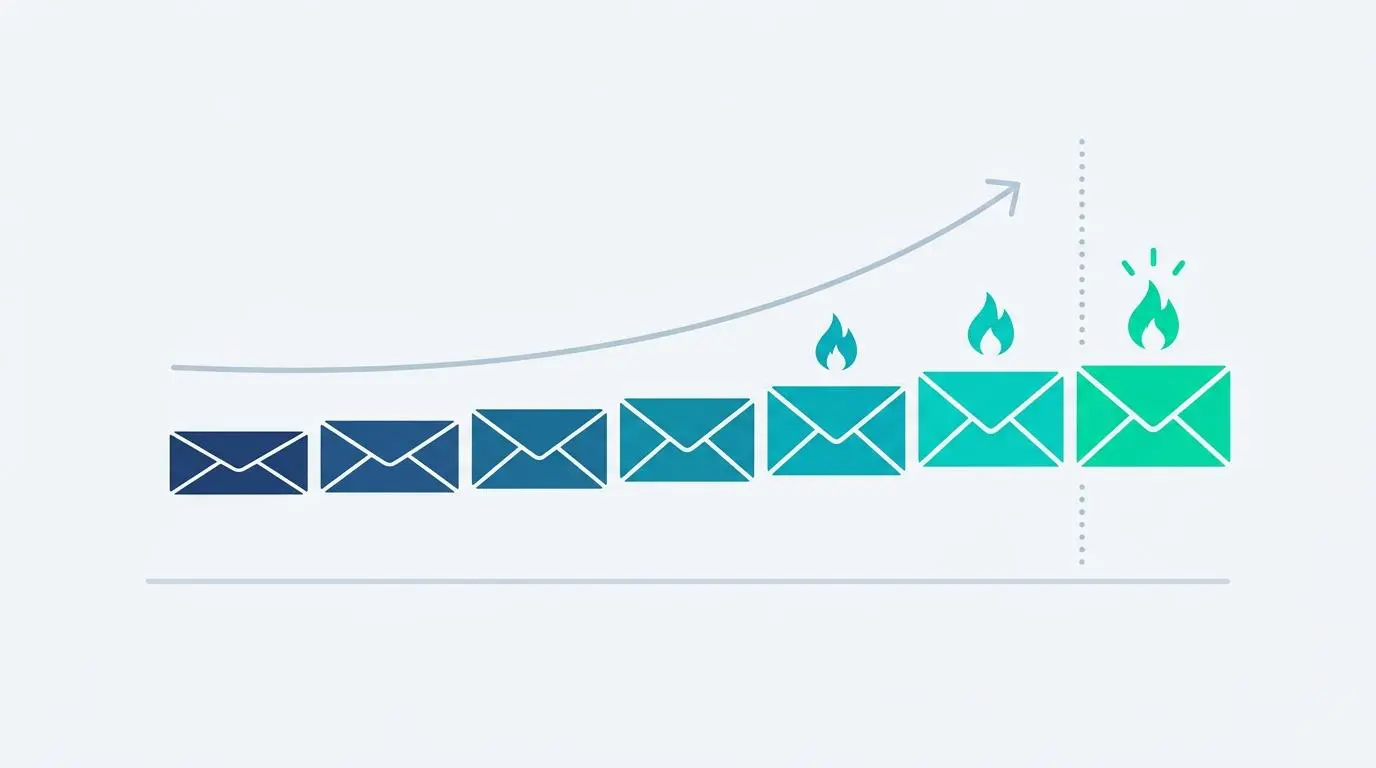
A critical technical shift is looming on the horizon for SEO automation architects. On August 31, 2026, Greenhouse will officially deprecate Harvest API v1 and v2.
This forces all programmatic outreach systems to migrate to v3 cursor-based pagination and JWT authentication. The days of passing a static API key in the authorization header are permanently over.
Failure to update your Make.com HTTP modules to handle cursor-based link headers will result in catastrophic data loss. High-volume niche job boards will simply fail to sync, leaving your outreach pipelines starved of fresh targets.
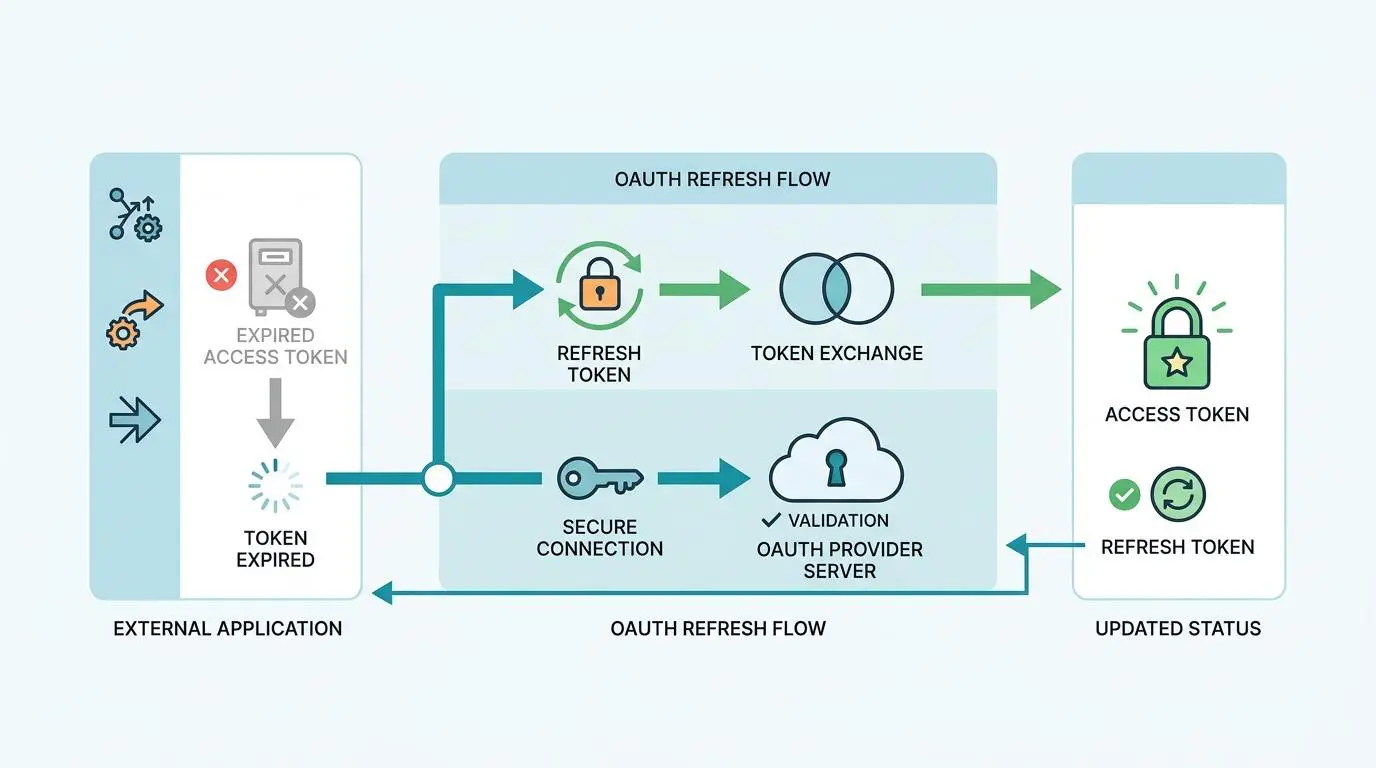
You must build a dedicated token-refresh sub-scenario within Make.com to keep the jobs and job_posts endpoints continuously authenticated.
This involves capturing the refresh token, generating a new access token via the OAuth endpoint, and updating your Make.com data stores dynamically. The real-world friction here lies in the bulk extraction phase.
Pinging the API for thousands of job listings simultaneously will rapidly exhaust your allocated points, forcing the server to reject subsequent payloads.
Your Make.com architecture must incorporate error-handling routers that detect 429 status codes and pause execution.
By implementing exponential backoff formulas, the system can gracefully wait and retry the payload without triggering a hard failure from the host server. This ensures continuous data flow without violating the provider’s infrastructure limits.
Orchestrating Semantic Alignment at Scale
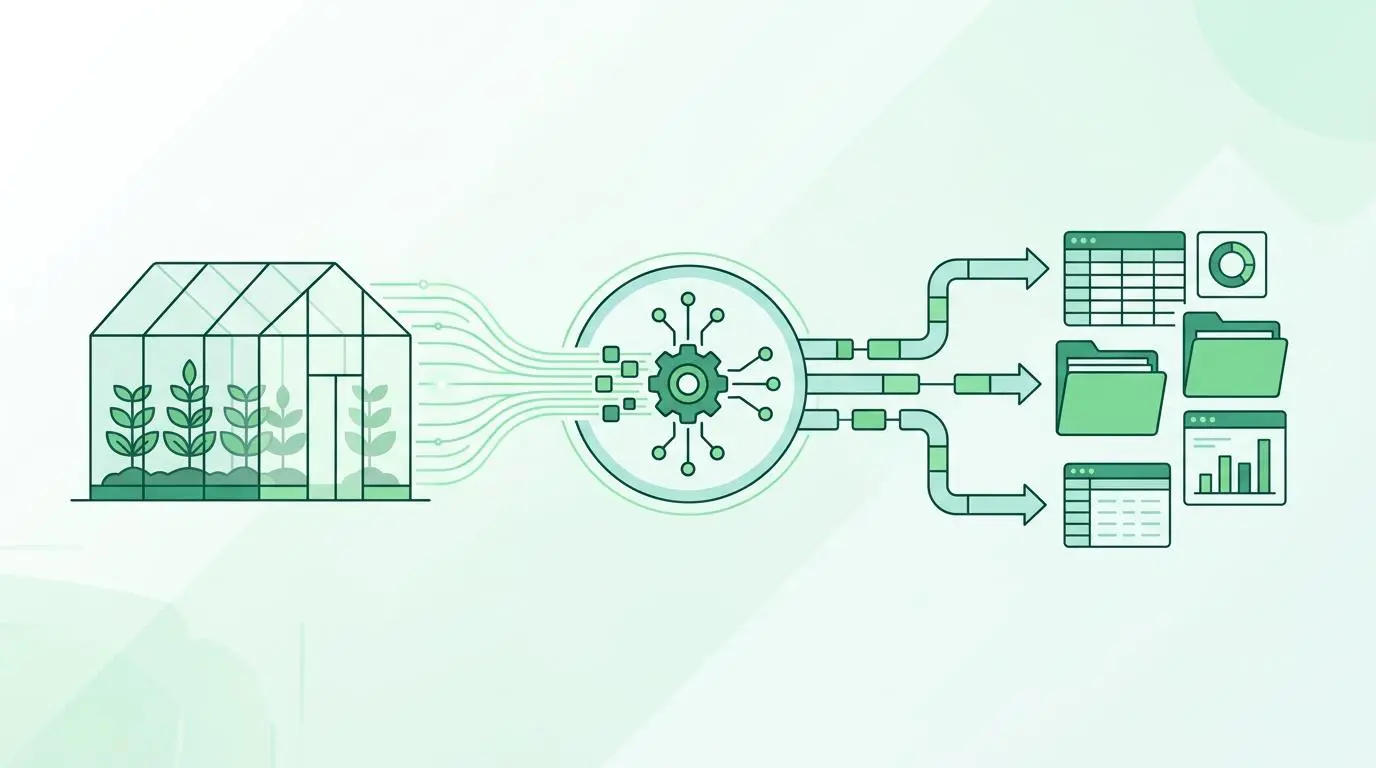
Moving data from the Greenhouse API to email sequencing tools unlocks the power of just-in-time link building. This automated flow extracts specific job requirement keywords directly from the API payload.
The system then identifies target resource pages where your client’s link provides a direct, highly relevant solution to the hiring company’s talent gap.
Automation easily identifies the raw opportunity, but the true bottleneck is achieving personalization at scale. Moving a campaign from a fractional manual response rate to a 25% automated response rate requires advanced semantic alignment.
You cannot simply merge a company name and a job title into a static email template and expect a high-tier editor to respond favorably.
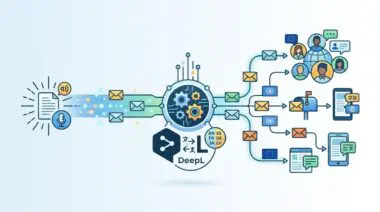
Instead, modern workflows utilize AI agents as an intermediary processing layer within Make.com. These agents cross-reference the extracted job descriptions with the target editor’s most recently published articles.
By analyzing the semantic overlap via natural language processing, the AI crafts a bespoke pitch.
This pitch bridges the gap between what the company is hiring for and what the editor is currently writing about. It creates a hyper-personalized narrative that feels entirely human-generated.
The AI evaluates entity salience and topical relevance, ensuring the outreach aligns perfectly with the editor’s current editorial calendar.
Normalizing Disparate JSON-LD Payloads
Beyond raw API endpoints, extracting Schema.org structured data from niche boards via Make.com provides a massive competitive advantage.
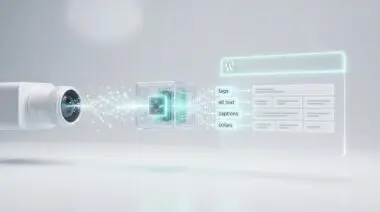
Automated systems can scrape the DOM, parse the JSON-LD payload, and map critical nodes directly into custom CRM variables. This bypasses the need for complex API integrations when dealing with smaller, independent job boards that lack developer endpoints.
This structured data injection ensures that every outreach pitch feels hyper-localized and contextually accurate. When an editor sees their exact salary band and organizational hierarchy referenced in a resource link pitch, the perceived value of the communication skyrockets.
It transforms a cold email into a highly consultative digital PR asset.
The pitch proves that you have deeply analyzed their specific hiring ecosystem. However, SEO architects face severe real-world friction due to non-standardized schema implementation.
Disparate, broken, or deeply nested JSON-LD structures across third-party niche boards will instantly break rigid Make.com mapping modules.
To solve this, you must deploy a middle-ware data cleaner to normalize the attributes. This is typically an LLM-based parsing module that ingests the raw, malformed JSON string.
This AI layer cleanses the syntax, standardizes the key-value pairs, and ensures flawless data integrity before it ever enters your CRM database.
Deploying Vector-Based Value-Gap Pitches
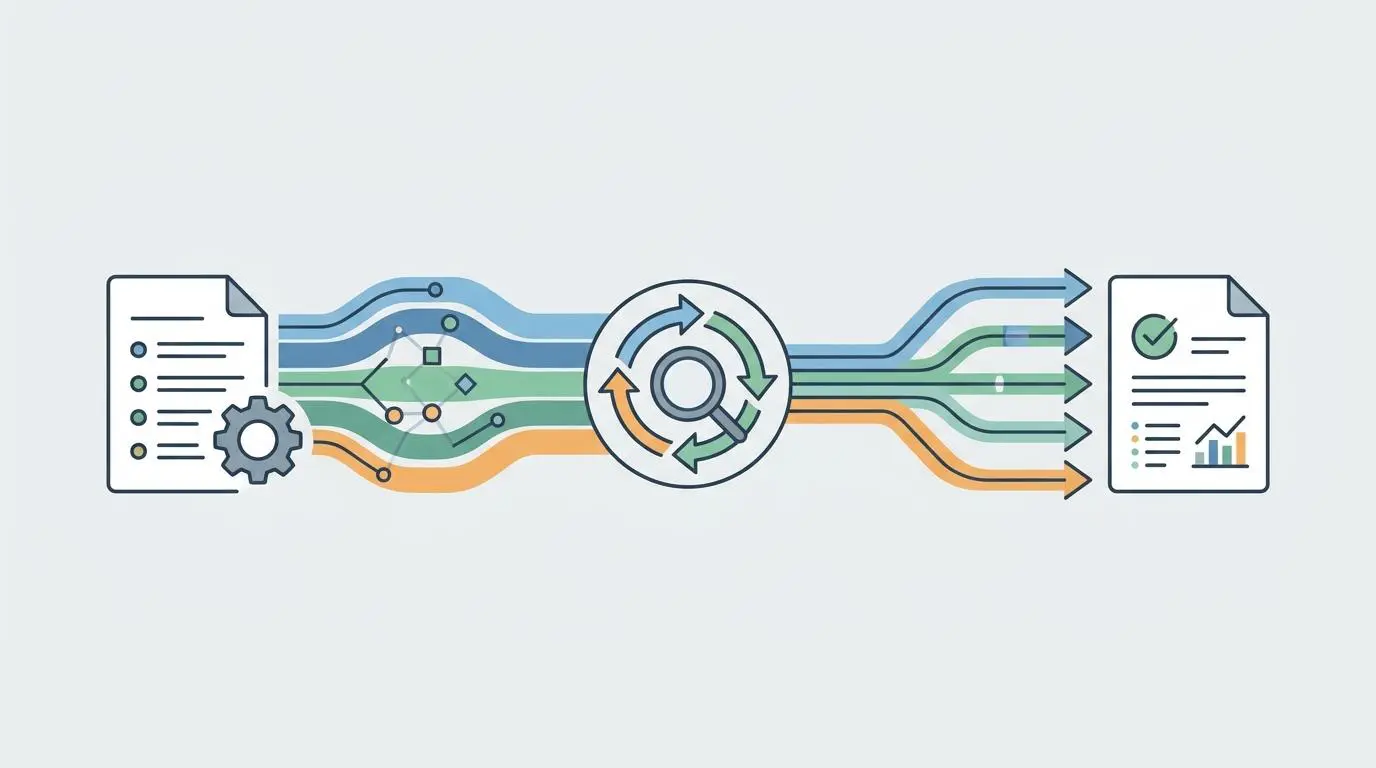
As we push deeper into 2026, Retrieval-Augmented Generation pipelines have become the gold standard for semantic enrichment.
Make.com can now feed raw Greenhouse job descriptions directly into a vector database like Pinecone. This enables the automated generation of highly specific value-gap pitches based on multi-dimensional semantic search.
These vector-driven pitches mathematically prove that your resource link directly supports the specific skills required field of the active job post. By matching the semantic vectors of your content with the vectors of the job requirements, the pitch becomes undeniable.
It is no longer a blind request for a backlink; it is a calculated solution to a documented corporate deficit.
The AI calculates the cosine similarity between the job gap and your article, generating a pitch that highlights this exact alignment. Yet, executing this requires navigating the fragmentation tax of modern sales technology.
The architectural debt of using separate, disjointed tools for data extraction, LLM enrichment, vector storage, and email outreach leads to unacceptable API latency.
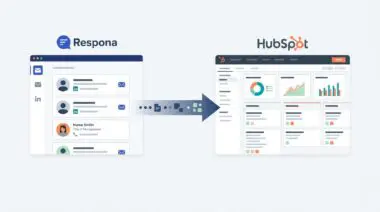
To eliminate this friction, SEO architects are rapidly migrating toward unified operating systems. These platforms handle the entire RAG-to-outreach lifecycle under one roof, reducing latency and preventing data leakage across disparate platforms.
This consolidation is the defining characteristic of modern programmatic link acquisition.
The Dawn of Autonomous GTM Operating Systems
By 2027, the SEO and digital PR industry will undergo a massive paradigm shift toward autonomous go-to-market operating systems. We are moving away from template-based outreach and entering an era of fully generative, multi-channel negotiations.
The concept of a static email sequence will be entirely obsolete, replaced by fluid, context-aware AI conversations.
Future AI agents will not just find link opportunities; they will autonomously negotiate placement terms and dynamic referral fees across email, LinkedIn, and Slack Connect.
This entire orchestration will be initiated in real-time, triggered the exact millisecond a new job post is indexed by the Google IndexNow API. The speed of execution will outpace human capability by orders of magnitude.
Navigating the intersection of technical SEO, programmatic architecture, and workflow automation requires a sharp strategy. To future-proof your site’s architecture and scale with precision, connect with Andres at Andres SEO Expert.
Frequently Asked Questions
What are the advantages of API-driven programmatic outreach over manual SEO?
API-driven programmatic outreach eliminates the decay of real-time relevance by intercepting link opportunities the moment they are published. Unlike manual outreach, which can take over 400 days to secure a backlink, API synchronization enables just-in-time acquisition that matches the fast lifecycle of niche content like job postings.
How do you handle Greenhouse Harvest API rate limiting in automation workflows?
Managing Greenhouse Harvest API rate limits requires implementing sophisticated exponential backoff logic within automation platforms like Make.com. By using error-handling routers to detect 429 Too Many Requests status codes, the system can pause and retry payloads gracefully without crashing the data pipeline.
Why is the migration to Greenhouse Harvest API v3 and OAuth 2.0 necessary?
The migration is critical because Greenhouse will deprecate Harvest API v1 and v2 on August 31, 2026. Systems must transition to OAuth 2.0 authentication and cursor-based pagination to maintain persistent connections and prevent catastrophic data loss in high-volume outreach pipelines.
How does semantic alignment improve response rates in digital PR?
Semantic alignment uses AI processing layers to analyze the overlap between a target editor’s recent articles and a specific data payload. By evaluating entity salience and topical relevance, AI can craft hyper-personalized pitches that achieve response rates of 10-25%, significantly higher than traditional spray-and-pray methods.
What is the purpose of normalizing JSON-LD payloads in SEO automation?
Normalizing JSON-LD payloads involves using LLM-based middleware to clean and standardize malformed structured data from third-party sites. This ensures that disparate data formats can be mapped correctly into CRM variables, allowing for hyper-localized pitches without breaking automation modules.
How do vector-based pitches function in modern link building?
Vector-based pitches utilize Retrieval-Augmented Generation (RAG) to compare the semantic vectors of a job description with the vectors of a resource link. By calculating cosine similarity, the system mathematically identifies a “value-gap,” proving that the content provides a direct solution to a specific skill deficit identified in the data source.