




Key Points
- Modern criminal wealth has transitioned from massive physical cash hoards to decentralized, sovereign-protected digital assets.
- The global shadow economy now moves trillions annually, directly inflating international real estate and distorting legitimate markets.
- Despite billion-dollar valuations, high-profile fugitives ultimately face a total loss of liquidity and agency upon capture by G7-tier justice systems.
Table of Contents
The Invisible Empire
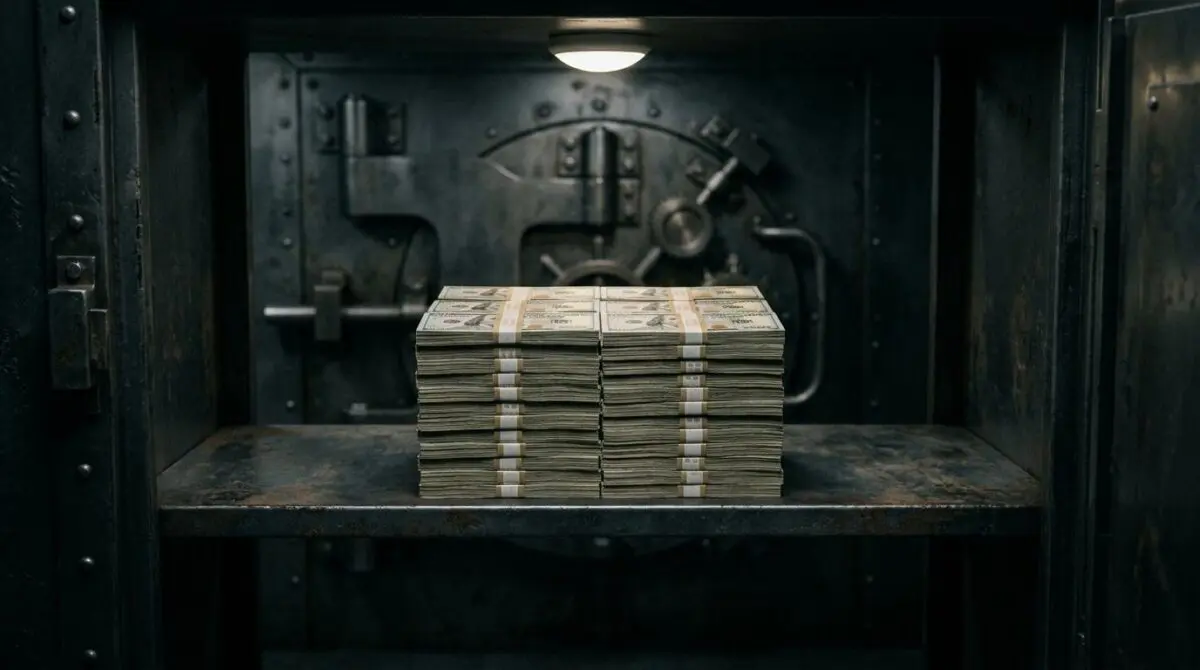
Imagine standing in a hidden vault where the sheer physical weight of hundred-dollar bills threatens the structural integrity of the concrete floor. While the average entrepreneur obsesses over tight profit margins and quarterly taxes, a completely hidden tier of the global elite operates entirely off the grid.
These are the illicit shadow billionaires. They are figures whose wealth effortlessly eclipses the GDP of mid-sized nations without ever appearing on a traditional wealth index.
The modern financial world is currently caught in a massive transparency paradox. Global forensic accounting has never been more digitized, sophisticated, or interconnected.
Yet, sophisticated criminal organizations continuously exploit decentralized finance and legacy shell networks. They move staggering sums of dark money in plain sight.
Tracking the Untrackable Wealth
Market Intelligence & Data
Total Illicit Activity
According to the Nasdaq Verafin 2026 Global Financial Crime Report, total illicit financial flows have reached this record high, representing a 19.2% CAGR over the last two years.
Escobar’s Peak Net Worth
Historical wealth audits analyzed in 2025/2026 retrospectives confirm Pablo Escobar reached a peak net worth of $30 billion, making him the richest criminal in recorded history.
Guzmán Asset Forfeiture
The U.S. Department of Justice maintains a 2026 standing forfeiture judgment of $12.6 billion against Joaquín ‘El Chapo’ Guzmán, representing his total illicit revenue over 30 years.
Drug Trafficking Flows
A 2026 UNODC and Nasdaq joint analysis indicates that drug trafficking alone accounts for over $1.1 trillion in annual illicit financial flows through the global system.
The staggering reality of a $4.4 trillion shadow economy fundamentally alters how we must understand global finance today. According to the Nasdaq Verafin report, this total illicit activity represents a massive 19.2 percent compound annual growth rate over the last two years.
This is not just fragmented street-level crime. It is a highly sophisticated, parallel financial ecosystem operating silently within our own.
When we look back at historical wealth audits, the sheer scale of cartel revenue remains incredibly difficult to comprehend. Retrospectives confirm that the infamous cartel leader achieved a peak net worth of $30 billion during the height of his violent reign.
This staggering accumulation of untaxed capital officially cemented his legacy as the richest criminal in recorded history.
The modern judicial system has developed highly aggressive mechanisms to strip this wealth from captured kingpins. The U.S. Department of Justice actively maintains a standing forfeiture judgment of $12.6 billion against Joaquín Guzmán.
This monumental financial penalty was meticulously calculated. It represents the totality of his illicit revenue generated over thirty years of global trafficking.
Moving beyond individual kingpins, the systemic flow of cartel capital continues to overwhelm international banking security infrastructure. A recent joint analysis by the UNODC and Nasdaq indicates that drug trafficking alone pushes over $1.1 trillion through the global system annually.
This immense volume of liquid capital forces compliance officers into an endless, high-stakes game of digital whack-a-mole.
From Cartel Origins to Cyber-Syndicates

Pablo Escobar’s Medellín Cartel famously transitioned from small-scale smuggling to a staggering $420 million-per-week enterprise. By 1982, his organization accounted for roughly 80 percent of the United States cocaine market.
Managing this level of physical liquidity was an absolute logistical nightmare for his inner circle.
Escobar’s brother and chief accountant, Roberto, famously reported that the cartel spent approximately $2,500 every single month just on rubber bands to organize their mountains of cash.
Even more shocking, an estimated 10 percent of their annual wealth, roughly $2.1 billion, was simply written off as a loss to rats, mold, or water damage while in hidden storage.
Today, the ascent of illicit wealth looks entirely different. Modern North Korean cyber-syndicates have traded physical pallets of cash for automated cryptocurrency mixers and high-speed laundering protocols.
The real-world friction has shifted from intercepting physical money at scale to the incredibly complex challenge of tracking cross-chain digital asset swaps.
Corporate Fronts and Energy Barons

The dark side of extreme wealth often wears a tailored corporate suit rather than a tactical vest. Semion Mogilevich, frequently dubbed the Boss of Bosses, built a $10 billion empire entirely devoid of traditional street-level crime.
Instead, he amassed his fortune by quietly controlling natural gas pipelines and deeply infiltrating Eastern European energy markets.
By 2026, the archetype of the illicit billionaire is characterized by legitimate corporate fronts in the energy and pharmaceutical sectors. These sophisticated business structures create a massive headache for international financial regulators and intelligence agencies.
The blurring of lines between sovereign state interests and transnational criminal holdings effectively prevents targeted sanctions from working.
When a criminal enterprise is deeply woven into a nation’s critical infrastructure, dismantling it becomes a geopolitical crisis rather than a simple law enforcement operation.
From Private Zoos to Server Farms

The psychology of extreme wealth always demands trophies, but the nature of these status symbols has evolved dramatically. Historical criminals built massive monuments to their invincibility.
Escobar’s sprawling 7,000-acre Hacienda Nápoles, complete with a private zoo and a personal hovercraft fleet, is a prime example. These physical estates were massive vulnerabilities that law enforcement could easily raid, seize, and dismantle.
In stark contrast, the 2026 illicit billionaire signals wealth through completely invisible trophies. Their prized assets are high-frequency trading servers located in remote jurisdictions with zero extradition treaties and no digital backdoors.
This represents a strategic shift from easily seized physical status symbols to sovereign-protected digital fortresses. The modern kingpin prioritizes data sovereignty and untraceable digital infrastructure over sprawling mansions and exotic cars.
Shadow GDP and Global Real Estate

The financial impact of this dark money extends far beyond the isolated criminal underworld. This $4.4 trillion shadow GDP actively distorts legitimate markets across the globe.
Criminal capital is routinely parked in high-end developments, artificially inflating global real estate markets.
Luxury hubs like Dubai and the Seychelles have become prime targets for this untraceable wealth. Developers in these regions often turn a blind eye to the origins of the massive capital inflows funding their skyline expansions.
The real-world friction here falls directly on the shoulders of everyday citizens. Massive capital inflows from criminal entities drive up property prices, making legitimate homeownership increasingly difficult for the general population.
The Supermax Reality Check
No matter how vast the fortune, the physical constraints of the justice system remain the ultimate equalizer. Joaquín Guzmán watched his sprawling empire evaporate into a life sentence inside the concrete walls of ADX Florence.
The transition from global kingpin to isolated inmate is a brutal psychological shock.
By 2026, the former billionaire has been reduced to filing handwritten motions claiming cognitive decline and unequal treatment. His bleak situation highlights a harsh reality about illicit wealth that pop culture often ignores.
Once a shadow billionaire enters a G7-tier judicial system, they face the total and immediate loss of both liquidity and personal agency. Their billions cannot buy a larger cell, an extra phone call, or a single moment of freedom.
The Hollywood Myth vs Gilded Cages
Pop culture has a long history of romanticizing the outlaw billionaire. Media portrayals like Narcos often glamorize a Robin Hood mythos, similar to the enduring legends surrounding Dawood Ibrahim’s alleged ties to Bollywood financing.
Audiences are captivated by the illusion of absolute freedom and rebellion.
However, reality-based reporting paints a much bleaker picture of the modern criminal lifestyle. Ibrahim remains a high-profile fugitive with an estimated $6.7 billion net worth, yet he cannot freely travel or spend it.
He exists in a gilded cage of high-security Karachi compounds, living under constant, paranoid surveillance. The romanticized fiction of the criminal lifestyle stands in stark contrast to the isolated, anxiety-ridden reality of high-value fugitives.
The Sovereign Shadow Future
The landscape of illicit wealth is rapidly shifting toward a dangerous new concept known as Sovereign Shadow Banking. Criminal organizations are increasingly partnering directly with pariah states to create parallel, untouchable financial ecosystems.
By late 2026, these state-sponsored shadow networks will likely render traditional SWIFT-based sanctions and asset-seizure laws completely obsolete.
The future of criminal empires will be defined by their ability to merge with sovereign immunity, making them virtually untouchable by western law enforcement. This evolution will force global regulators to completely rethink how they track and intercept dark money.
Understanding the strategies, risks, and mindsets behind extreme wealth can inspire your own business journey. To scale your own empire with precision and smart SEO & GEO architecture, connect with Andres at Andres SEO Expert.
Frequently Asked Questions
Who is the richest criminal in recorded history?
Historical wealth audits analyzed in 2025/2026 confirm that Pablo Escobar reached a peak net worth of $30 billion, officially making him the wealthiest criminal in recorded history at the height of the Medellín Cartel’s power.
What is the total value of global illicit financial flows in 2026?
According to the Nasdaq Verafin 2026 Global Financial Crime Report, total illicit financial activity has reached a record high of $4.4 trillion, reflecting a 19.2% compound annual growth rate over the last two years.
How much illicit revenue did the U.S. government seize from El Chapo?
The U.S. Department of Justice maintains a standing forfeiture judgment of $12.6 billion against Joaquín ‘El Chapo’ Guzmán. This amount represents the total calculated illicit revenue generated through his global trafficking operations over three decades.
How has the storage of criminal wealth evolved from physical cash to digital assets?
While historical cartels like Escobar’s managed physical mountains of cash—spending $2,500 monthly on rubber bands—modern illicit billionaires use automated cryptocurrency mixers, high-speed laundering protocols, and sovereign-protected server farms to hide their wealth.
What is Sovereign Shadow Banking and why is it a threat?
Sovereign Shadow Banking is a trend where criminal organizations partner with pariah states to create parallel financial ecosystems. These networks utilize sovereign immunity to protect assets, potentially rendering traditional sanctions and asset-seizure laws obsolete by late 2026.
How does dark money impact the global real estate market?
Illicit capital is frequently parked in luxury real estate developments in hubs like Dubai and the Seychelles. This massive inflow of untraceable wealth artificially inflates property prices, making legitimate homeownership more difficult for the general population.