Key Points
- Dynamic Routing Optimization: Modern algorithms process live traffic and weather to shrink customer arrival windows and completely eliminate dead mileage.
- Generative Diagnostic Support: Mobile AI assistants instantly summarize massive technical manuals to help junior technicians repair unfamiliar legacy equipment on the first try.
- Shift-Left Financial Strategies: Implementing remote visual assistance intercepts unnecessary physical truck rolls to protect profit margins and reclaim lost billable hours.
Table of Contents
- The Chaos of the Disconnected Dispatch
- The Data Driving the Modern Service Fleet
- Eliminating Dead Mileage and Guesswork
- Empowering Technicians with Generative Knowledge
- Protecting Profit Margins with Remote Resolution
- Bridging the Generational Skills Gap
- Breaking Free from the Physical Office
- The Shift Toward Guaranteed Uptime
The Chaos of the Disconnected Dispatch
Picture this: your highest-paid technician sits in gridlocked traffic for an hour, only to arrive at a job site lacking the necessary replacement part. They must then explain to a frustrated customer that the repair cannot happen today.
This scenario is a daily reality for operations relying on outdated, fragmented scheduling tools. The siloed resolution gap between dispatchers, inventory systems, and technicians causes one in four service calls to fail on the first visit.
This massive overhead in repeat truck rolls acts as a hidden tax draining your operational budget. When your field team flies blind without real-time data, every missed appointment chips away at your profit margins. Businesses can no longer afford to treat field service operations as an unpredictable guessing game.
The ultimate solution to modernize and scale these complex operations lies in adopting AI-driven Field Service Management (FSM) systems. These intelligent platforms bridge the gap between the back office and the field. By centralizing data and automating the heavy lifting, modern FSM platforms ensure the right technician arrives with the right parts at the exact right time.
The Data Driving the Modern Service Fleet
Market Intelligence & Data
Global Market Valuation
According to a 2026 Fortune Business Insights report, the global field service management market reached this valuation, driven by demand for real-time mobile visibility.
Enterprise AI Implementation
A 2026 TSIA State of Field Services report indicates that nearly all high-performing service organizations have now integrated AI into their core workflows.
Unnecessary Dispatch Rate
The 2025 Field Service Benchmark Report by Aquant reveals that over one-tenth of all physical truck rolls could have been resolved remotely with better data.
Dispatcher Productivity Drain
According to 2025 research from Fieldproxy, manual scheduling tasks consume nearly two full workdays per week for administrative staff.
The explosive growth of this technology is undeniable, as detailed in the 2026 Fortune Business Insights report. A global valuation of $6.14 billion highlights a massive industry shift away from paper-based tracking toward real-time mobile visibility. Companies are actively investing capital to ensure their technicians remain connected, informed, and operating at peak efficiency.
Furthermore, an astonishing 93 percent of high-performing service organizations have already integrated artificial intelligence into their core workflows. This means AI is no longer an experimental luxury for the enterprise sector. It is a fundamental baseline required to remain competitive, process complex logistical data, and keep customer satisfaction scores high.
However, the industry still faces massive inefficiencies, as the 2025 Field Service Benchmark Report by Aquant clearly demonstrates. Discovering that 14 percent of all physical truck rolls are completely unnecessary reveals a glaring communication breakdown. Better preliminary data and remote diagnostics could instantly intercept these trips, saving thousands of dollars in fuel and labor.
Finally, the administrative burden of outdated systems is crushing back-office staff. Losing 15 hours a week to manual scheduling means dispatchers spend almost two full workdays just moving calendar blocks around. Automating these routine tasks frees up human talent to focus on complex customer escalations and strategic growth.
Eliminating Dead Mileage and Guesswork

Manual scheduling is a logistical nightmare that inevitably leads to dead mileage and severe customer frustration. When dispatchers rely on static whiteboards or basic spreadsheets, they cannot account for sudden road closures or last-minute cancellations. This results in the dreaded four-hour arrival window, forcing customers to waste half their day waiting for a technician.
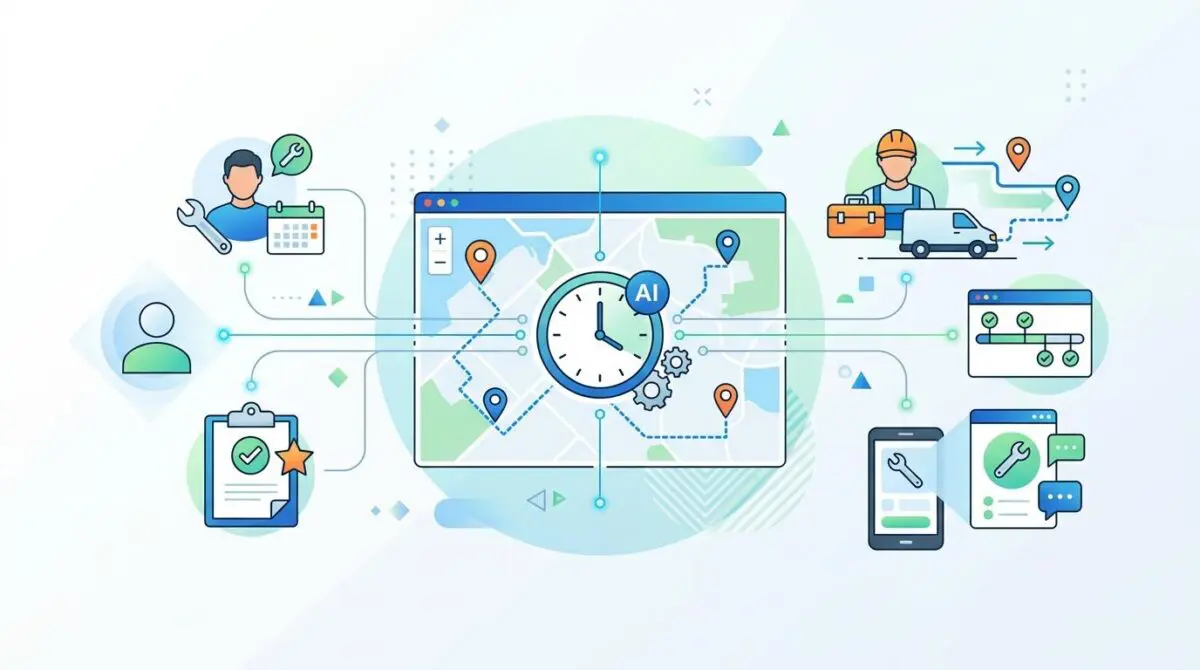
Modern dynamic routing tools completely eliminate this guesswork. These platforms utilize real-time traffic updates and weather data to continuously optimize travel paths on the fly. By dynamically adjusting routes, businesses can confidently reduce technician arrival windows to as little as 15 minutes.
This level of precision does more than just delight the customer; it maximizes the daily output of your workforce. Technicians spend less time idling in traffic and more time executing billable repairs. The entire operation becomes a fluid, highly responsive network rather than a rigid, breakable schedule.
Empowering Technicians with Generative Knowledge
A major bottleneck in the field occurs when junior technicians encounter legacy equipment they have never been trained on. Staring at an unfamiliar machine leads to stressful diagnostic delays, frantic calls back to headquarters, and ultimately, failed repairs. The knowledge gap between seasoned veterans and new hires is a critical vulnerability.
Generative AI tools are stepping in to bridge this divide directly at the job site. Advanced platforms can instantly ingest and summarize dense, 50-page technical manuals. The AI distills this complex documentation into simple, three-step repair instructions accessible via the technician’s mobile device.
Furthermore, the technology is rapidly evolving from passive assistance to proactive management. The transition to agentic AI allows FSM systems to independently re-order parts and reschedule appointments without human intervention based on live diagnostic data. This means the software actively manages the logistical fallout if a part is missing.
Protecting Profit Margins with Remote Resolution
Physical truck rolls are incredibly expensive, costing an average of $200 to $500 per visit when factoring in labor, fuel, and vehicle wear. When a technician is dispatched simply to flip a switch or diagnose a minor software glitch, that trip becomes a major drain on profit margins. Unnecessary diagnostic visits are a luxury no modern service business can afford.
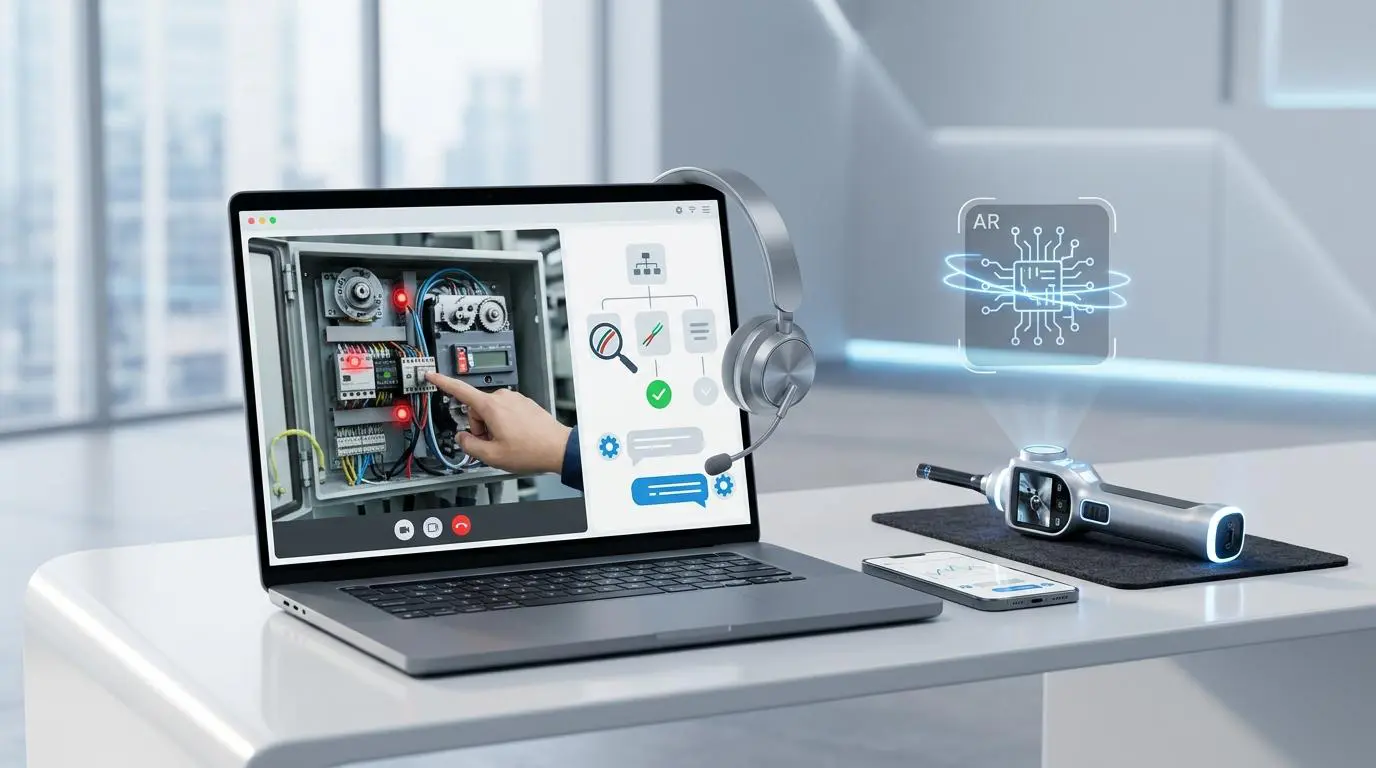
Implementing shift-left strategies fundamentally changes this financial dynamic. By utilizing remote visual assistance, tier-one support agents can see exactly what the customer sees through their smartphone camera. They can guide the user through basic troubleshooting steps, completely avoiding the need to dispatch a physical vehicle.
The financial impact of this operational shift is staggering at scale. Enterprise service organizations can save approximately $1.1 million annually for every single percent increase in their remote resolution rates. Protecting your bottom line starts with ensuring that a truck only rolls when absolutely necessary.
Bridging the Generational Skills Gap
The technical service sector is facing a severe demographic crisis as its most experienced workers reach retirement age. This aging workforce is projected to create a massive 2.6 million worker deficit by the year 2026. Companies are scrambling to find ways to rapidly upskill junior staff before decades of institutional knowledge walk out the door.
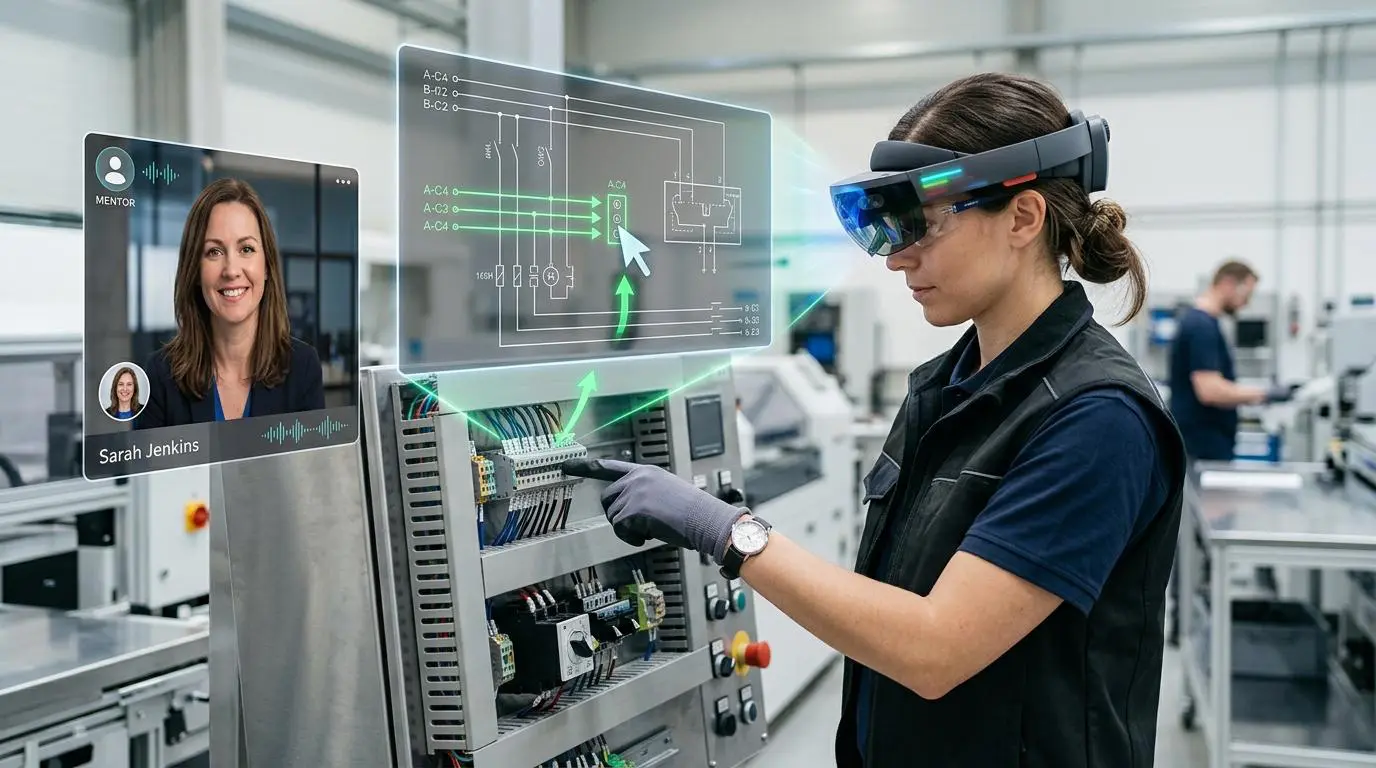
Augmented reality tools are providing a brilliant lifeline for this human resource challenge. Advanced applications allow retired or senior veterans to operate from a comfortable central hub. From there, they can virtually look through the eyes of a new hire out in the field.
The senior expert can draw digital arrows, circle components on the screen, and guide the junior technician through complex repairs in real time. This highly interactive mentorship accelerates the training process while ensuring high-quality service delivery. It effectively clones your best technicians and distributes their expertise across the entire fleet.
Breaking Free from the Physical Office
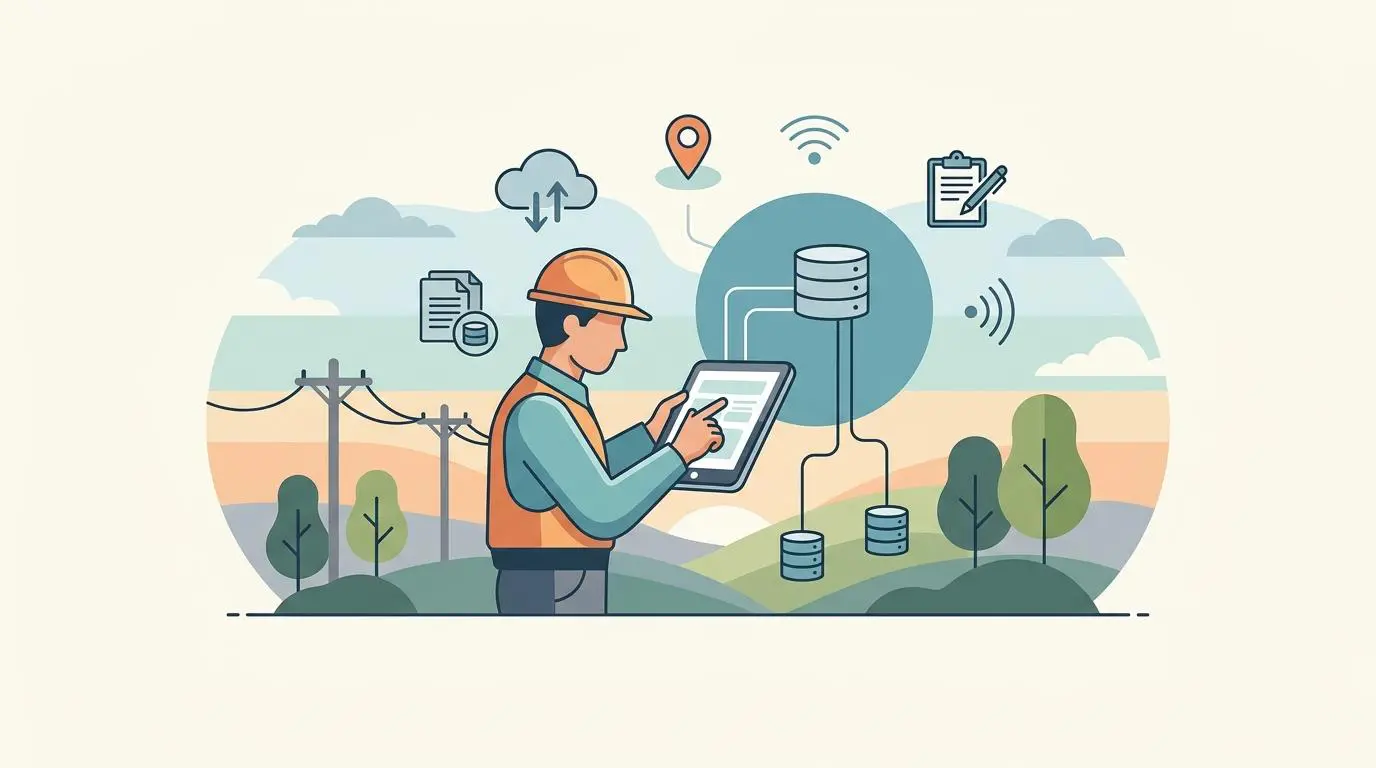
Legacy, desktop-based logging systems force technicians to act as part-time data entry clerks. Having to return to a physical office at the end of the day just to input job notes and close out work orders is incredibly inefficient. This outdated process wastes up to two hours of billable field time daily per technician.
Modern FSM platforms have solved this by providing mobile-first, offline-capable applications. Technicians can log their hours, capture signature approvals, and update inventory directly from their smartphone while standing in a customer’s basement. The software is designed to work seamlessly even in dead zones with zero cellular reception.
Once the technician drives back into an area with connectivity, the app instantly syncs all cached data with the cloud. This eliminates the need for redundant office-based data entry and keeps the billing department moving at lightning speed. Your field team can finally focus entirely on the physical work they were hired to do.
The Shift Toward Guaranteed Uptime
By late 2026, the entire field service industry will pivot away from the traditional, reactive break-fix model. Clients will no longer want to pay for technician labor hours or individual replacement parts. Instead, the market is moving toward Outcome-as-a-Service (OaaS), where customers simply pay a subscription for guaranteed machine uptime.
This visionary future relies heavily on IoT-linked, self-healing assets that can predict their own failures before they happen. AI-driven FSM systems will monitor these connected machines, automatically dispatching technicians for preventative maintenance before the client even realizes there is a problem. The ultimate goal is invisible, frictionless service.
Navigating the intersection of modern technology, software architecture, and business growth requires a sharp strategy. To future-proof your tech stack and scale with precision, connect with Andres at Andres SEO Expert.
Frequently Asked Questions
What is the primary cause of failed field service visits?
According to current industry data, one in four service calls fails on the first visit due to a siloed resolution gap where dispatchers, inventory systems, and technicians lack real-time data synchronization.
How much does an unnecessary truck roll cost a business?
A physical truck roll typically costs between $200 and $500 per visit when factoring in labor, fuel, and vehicle wear. High-performing organizations utilize remote resolution to intercept these costs.
How does Generative AI assist technicians at the job site?
Generative AI tools can ingest and summarize dense technical manuals into simple, actionable repair instructions, helping junior technicians bridge the knowledge gap and complete repairs on legacy equipment.
What is the financial impact of increasing remote resolution rates?
Enterprise service organizations can save approximately $1.1 million annually for every single percent increase in their remote resolution rates by implementing Shift-Left strategies and remote visual assistance.
How does dynamic routing improve technician arrival windows?
Modern FSM platforms use real-time traffic and weather data to continuously optimize routes, allowing businesses to reduce arrival windows from several hours to as little as 15 minutes.
What is the Outcome-as-a-Service model in field service?
Outcome-as-a-Service (OaaS) is a shift away from reactive break-fix billing toward a subscription-based model where customers pay for guaranteed machine uptime supported by IoT and predictive maintenance.