Key Takeaways
- Full AI agent tracing: every model call, tool execution, and token count surfaced in one dashboard.
- Session replay and nested execution waterfalls end black-box debugging for agentic workflows.
- OpenTelemetry support and exportable traces turn observability into a continuous improvement loop.
Table of Contents
Agent Observability Moves from Black Box to Dashboard
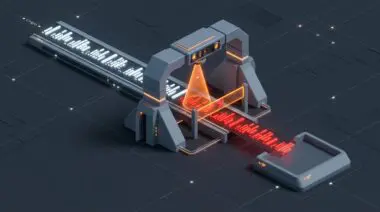
Cloudflare has launched Cloudflare Agents, an observability and management suite that starts with full agent tracing.
The announcement brings real-time insight into what autonomous agents actually think, do, and cost at production scale.
For teams deploying AI agents on the company’s developer platform, the new layer surfaces every model call, tool execution, and token consumed — a level of visibility traditional application telemetry never captured.
Agent tracing, the first pillar of the offering, plugs a critical blind spot: an agent can return HTTP 200 and still fail by looping on the wrong tool or burning tokens silently.
With Cloudflare Agents, those failures become inspectable and fixable.
Inside Agent Tracing: Every Model Call, Tool, and Token Exposed
Cloudflare’s existing Workers tracing already maps infrastructure calls such as D1 queries, KV reads, and fetch requests.
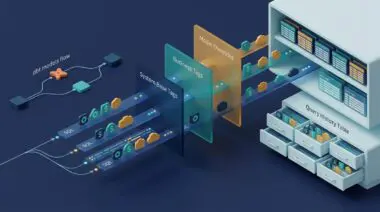
Agent tracing extends that picture upward into the reasoning layer, adding dedicated spans for agent invocations, tool executions, approval events, and supported subagent calls.
Each span carries metadata about the model used and token counts, so operators can finally answer questions like “where did the time go — the model, the tool, or the infrastructure?” without piecing together fragmented logs.
Session Replay Without Re-Execution
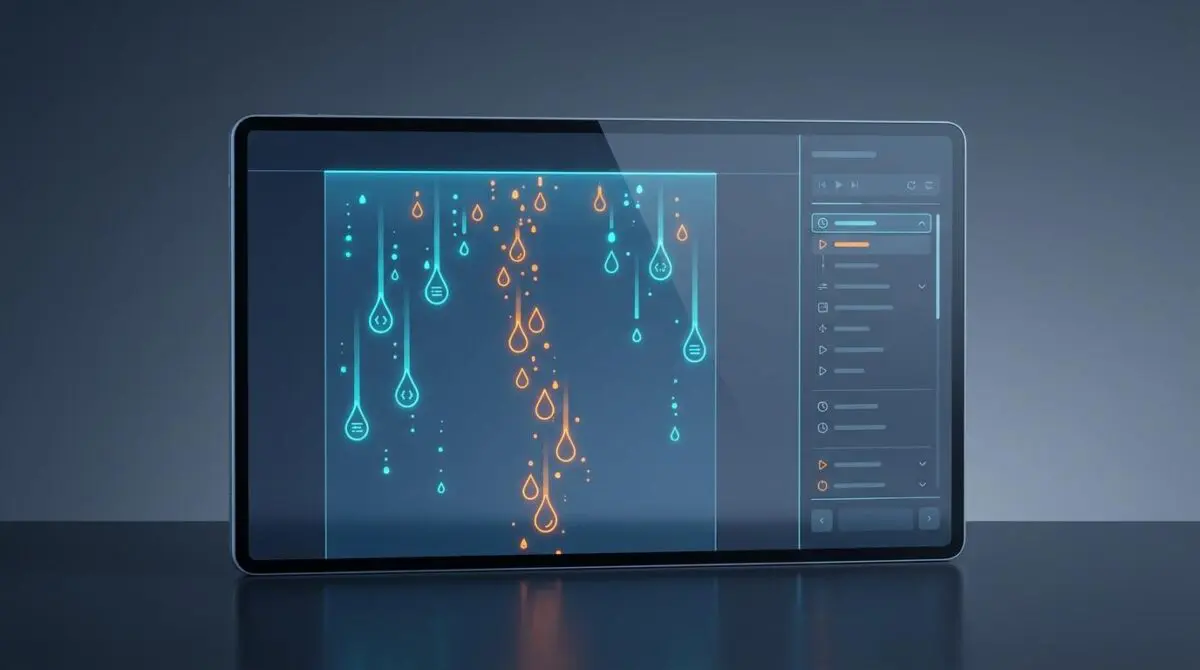
A new Messages tab assembles the full conversation for a turn: system instructions, user input, the model’s internal thinking, tool arguments and results, and the final response.
It replays recorded data rather than re-running the agent, letting teams inspect exactly what context was available when a tool was selected or when a handoff to a subagent occurred.
Payload recording controls give developers the option to suppress message and tool data when those payloads contain personal information or secrets.
Execution Waterfall That Connects the Dots
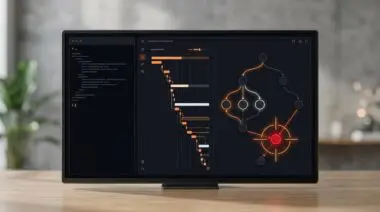
The Traces tab visualises the full waterfall, nesting subagent invocations under the parent and linking each agent operation to the Cloudflare infrastructure resources it triggered.
One example traced a travel planner agent delegating to an itinerary builder subagent; the waterfall showed the parent spanning 2.72 minutes, the child 1.83 minutes, and every model call, D1 query, and KV write in a single, correlated stream.
Suddenly, debugging agent-side decisions and infrastructure-side latencies becomes a single workflow instead of two disconnected investigations.
OpenTelemetry and Custom Harness Support
Agent tracing works out of the box today with the Think, Flue, and AI SDK agent harnesses, which emit agent, conversation, turn, model, and tool telemetry through their tracing integrations.
For custom frameworks, Cloudflare provides a custom spans API that follows OpenTelemetry’s Generative AI semantic conventions, allowing any in-house harness to instrument agents without waiting for a bespoke adapter.
Cloudflare is also working to accept OpenTelemetry data directly inside Workers.
That means frameworks already emitting OpenTelemetry spans for genAI will eventually appear in the Agents view without any Cloudflare-specific glue, grouping into agents and sessions automatically when standard identifiers are present.
Pricing and Path to General Availability
All tracing remains free during the beta period.
Starting October 1, 2026, agent spans will count as observability events and fall under existing Workers Observability pricing: 200,000 events per day on the Free tier, 20 million included per month on the Paid tier, with additional events at $0.60 per million and retention windows of three or seven days.
Traces can also be exported to any OTLP-compatible destination, so the same structured data can power evaluations, cost analytics, and continuous improvement pipelines instead of sitting locked inside a single dashboard.
The Agent Economy Demands Infrastructure That Pays Attention
Agent tracing arrives at a moment when Cloudflare’s network is already absorbing staggering AI-driven load.
AI agent requests on the platform surged 1,700% between June 2025 and May 2026, a trajectory that management believes will push total internet traffic up between ten and a hundred times within five years.
Simultaneously, publishers on the network now send over 1 billion HTTP 402 “payment required” notices to AI bots every single day as part of the Pay Per Crawl closed beta — a monetization model examined in the following video analysis:
In that context, agent observability is not just a developer convenience; it is the prerequisite for a functioning agent economy where every request can be measured, attributed, and eventually monetized.
Cloudflare’s own structural moves reinforce the strategic weight of the announcement.
The company recently disclosed a 20% workforce reduction aimed at evolving to an “agentic AI-first operating model,” a restructuring expected to carry charges of $140 million to $150 million.
That pivot aligns directly with the vision articulated in the Agents launch: one place to deploy, observe, and continuously improve every agent you run.
Competitive pressure is also mounting. Amazon introduced a rival AI traffic monetization tool in June 2026, leveraging its vast distribution to millions of websites.
Where Amazon can monetize the traffic, Cloudflare is betting that deep observability and control — the ability to replay sessions, trace token economics, and build self-improving loops — will lock in developers who need more than a toll booth.
From Reactive Debugging to Autonomous Improvement Loops
Cloudflare Agents transforms observability from a post-mortem tool into a feedback loop that can feed an agent’s development lifecycle.
Once developers have a complete, traceable record of where agents burn time, which tools they misselect, and how subagent handoffs ripple through costs, they can begin baking that intelligence back into automated refinement cycles — a step toward truly self-improving autonomous systems.
As AI agents graduate from experimental demos to web-scale consumers, the infrastructure that sees and governs their behavior will define the next competitive frontier.
For organisations engineering AI-driven digital experiences, the performance of those systems rests not just on model quality but on the speed, resilience, and observability of the cloud layer underneath. Andres SEO Expert specialises in technical performance engineering that eliminates infrastructure bottlenecks, managed cloud hosting architected for demanding workloads, and AI-driven content and automation pipelines that scale without breaking. When your stack needs the same clarity Cloudflare Agents brings to agent behaviour, connect with Andres and learn how Andres SEO Expert can build the observability, speed, and strategy your digital operation depends on.
Frequently Asked Questions
What is Cloudflare Agents?
Cloudflare Agents is an observability and management suite for AI agents deployed on Cloudflare’s developer platform, starting with full agent tracing to surface every model call, tool execution, and token consumed at production scale.
How does Cloudflare agent tracing work?
Agent tracing extends Workers tracing to the reasoning layer, adding dedicated spans for agent invocations, tool executions, approval events, and supported subagent calls. Each span carries metadata about the model used and token counts, enabling operators to see where time goes across model, tool, and infrastructure.
What is the Cloudflare Agents pricing?
All tracing is free during beta. Starting October 1, 2026, agent spans will count as observability events under Workers Observability pricing: 200,000 events per day on the Free tier, 20 million included monthly on the Paid tier, with additional events at $0.60 per million and retention windows of three or seven days.
Which AI agent harnesses are supported by Cloudflare Agents?
Agent tracing works out of the box with Think, Flue, and AI SDK agent harnesses, which emit agent, conversation, turn, model, and tool telemetry. Custom frameworks can use Cloudflare’s custom spans API that follows OpenTelemetry’s Generative AI semantic conventions.
Does Cloudflare Agents support OpenTelemetry?
Yes, Cloudflare provides a custom spans API following OpenTelemetry’s Generative AI semantic conventions, and is also working to accept OpenTelemetry data directly inside Workers. Frameworks already emitting OpenTelemetry spans for genAI will eventually appear in the Agents view without Cloudflare-specific glue.
How does Cloudflare Agents help with agent debugging?
Cloudflare Agents provides a Messages tab that replays the full conversation for a turn, and a Traces tab that visualises the full waterfall, nesting subagent invocations and linking each agent operation to infrastructure resources. This lets teams inspect exactly what context was available when tools were selected or subagent handoffs occurred, without re-running the agent.