Executive Summary
- Autonomous detection and remediation of workflow failures to ensure 99.9% uptime.
- Integration of circuit breakers and exponential backoff to manage API instability.
- Critical infrastructure for scaling programmatic SEO and high-volume AI content operations.
What is Self-Healing Pipelines?
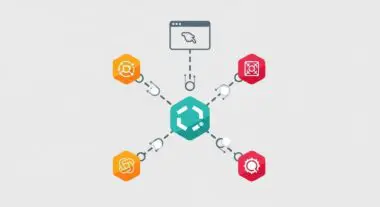
Self-healing pipelines are advanced architectural frameworks designed to autonomously detect, diagnose, and remediate failures within data or automation workflows. In the context of AI and programmatic operations, these pipelines utilize sophisticated error-handling logic, such as exponential backoff, circuit breakers, and automated retries, to maintain system continuity without human intervention. By monitoring execution states and payload integrity, a self-healing system can identify transient network issues, API rate limiting, or malformed JSON responses and trigger corrective actions dynamically.
At their core, these pipelines rely on idempotency—the property where an operation can be repeated multiple times without changing the result beyond the initial application. This ensures that when a pipeline heals by re-running a failed step, it does not create duplicate data or corrupted states. We at Andres SEO Expert view self-healing capabilities as the transition from fragile, linear scripts to robust, resilient autonomous agents capable of operating at scale.
The Real-World Analogy
Imagine a modern smart electrical grid. In a traditional grid, if a tree falls on a power line, the entire neighborhood loses power until a technician manually finds the break and fixes it. In a self-healing grid, sensors immediately detect the break and automatically reroute electricity through alternative pathways in milliseconds. The lights stay on for the residents while the system logs the specific location of the damage for a permanent repair later. Self-healing pipelines do the same for your data: they reroute and retry tasks so your business operations never go dark.
Why is Self-Healing Pipelines Critical for Autonomous Workflows and AI Content Ops?
In the era of AI-driven content production and programmatic SEO, workflows often depend on a complex web of third-party APIs, LLM providers, and cloud functions. These external dependencies are inherently unstable; an API might timeout, or a model might return a non-compliant schema. Without self-healing mechanisms, a single failure in a batch of 10,000 content generations could halt the entire process, leading to significant data gaps and operational downtime. Self-healing pipelines ensure high availability and fault tolerance, allowing for stateless automation that scales horizontally without requiring constant developer oversight.
Best Practices & Implementation
- Implement Exponential Backoff: When an API call fails, wait for progressively longer intervals before retrying to avoid overwhelming the server and triggering further rate limits.
- Utilize Dead Letter Queues (DLQ): Route persistently failing tasks to a separate queue for manual inspection, preventing them from clogging the main processing stream.
- Enforce Idempotency Keys: Use unique identifiers for every transaction to ensure that retried actions do not result in duplicate entries in your database or CMS.
- Deploy Circuit Breakers: Automatically stop requests to a specific service if it fails repeatedly, allowing it time to recover before the pipeline attempts to resume operations.
Common Mistakes to Avoid
One frequent error is the implementation of infinite retry loops, which can lead to retry storms that crash both the source and destination systems. Another mistake is silent healing, where the system fixes an error but fails to log the event; this obscures underlying architectural weaknesses that may require a permanent fix. Finally, many teams neglect state validation, assuming a retried task will always succeed without verifying if the environment has changed since the initial failure.
Conclusion
Self-healing pipelines are the backbone of resilient AI automation, transforming fragile data flows into durable, autonomous systems. By prioritizing fault tolerance and automated recovery, organizations can scale their programmatic SEO and content operations with absolute technical confidence.