Key Takeaways
- Writing the event inside the same transaction as the business change eliminates the dual-write failure window entirely.
- Polling and CDC both discover outbox rows, but CDC adds replication slots, WAL retention, and cross-table ordering constraints.
- At-least-once delivery makes idempotent consumers mandatory, and the relay needs retries, dead letter handling, and archival.
Table of Contents
The Dual-Write Failure That Silently Breaks Distributed Systems
A customer places an order. The database records it.
The service crashes. The inventory, billing, and shipping systems never hear about it.
This is the dual-write problem, and a technical explainer published by the n8n blog on September 19, 2026 argues that the transactional outbox pattern permanently closes that failure window.
The guarantee is structural, not a retry patch. The event is written inside the same database transaction as the business change.
Commit Once, Publish Later: Inside the Transactional Outbox
The dual-write problem exists because a local database commit and a message broker publish cannot be coordinated atomically across two independent systems. A failure between those operations leaves downstream services permanently out of sync.
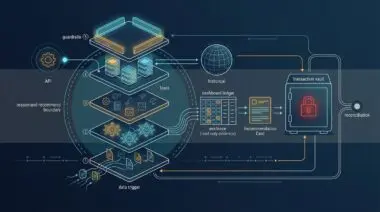
The outbox pattern removes the second independent write from the application’s critical path. The service writes business data and an event row to an outbox table in one transaction.
Only after that transaction commits does a separate relay process read the unpublished row and forward it to a broker. A broker outage delays delivery; the relay retries later without re-executing business logic.
It guarantees the event is delivered, not just attempted.
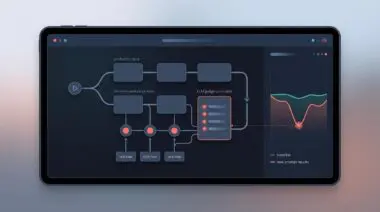
The n8n platform applies this pattern to workflow automation. It provides retries, execution history, failure handling, and monitoring as native relay infrastructure.
In practice, the automation relay follows a disciplined sequence.
- Detect new outbox rows: Trigger a workflow from a Postgres Trigger node or poll with a Schedule Trigger node.
- Publish each event: Send the event to RabbitMQ, Redis, or an HTTP endpoint with built-in retries.
- Mark rows processed only after delivery succeeds: Updating the outbox before broker confirmation risks silent event loss.
- Alert on exhausted retries: Error Trigger nodes notify the team when a row remains undelivered.
That sequence matters more than the tool choice. Processing a row too early reopens the exact failure window the pattern was built to close.
Polling, CDC, and the Production Tradeoffs Most Teams Underestimate
Once the outbox row exists, the relay must discover it. There are two mainstream detection strategies: polling and change data capture.
Polling is simpler. The relay queries unpublished rows on an interval, often using a partial index on pending records to keep scans fast.
Change data capture reads the database transaction log directly. Debezium 2.5+ has become an industry-standard CDC tool, with Conduktor’s outbox pattern glossary documenting near real-time publishing typically within single-digit milliseconds of commit in properly tuned deployments.
That latency advantage comes with real operational costs. PostgreSQL requires wal_level set to logical, while MySQL needs log_bin enabled and binlog_format set to row.
CDC also adds infrastructure overhead. Teams must manage replication slots, connector health, and WAL retention to avoid filling the disk.
For high-concurrency relay workers, Postgres implementations often use SELECT FOR UPDATE SKIP LOCKED to prevent lock contention. Monitoring replication slot lag becomes a production safety check, not a nice-to-have.
Ordering is another underestimated constraint. CDC preserves order within a single table but not across tables.
The practical fix is to use the business aggregate identifier as the Kafka message key. The outbox pattern works with any broker, but Kafka is a common target because partitioning aligns cleanly with aggregate identifiers.
Schema evolution also needs attention. Forward-compatible changes are easier when payloads include schema_version and use a schema registry with Avro or Protobuf.
The Maturing Outbox Ecosystem and What It Changes for Automation Teams
The pattern has moved well beyond hand-rolled database tables and custom worker services. Paramore Brighter’s official V10 documentation now describes automated table provisioning, generated DDL, and a background outbox sweeper with distributed locking for .NET teams.
That ecosystem shift matters for automation teams evaluating where to build versus buy. A reliable relay needs retries, dead letter handling, execution visibility, and cleanup tooling.
Without archival policies, the outbox table grows without bound and polling queries degrade.
Building that from scratch creates redundant infrastructure. The outbox pattern is operationally demanding even when the core transaction logic is simple.
At the same time, the at-least-once delivery model places a hard requirement on downstream consumers. They must be idempotent, because duplicate events are a designed consequence of retries.
For automation professionals, the outbox pattern is becoming a boundary line between workflows that tolerate partial failure and workflows that quietly corrupt state. The architecture choice now influences monitoring, incident response, and long-term data governance.
The tradeoff is clear: more upfront discipline buys fewer undetected delivery failures. That is the operational value proposition driving adoption across microservices and event-driven automation stacks.
The Relay Is the Real Guarantee
The transactional outbox only becomes production-ready when the relay is treated as a first-class system, not an afterthought. For teams building automation layers that need to survive partial failures, Andres SEO Expert’s programmatic SEO and AI automation service is how reliable orchestration gets designed — contact Andres SEO Expert.
Frequently Asked Questions
What is the transactional outbox pattern?
The transactional outbox pattern writes an event row to an outbox table inside the same database transaction as the business data change. A separate relay process then publishes that event to a message broker after the transaction commits, so the database write and event publication are not two independent operations.
What problem does the dual-write problem cause in distributed systems?
A local database commit and a message broker publish cannot be coordinated atomically across two independent systems. If the service crashes between those operations, downstream services such as inventory, billing, and shipping can remain permanently out of sync.
How does the outbox pattern guarantee event delivery?
The event is committed with the business change first. A relay reads unpublished outbox rows and retries broker delivery until it succeeds, marking rows processed only after delivery succeeds. This guarantees the event is delivered, not just attempted.
What is the difference between polling and change data capture for outbox relays?
Polling queries unpublished rows on an interval and is simpler. Change data capture reads the database transaction log directly and can publish within single-digit milliseconds of commit in tuned deployments, but it adds operational costs such as replication slots, connector health, and WAL retention.
Why do downstream consumers need to be idempotent with the outbox pattern?
The outbox pattern provides at-least-once delivery, so retries can produce duplicate events. Downstream consumers must handle duplicates idempotently to avoid silently corrupting state.
What operational challenges should teams expect when running the transactional outbox pattern in production?
Teams must manage polling query performance, outbox table growth and archival policies, lock contention using SELECT FOR UPDATE SKIP LOCKED, replication slot lag for CDC, ordering constraints across tables, and schema evolution with versioned payloads.
How do automation platforms such as n8n implement the transactional outbox pattern?
n8n applies the pattern to workflow automation with native relay infrastructure such as retries, execution history, failure handling, and monitoring. A workflow detects outbox rows, publishes each event, marks rows processed only after delivery succeeds, and alerts on exhausted retries.