Executive Summary
- SOAR integrates disparate security tools and processes into a unified workflow, enabling automated incident response and reducing mean time to respond (MTTR).
- Orchestration coordinates multi-vendor security products, while automation executes predefined actions without human intervention, and response manages case handling and reporting.
- Strategic value includes improved SOC efficiency, reduced analyst burnout, and enhanced compliance through standardized, auditable processes.
What is Security Orchestration, Automation, and Response (SOAR)?
Security Orchestration, Automation, and Response (SOAR) refers to a stack of compatible software programs that enable an organization to collect data about security threats from multiple sources and respond to low-level security events without human assistance. SOAR platforms integrate with existing security tools—such as SIEMs, firewalls, endpoint detection and response (EDR) systems, and threat intelligence feeds—to automate repetitive tasks and streamline incident response workflows.
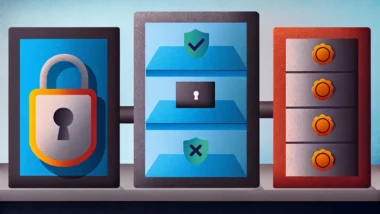
At its core, SOAR comprises three key capabilities: orchestration, automation, and response. Orchestration involves connecting and coordinating disparate security tools and processes to create a cohesive workflow. Automation executes predefined actions—like blocking an IP address or quarantining a file—based on triggers from security alerts. Response encompasses case management, collaboration, and reporting to ensure incidents are tracked and resolved efficiently.
SOAR platforms typically include a playbook engine that allows security teams to define, test, and execute automated response procedures. These playbooks can be triggered automatically by alerts or manually by analysts. By reducing manual intervention, SOAR helps security operations centers (SOCs) handle a higher volume of alerts, accelerate incident response, and maintain consistent processes.
The Real-World Analogy
Think of a SOAR platform as the air traffic control system for a busy airport. Just as air traffic controllers coordinate takeoffs, landings, and ground movements to ensure safe and efficient operations, SOAR coordinates the flow of security alerts and actions across various tools. Without air traffic control, planes would operate in silos, leading to chaos and delays. Similarly, without SOAR, security teams manually juggle alerts from multiple systems, leading to slower response times and increased risk of human error.
In this analogy, the playbooks are like standard operating procedures for different scenarios—such as emergency landings or weather diversions—that are executed automatically when certain conditions are met. The orchestration layer ensures that all systems (e.g., radar, communication, runway lights) work together seamlessly, while automation handles routine tasks like updating flight boards or notifying ground crews.
How Security Orchestration, Automation, and Response (SOAR) Drives Strategic Growth & Market Competitiveness?
SOAR directly impacts an organization’s security posture and operational efficiency, which in turn supports business growth and competitive advantage. By automating incident response, SOAR reduces the mean time to respond (MTTR) from hours or days to minutes or seconds. This rapid containment of threats minimizes potential damage, data loss, and reputational harm, thereby protecting revenue and customer trust.
From a cost perspective, SOAR lowers the total cost of ownership for security operations by reducing the need for manual labor. Analysts can focus on high-priority investigations rather than repetitive tasks, improving job satisfaction and reducing burnout. This efficiency allows SOCs to scale without linearly increasing headcount, enabling organizations to handle growing alert volumes as they expand.
SOAR also enhances compliance and audit readiness. Automated playbooks ensure that incident response procedures are consistently followed and documented, providing a clear audit trail for regulations like GDPR, HIPAA, or PCI DSS. This reduces the risk of non-compliance penalties and streamlines external audits, giving the organization a competitive edge in regulated industries.
Strategic Implementation & Best Practices
- Start with high-volume, low-complexity use cases: Identify repetitive tasks that consume analyst time, such as phishing email triage or indicator of compromise (IoC) enrichment. Automate these first to demonstrate quick wins and build momentum.
- Develop and maintain a playbook library: Create standardized playbooks for common incident types, ensuring they are version-controlled and regularly updated based on lessons learned. Use conditional logic to handle variations in alerts.
- Integrate with existing tools via APIs: Leverage REST APIs, webhooks, and native integrations to connect SOAR with SIEM, EDR, threat intelligence, ticketing systems, and communication platforms. Ensure bidirectional data flow for accurate state tracking.
- Implement human-in-the-loop for critical decisions: While automation handles routine actions, configure playbooks to pause and request analyst approval for high-risk actions like account disabling or network isolation. This balances speed with oversight.
- Measure and optimize key metrics: Track MTTR, automation rate (percentage of alerts handled without human intervention), and analyst productivity. Use these metrics to refine playbooks and identify bottlenecks.
Common Pitfalls & Strategic Mistakes
One frequent error is attempting to automate everything at once without proper planning. Organizations often underestimate the complexity of integrating diverse tools and fail to clean up data quality issues, leading to broken workflows and false positives. A phased approach with thorough testing is essential.
Another pitfall is neglecting playbook maintenance. As threats evolve and infrastructure changes, playbooks become outdated. Without regular reviews and updates, automation may execute incorrect actions, causing operational disruptions. Establish a governance process to review playbooks quarterly.
Finally, over-reliance on automation without human oversight can be dangerous. Automated responses may inadvertently block legitimate traffic or escalate low-priority incidents. Always include validation steps and escalation paths to ensure appropriate handling.
Conclusion
SOAR is a critical component of modern security operations, enabling organizations to respond to threats faster and more consistently. By integrating orchestration, automation, and response, businesses can improve their security posture, reduce costs, and maintain compliance in an increasingly complex threat landscape.