Executive Summary
- Purpose-Built Architecture: TPUs are custom ASICs designed by Google to accelerate tensor computations, delivering high throughput for machine learning workloads while optimizing power efficiency.
- Scalable Performance: TPU pods interconnect thousands of chips to achieve exaflop-level performance, enabling training of large-scale models like GPT and BERT in days instead of weeks.
- Strategic Advantage: By reducing training time and cost, TPUs enable faster iteration cycles, giving businesses a competitive edge in deploying AI-driven products and services.
What is Tensor Processing Unit (TPU)?
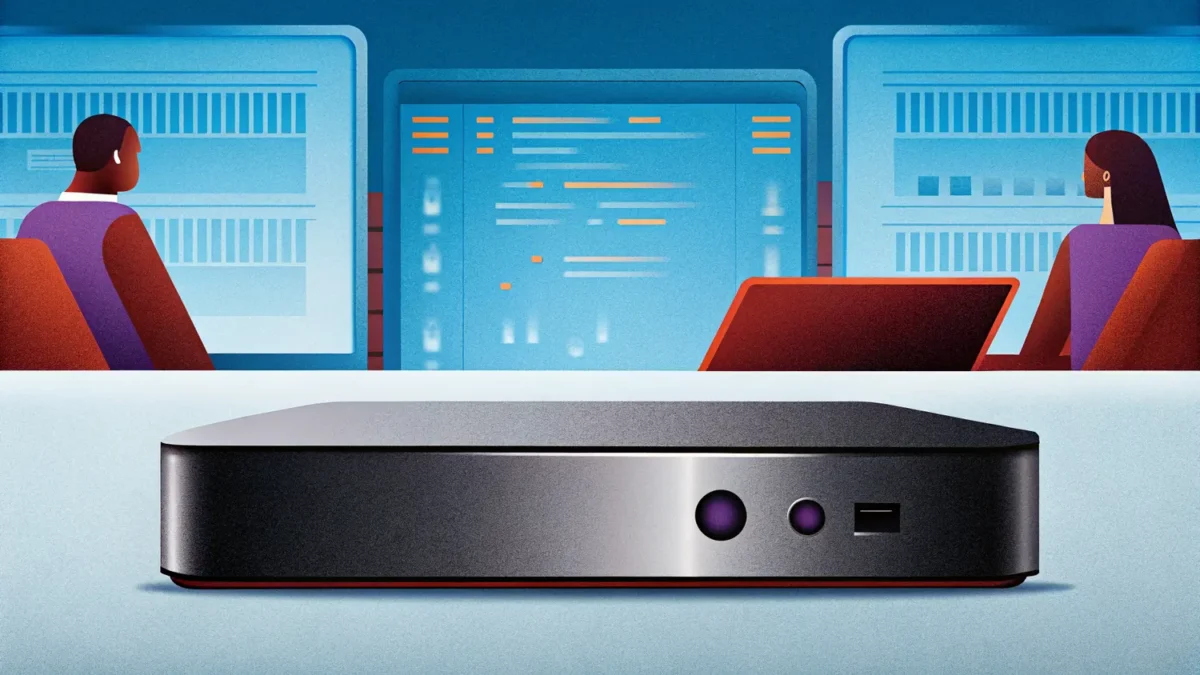
A Tensor Processing Unit (TPU) is a custom application-specific integrated circuit (ASIC) developed by Google specifically to accelerate machine learning workloads. Unlike general-purpose CPUs or GPUs, TPUs are optimized for tensor operations—the fundamental mathematical building blocks of neural networks. They achieve this through a systolic array architecture that performs matrix multiplications and convolutions with high parallelism and reduced precision (e.g., bfloat16).
TPUs are designed to handle both training and inference phases of deep learning models. They integrate high-bandwidth memory (HBM) and a dedicated interconnect (ICI) for scaling across multiple chips. Google Cloud offers TPUs as a service, allowing enterprises to rent these accelerators for their AI projects without upfront hardware investment.
The Real-World Analogy
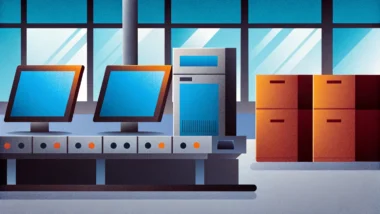
Think of a TPU as a dedicated assembly line in a car factory. While a CPU is like a general-purpose mechanic who can fix any car part, and a GPU is like a team of mechanics working on multiple tasks simultaneously, a TPU is a specialized robot that only installs wheels—but does it thousands of times faster and more efficiently. This specialization allows the factory to produce cars at a much higher rate, analogous to how TPUs accelerate neural network training.
How Tensor Processing Unit (TPU) Drives Strategic Growth & Market Competitiveness?
TPUs directly impact the bottom line by reducing the time and cost required to train large AI models. For businesses relying on AI for product recommendations, fraud detection, or natural language processing, faster training cycles mean quicker deployment of improved models. This leads to better customer experiences, higher conversion rates, and reduced operational costs.
Moreover, TPUs enable the training of models that would be impractical on traditional hardware. For example, training a state-of-the-art language model like GPT-3 on GPUs could take months and cost millions; TPUs can cut that time to weeks. This capability allows companies to innovate faster, iterate on model architectures, and maintain a competitive edge in AI-driven markets.
Strategic Implementation & Best Practices
- Leverage Cloud TPUs for Elastic Scaling: Use Google Cloud TPU Pods to dynamically allocate compute resources based on workload demands. This avoids idle hardware costs and ensures you only pay for what you use.
- Optimize Model Precision: Train models using bfloat16 or mixed precision to maximize TPU throughput. This reduces memory bandwidth requirements and speeds up matrix operations without sacrificing model accuracy.
- Adopt TensorFlow or JAX: TPUs are tightly integrated with TensorFlow and JAX. Use these frameworks to automatically compile operations for TPU execution, minimizing manual optimization efforts.
- Profile and Tune Data Pipelines: Ensure data loading does not become a bottleneck. Use tf.data or JAX’s data pipelines to prefetch and preprocess data efficiently, keeping the TPU saturated with work.
- Monitor and Manage Costs: Use Google Cloud’s cost management tools to track TPU usage. Preemptible TPUs offer significant discounts for fault-tolerant workloads, such as hyperparameter tuning.
Common Pitfalls & Strategic Mistakes
One common mistake is assuming TPUs are a drop-in replacement for GPUs. Code written for CUDA may not run efficiently on TPUs without adaptation. Teams must refactor models to use TPU-compatible operations and avoid custom CUDA kernels. Another pitfall is underestimating the importance of data pipeline performance; slow data loading can starve the TPU, negating its speed advantage.
Additionally, overprovisioning TPU resources without proper scaling can lead to wasted expenditure. It’s crucial to right-size TPU configurations based on model size and batch requirements. Finally, neglecting to use preemptible TPUs for non-critical jobs can unnecessarily inflate costs.
Conclusion
TPUs represent a strategic investment for any organization serious about scaling AI capabilities. By understanding their architecture and best practices, businesses can unlock unprecedented training speed and cost efficiency, driving innovation and market leadership.