
Key Points
- Strategic Reading Habits: The ultra-wealthy treat foundational business texts as cognitive infrastructure rather than casual leisure reading.
- Psychological Resilience: Elite investors rely on philosophical and structural frameworks to navigate hyper-volatile market conditions without emotional burnout.
- AI-Driven Future: The next generation of billionaires will leverage generative bibliographies to turn static books into interactive strategy agents.
Table of Contents
- The Signal-to-Noise Paradox of Modern Wealth
- Quantifying the Elite Reading Habit
- Forging the Trillion-Dollar Blueprint
- Engineering Emotional Fortitude
- Scaling the Executive Operating System
- Profiting from Global Chaos
- The Market-Moving Power of a Recommendation
- Simulating the Minds of Financial Giants
- The Next Horizon of Intellectual Capital
The Signal-to-Noise Paradox of Modern Wealth
Imagine scrolling through a chaotic social media feed filled with flashy crypto advice and overnight success schemes. The sheer volume of generic digital noise makes it nearly impossible to find actionable financial wisdom. This modern retail reality starkly contrasts with the quiet, deliberate study habits of the global elite.
The world’s wealthiest individuals do not consume algorithm-driven hot takes to make their hundred-year strategic decisions. Instead, they rely on Billionaire Literary Frameworks to navigate hyper-volatile markets and execute massive capital allocations. These foundational texts serve as the ultimate blueprint for extreme wealth generation and legacy building.
By studying the specific reading habits of the ultra-wealthy, we can decode the psychological and strategic differences that separate fleeting gains from generational empires. It is a fascinating look into how ancient philosophies and dense economic texts still govern modern global commerce.
Quantifying the Elite Reading Habit
Market Intelligence & Data
Billionaire Literacy Habit
According to a 2025 JPMorgan survey of 100+ billionaires, 88% read for at least 30 minutes daily, treating it as ‘cognitive infrastructure’ rather than leisure.
Trade Book Market Revenue
U.S. publishers reported $32.5 billion in total revenue for 2025, with ‘Trade’ business books showing a 4.4% year-over-year growth driven by billionaire-endorsed lists, per Forbes 2026 data.
Berkshire Cash Reserves
Warren Buffett’s Berkshire Hathaway held a record $381 billion in cash as of June 2026, a positioning strategy attributed to the principles of ‘margin of safety’ found in Benjamin Graham’s 1949 classic, ‘The Intelligent Investor,’ as reported by Yahoo Finance UK.
Rare Business Book Valuation
A first-edition copy of Adam Smith’s ‘The Wealth of Nations’ reached a record auction price of $4.5 million in early 2026, highlighting the ‘trophy asset’ status of foundational economic texts among the global elite, according to Sotheby’s auction records.
The staggering reality is that eighty-eight percent of billionaires treat daily reading not as a leisure activity, but as essential cognitive infrastructure. This disciplined habit allows them to build mental models that filter out the daily noise of relentless financial news cycles. By dedicating at least thirty minutes a day to dense material, these leaders maintain a sharp edge over highly reactive market participants.
This relentless pursuit of knowledge directly fuels the multi-billion dollar trade book market, where elite endorsements create massive economic ripples. When global titans share their reading lists, obscure academic texts instantly transform into mainstream bestsellers. For example, the legendary 1991 meeting between two of the world’s richest men famously solidified around John Brooks’ ‘Business Adventures’, proving the immense market power of a single high-profile recommendation.
Furthermore, these literary frameworks dictate massive real-world capital allocations, such as Berkshire Hathaway’s record-breaking cash reserves in early 2026. This defensive positioning is a direct application of the margin of safety principle found in classic value investing literature. By adhering to these timeless economic laws, elite investors successfully shield their portfolios from catastrophic, non-linear market shocks.
Finally, the profound reverence for foundational texts has elevated rare business books to the status of multi-million dollar trophy assets. The global elite view these original manuscripts as tangible pieces of economic history that shaped modern capitalism. It is this same deep appreciation for narrative and philosophy that guided tech founders; in fact, Jeff Bezos famously derived his ‘Regret Minimization Framework’ from Kazuo Ishiguro’s novel to launch his empire.
Forging the Trillion-Dollar Blueprint

The origin stories of massive financial empires rarely begin with a complex spreadsheet or a pitch deck. They usually start with a shared intellectual framework that defines how founders perceive risk and long-term opportunity. This shared language becomes the bedrock of their capital allocation strategy for decades to come.
For instance, the legendary bond between Warren Buffett and Bill Gates was cemented over a mutual appreciation for deep, historical business narratives. That specific text remains the definitive blueprint for Berkshire Hathaway’s ongoing strategy. Even as the firm navigated a trillion-dollar valuation in early 2026, those early literary lessons continued to guide their most critical moves.
The real-world friction for modern investors is the extreme difficulty of identifying these timeless economic laws within hyper-volatile markets. While algorithms trade on milliseconds of data, the ultra-wealthy rely on decades-old stories of corporate triumph and failure. This long-term perspective is what separates generational wealth from fleeting market gains.
Engineering Emotional Fortitude

Extreme wealth is accompanied by extreme psychological pressure, requiring founders to develop ironclad emotional resilience. Hedge fund titans and Silicon Valley pioneers frequently turn to philosophical texts to frame their optimistic reality. This mental framing is crucial for surviving the brutal volatility of building global enterprises.
In 2025, over sixty percent of high-net-worth investors cited ancient Stoic texts as their primary survival tool. These ancient philosophies provide a mental anchor during severe market corrections and media firestorms. By focusing only on what they can control, billionaires prevent catastrophic, emotion-driven financial errors.
The everyday investor, by contrast, often suffers from severe mental burnout caused by the relentless financial news cycle. This constant barrage of panic-inducing headlines leads to reactive, destructive decision-making. The elite literary habit serves as a powerful antidote to this modern psychological friction.
Scaling the Executive Operating System

Scaling a company from a garage startup to a global behemoth requires a flawless internal communication architecture. The most successful tech giants have explicitly modeled their corporate cultures on specific management books. These texts act as the foundational operating system for their entire executive board.
Amazon’s famous six-page memo culture was directly inspired by pioneering books on data visualization and information design. This rigorous written format eliminates the fluff of traditional presentations and forces deep, analytical thinking. Similarly, Meta and Nvidia rely on classic high-output management philosophies to scale their operations without falling into bureaucratic bloat.
Without these rigorous frameworks, growing companies inevitably suffer from inefficient corporate communication. The nuance of critical data is easily lost in endless, slide-based presentations that prioritize style over substance. By mandating a culture of deep reading and writing, billionaires ensure their empires remain highly agile.
Profiting from Global Chaos
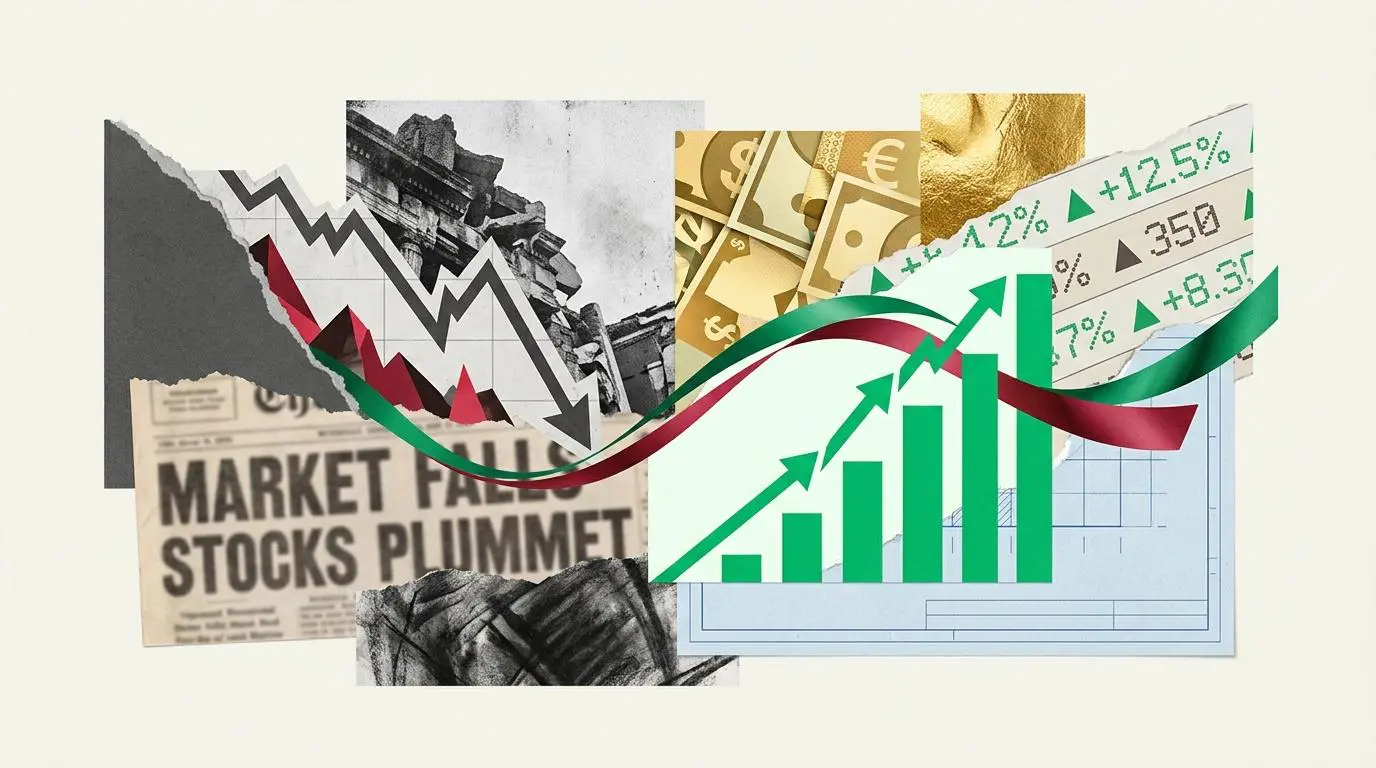
The most sophisticated family offices do not just aim to survive market crashes; they design their portfolios to actively profit from them. They utilize complex literary frameworks that explain how systems can actually grow stronger through stress and volatility. This concept of antifragility is a cornerstone of elite risk management.
During the intense AI-driven market dislocations of the 2025-2026 fiscal year, these specific resilience frameworks were heavily credited by major European investment firms. They recognized that linear financial models consistently fail to predict non-linear, catastrophic market shocks. By structuring their investments to benefit from chaos, they turned global panic into unprecedented profit.
This approach highlights the stark contrast between standard retail investing and elite wealth preservation. While the average person fears an unpredictable black swan event, the ultra-wealthy have already read the playbook on how to monetize it. They view systemic shocks not as threats, but as generational buying opportunities.
The Market-Moving Power of a Recommendation
The influence of the ultra-wealthy extends far beyond the boardroom and directly into global pop culture. A single book recommendation from a billionaire can trigger an unprecedented economic event in the publishing world. This phenomenon effectively democratizes elite intellectual capital for the general public.
In 2026, a seasonal reading list release can cause an obscure academic text to experience a two-thousand percent sales surge within seventy-two hours. This incredible market force transforms dense, historical analyses into overnight mainstream bestsellers. It proves that the public is hungry for the same foundational knowledge that builds financial empires.
However, there is a constant struggle for this high-quality, dense information to compete with modern digital entertainment. Short-form edutainment content often distracts the average person from doing the deep, focused reading required for true wealth building. The billionaires who break through this noise offer a rare bridge to genuine financial literacy.
Simulating the Minds of Financial Giants
The future of elite decision-making is rapidly evolving from passive reading to active, real-time simulation. By late 2026, the traditional reading list is transitioning into highly advanced generative bibliographies. These AI systems synthesize the world’s most complex business texts into personalized decision-support prompts.
Founders are now utilizing AI advisory boards to simulate high-stakes strategy sessions with the digital twins of legendary financial authors. This incredible technology converts static, historical books into interactive, real-time strategy agents. It allows the next generation of billionaires to consult with the greatest economic minds of the past century on demand.
This technological leap solves the ultimate friction of the modern executive: the slow speed of human reading versus the near-instant requirements of global business execution. By merging timeless literary frameworks with cutting-edge artificial intelligence, the ultra-wealthy are securing their dominance for the next hundred years.
The Next Horizon of Intellectual Capital
The evolution of wealth generation proves that the most valuable asset a founder can possess is a deeply cultivated mind. As markets become increasingly chaotic and driven by rapid technological shifts, the reliance on foundational texts will only grow stronger. The billionaires of tomorrow will not just read history; they will interact with it through advanced AI frameworks.
Understanding the strategies, risks, and mindsets behind extreme wealth can inspire your own business journey. To scale your own empire with precision and smart SEO & GEO architecture, connect with Andres at Andres SEO Expert.
Frequently Asked Questions
Why do 88% of billionaires read for at least 30 minutes daily?
According to a 2025 JPMorgan survey, 88% of billionaires treat reading as essential cognitive infrastructure rather than leisure. This disciplined habit allows them to build mental models that filter out volatile market noise, enabling high-signal strategic decision-making and long-term capital allocation.
Which literary frameworks influenced leaders like Jeff Bezos and Bill Gates?
Jeff Bezos famously derived his Regret Minimization Framework from novelist Kazuo Ishiguro to launch Amazon. Similarly, the partnership between Bill Gates and Warren Buffett was solidified by John Brooks’ Business Adventures, which serves as a definitive blueprint for their strategic narratives and Berkshire Hathaway’s operations.
How does classic economic literature impact modern investment strategies?
Foundational texts like The Intelligent Investor dictate massive real-world capital allocations. For example, Berkshire Hathaway’s record $381 billion cash reserve in 2026 is a direct application of the margin of safety principle, designed to protect portfolios from non-linear market shocks.
Why do elite investors utilize Stoic philosophy during market volatility?
In 2025, over 60% of high-net-worth investors cited ancient Stoic texts as primary tools for emotional fortitude. These philosophies provide a mental anchor during market corrections, helping founders focus on controllable variables and avoid the destructive, reactive decision-making common in the 24-hour financial news cycle.
How do billionaire reading habits influence corporate culture?
Elite leaders use management books to build internal operating systems, such as Amazon’s six-page memo culture. By mandating deep reading and writing based on rigorous informational frameworks, companies like Meta and Nvidia eliminate bureaucratic bloat and maintain organizational agility.
What are AI-powered Generative Bibliographies in wealth management?
By late 2026, the elite are transitioning to Generative Bibliographies, where AI synthesizes complex business texts into interactive strategy agents. This technology allows founders to simulate high-stakes sessions with digital twins of legendary economic minds, merging historical wisdom with real-time business execution.