Key Points
- Automated Rotoscoping: Generative video models are replacing manual plate cleaning with instant edge-detection algorithms.
- Cloud-Native Workflows: Browser-based VFX environments remove heavy hardware dependencies for elastic studio rendering.
- Spatial Computing: Gaussian Splatting enables real-time photorealistic 3D environment capture without polygon-heavy modeling.
Table of Contents
- The Rotoscoping Bottleneck
- Quantifying the Shift in Media Budgets
- Erasing the Everyday Studio Problem
- The Cloud-Native Rendering Evolution
- Spatial Computing and Smart Features
- Redefining Financial Impact and Studio ROI
- Upskilling the Human Element
- The Autonomous Post-Production Horizon
- A Visionary Era for Digital Storytelling
The Rotoscoping Bottleneck
Imagine a highly anticipated streaming series locked in post-production. A stray boom mic and an improperly lit green screen force junior artists to spend countless hours manually painting out frames. This traditional visual effects bottleneck consumes up to 40% of production timelines across the industry.
It burns out creative talent and balloons budgets before the final cut is even assembled.
Implementing generative AI for VFX pipelines transforms this grueling marathon into a streamlined sprint. By replacing brute-force pixel pushing with intelligent algorithms, studios can instantly isolate subjects and reconstruct backgrounds. This technological shift allows production houses to scale output and focus entirely on high-level visual storytelling.
Quantifying the Shift in Media Budgets
Market Intelligence & Data
GenAI in Media Market
The global generative AI in media and entertainment market is predicted to reach this value in 2026, driven by film and television studios, according to an April 2026 report by Vertex AI Search.
Post-Prod Accuracy Gains
Adobe Firefly’s generative AI now automates inpainting and compositing with up to 90% accuracy in professional post-production workflows, as documented in a January 2026 SNS Insider report.
AI in VFX Growth Rate
The AI-driven segment of the visual effects market is projected to expand at a compound annual growth rate of 19.46% from 2026 through 2035, according to data from SNS Insider.
Realism Benchmarking
AI-driven fur and hair simulation has improved realism by 76% in digital characters during early 2026 productions, according to a May 2026 Gitnux industry analysis.
The $2.8 billion valuation for the generative AI media market by 2026 highlights a massive reallocation of studio resources. Major film and television networks are shifting budgets away from manual labor and investing heavily in intelligent pipeline infrastructure. This capital influx rapidly matures the software landscape, turning experimental algorithms into enterprise-grade tools.
Achieving 90% accuracy in automated inpainting fundamentally changes the daily reality of compositors. When tools handle the heavy lifting of plate cleaning, artists reclaim countless hours previously lost to tedious corrections. Supervisors can now trust automated passes for background elements, reserving human intervention strictly for complex hero shots.
The sheer velocity of this transition is evident as the AI-driven segment of the visual effects market is projected to expand at a compound annual growth rate of 19.46% over the next decade. Studios failing to adopt these intelligent workflows risk being priced out of competitive bidding wars for high-end streaming contracts. This rapid growth signals a permanent structural shift in how digital content is budgeted globally.
The 76% improvement in realism benchmarking for complex simulations proves that AI enhances quality alongside speed. This leap in fidelity is supported by new rendering standards, such as the KHR_gaussian_splatting extension for glTF 2.0, allowing web-compatible viewers to process photorealistic environments instantly. Generative models now produce assets that seamlessly blend with live-action footage, drastically lowering the barrier to entry for premium visual effects.
Erasing the Everyday Studio Problem
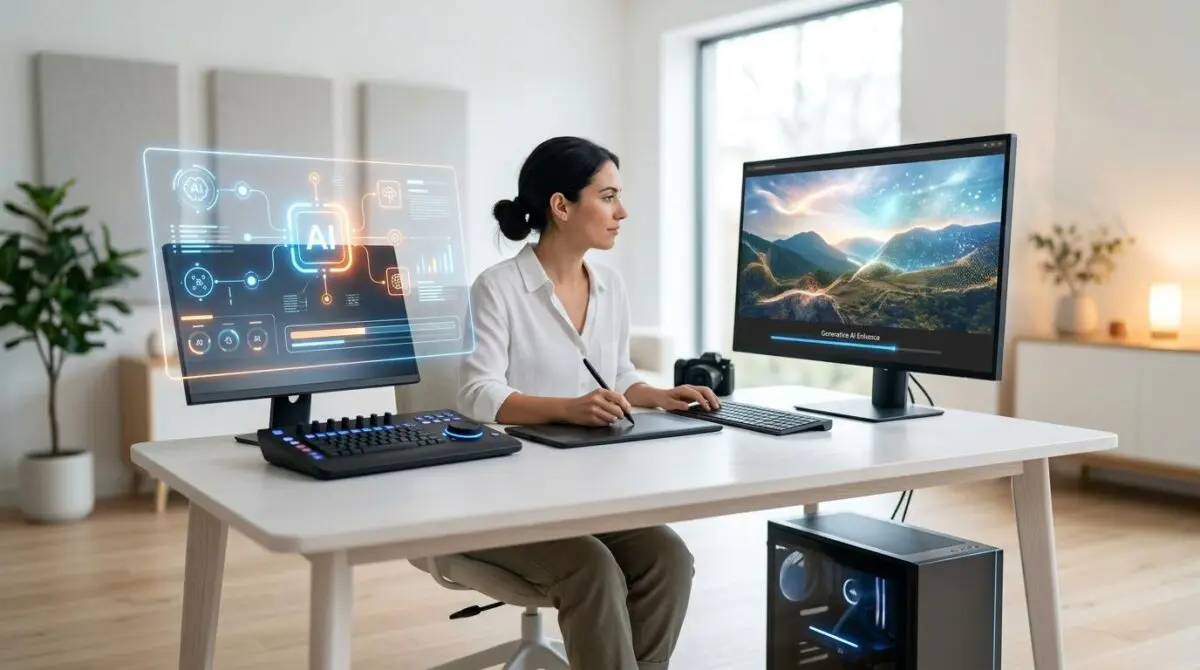
Manual rotoscoping has long been the bane of the visual effects industry. The frame-by-frame isolation of subjects is tedious, error-prone, and incredibly time-consuming. Historically, subject isolation required junior artists to spend up to 15 hours per shot just to prepare footage for actual creative work.
This manual bottleneck is rapidly being replaced by generative edge-detection technologies. Tools like Runway Gen-3 and Adobe Firefly Video offer powerful generative fill capabilities specifically engineered for motion. These systems allow for the instant removal of complex moving objects that previously required days of manual prep work.
By leveraging these AI-driven tools, tasks that took days are now completed in mere minutes. This operational efficiency frees up creative teams to focus on compositing and lighting. Artists no longer have to act as digital janitors for flawed principal photography.
The Cloud-Native Rendering Evolution
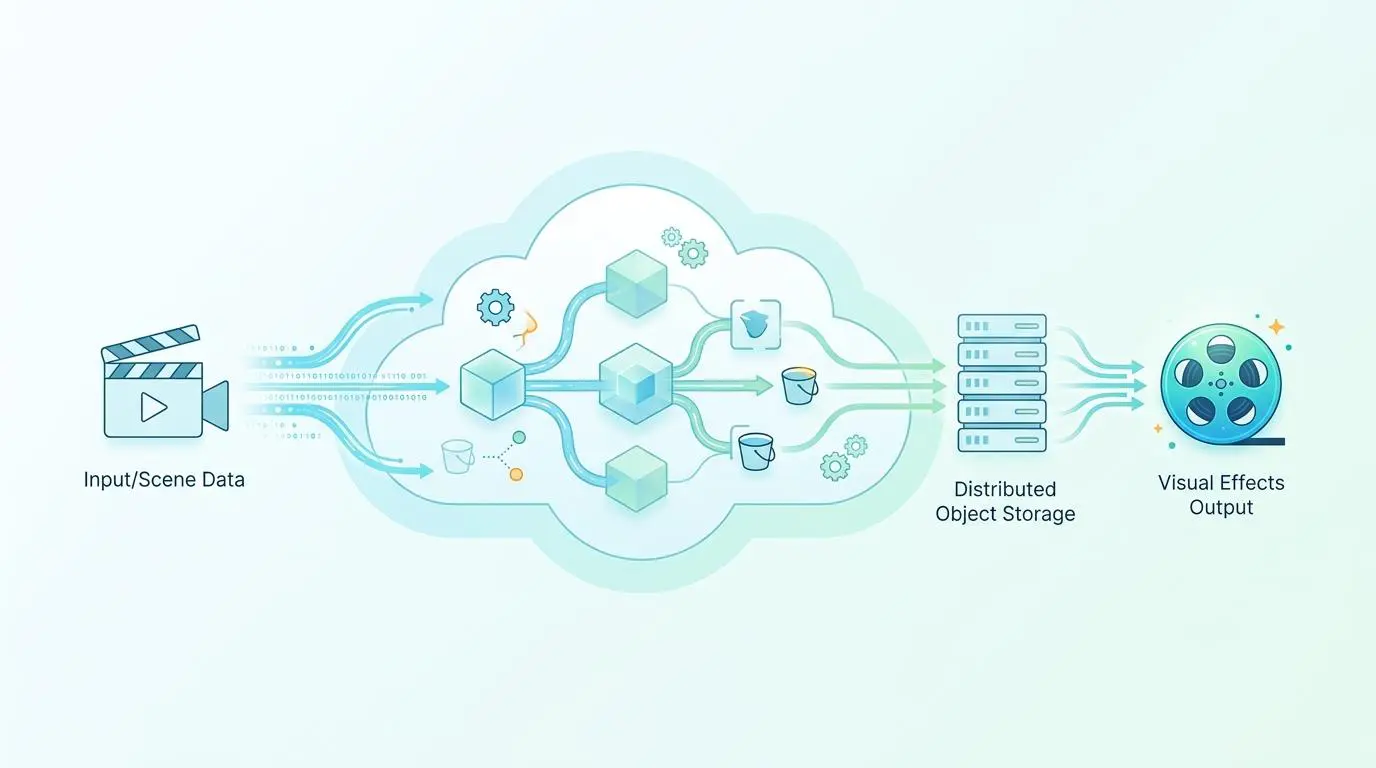
The launch of Autodesk Flow Studio marked a definitive shift toward cloud-native visual effects workflows. For decades, studios were tethered to expensive on-premise GPU clusters requiring massive upfront capital and continuous IT maintenance. Fragmented workflows and heavy hardware dependencies consistently prevented small studios from competing on big-budget projects.
This new cloud environment allows studios to completely bypass traditional hardware limitations. Teams can now utilize elastic cloud rendering and AI-assisted workflows directly within a browser-based review system. As rendering demands spike during the final weeks of production, the cloud infrastructure scales automatically to meet the load.
Democratizing access to high-performance computing means boutique agencies can punch above their weight class. By removing the hardware barrier, the industry is seeing a surge in independent studios successfully bidding on tier-one streaming content.
Spatial Computing and Smart Features

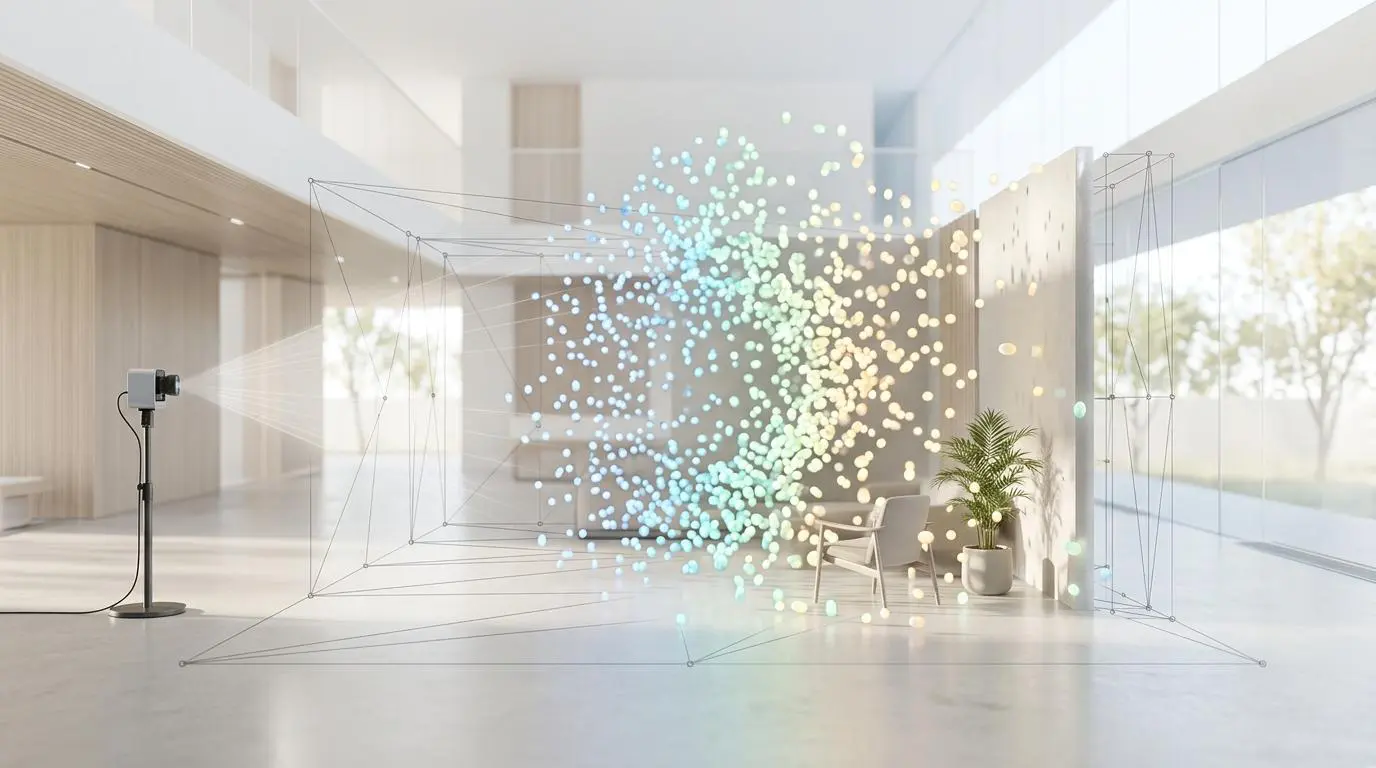
The spatial computing landscape experienced a breakthrough moment with the ratification of Gaussian Splatting standards. Previously, digital environment reconstruction required a months-long process of manual 3D modeling, UV mapping, and texturing. This polygon-heavy workflow was a massive drain on pre-production resources.
Unlike traditional photogrammetry, 3D Gaussian Splatting allows for real-time, photorealistic 3D environment capture from simple video feeds. This technology quickly moved from an academic curiosity to an industry standard. It enables instant virtual production set creation without the need for complex geometry.
Directors can now scout and block scenes in fully realized digital twins of real-world locations before a single physical camera rolls. This smart feature drastically reduces location scouting costs. It also provides unprecedented creative flexibility during the previz stage.
Redefining Financial Impact and Studio ROI
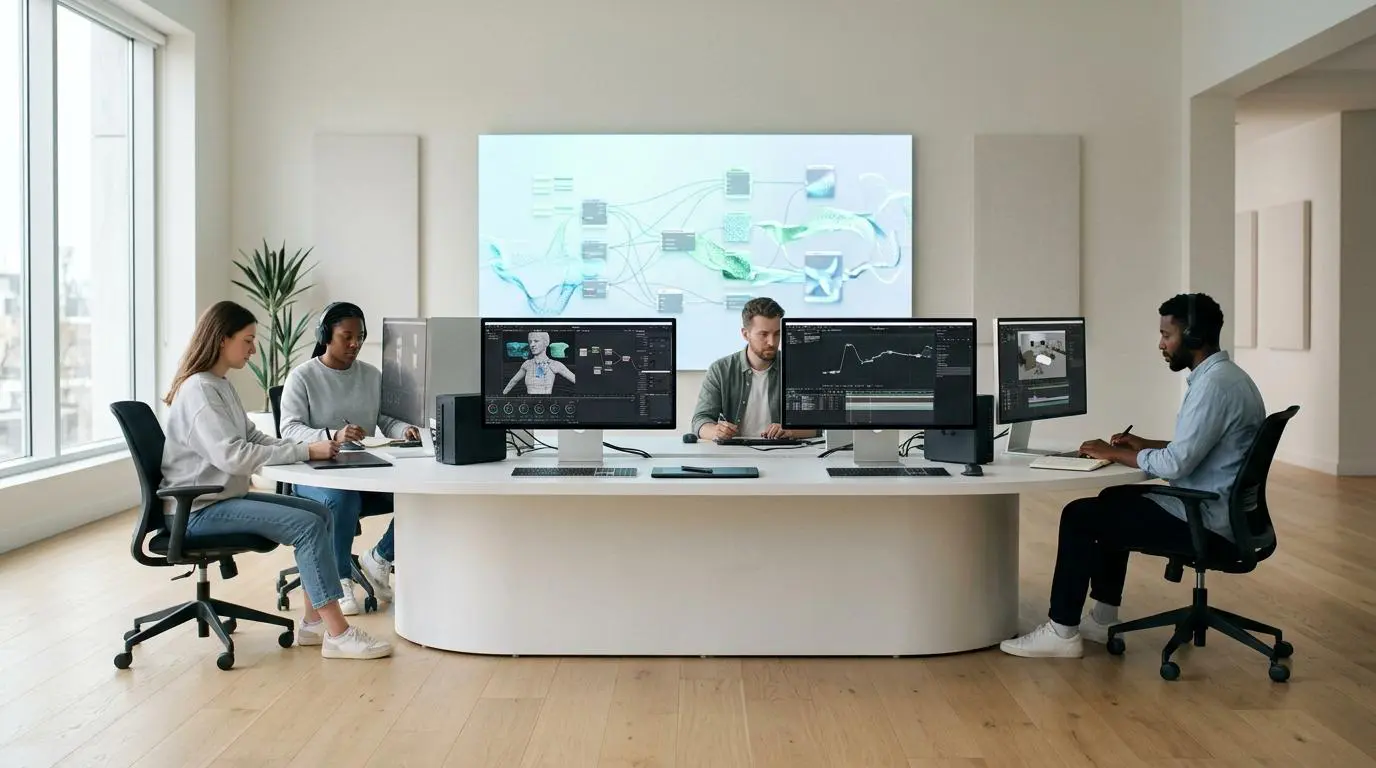
The rising demand for high-end streaming content heavily outpaces the physical capacity of traditional labor-based VFX houses. Studios are under immense pressure to deliver cinematic quality on serialized television schedules. The old math of hiring more artists to meet tighter deadlines simply no longer works.
To survive, studio heads are adopting hybrid ROI models where artificial intelligence handles all technical cleanup. Leading visual effects companies utilize these systems to turn every single artist into a production powerhouse. By automating routine denoising and light-matching tasks, a single compositor can manage a significantly larger workload.
This structural shift allows the exact same budget to produce three times the shot volume. Profit margins are no longer eaten alive by overtime pay during the final crunch. This ensures studios remain financially healthy while delivering premium visual spectacles.
Upskilling the Human Element
The fear of mass job replacement has given way to a massive wave of technical upskilling. A majority of visual effects crews have now undergone formal AI integration training. The industry is actively shifting away from pixel-pushing and moving toward a model of aesthetic governance.
Artist burnout and the notorious VFX crunch were caused by unsustainable deadlines and deeply repetitive manual tasks. Automation removes this soul-crushing busywork from the pipeline. Artists and directors now act as curators of generative outputs, guiding the machine to match their specific creative vision.
This evolution elevates the role of the digital artist. Instead of spending hours masking out a green screen, they focus on high-level storytelling and color theory. This shift brings true artistic value back to the forefront of post-production.
The Autonomous Post-Production Horizon
The industry is rapidly preparing for the standardization of Agentic AI. These semi-autonomous systems are designed to manage entire post-production workflows in the background. They will autonomously handle metadata generation, color space conformity, and regional localization without human prompting.
The logistical complexity of managing thousands of files in global content distribution has always been a massive hidden tax on studios. Agentic AI eliminates this friction by ensuring technical compliance across all deliverables. Humans are left to focus exclusively on the final creative polish.
The ultimate transition is moving from AI-assisted tools to predictive context-aware systems. These advanced networks will soon suggest edits and visual effects based on viewer engagement patterns and emotional peaks. This effectively closes the feedback loop between creative output and audience performance.
A Visionary Era for Digital Storytelling
The integration of generative algorithms into visual effects pipelines is a fundamental reimagining of how digital art is crafted. By eliminating manual bottlenecks and embracing cloud-native architectures, studios unlock unprecedented levels of scale, speed, and creative freedom. The future of post-production belongs to those who leverage automation to amplify human imagination.
Navigating the intersection of modern technology, software architecture, and business growth requires a sharp strategy. To future-proof your tech stack and scale with precision, connect with Andres at Andres SEO Expert.
Frequently Asked Questions
How does generative AI solve the rotoscoping bottleneck in VFX?
Generative AI replaces manual frame-by-frame isolation with intelligent edge-detection and generative fill. Tools like Runway Gen-3 and Adobe Firefly can automate tasks like removing boom mics or subjects in minutes, which previously took junior artists 10 to 15 hours per shot.
What is the projected market growth for AI in the visual effects industry?
The AI-driven segment of the VFX market is projected to expand at a compound annual growth rate (CAGR) of 19.46% from 2026 through 2035. Additionally, the global generative AI in media and entertainment market is expected to reach $2.8 billion by 2026.
Can generative AI produce realistic digital character simulations?
Yes, AI-driven simulations for complex elements like fur and hair have improved realism by 76% in early 2026 productions. This leap in quality, combined with new standards like Gaussian Splatting, allows AI-generated assets to blend seamlessly with live-action footage.
What is 3D Gaussian Splatting and why is it important for film production?
3D Gaussian Splatting is a spatial computing standard that allows for real-time, photorealistic 3D environment capture from simple video feeds. It replaces traditional, labor-intensive 3D modeling and allows directors to scout and block scenes in high-fidelity digital twins.
How does cloud-native rendering change the visual effects pipeline?
Cloud-native environments, such as Autodesk Flow Studio, eliminate the need for expensive on-premise GPU clusters. This democratizes high-performance computing, allowing smaller boutique agencies to scale their rendering power automatically and compete for high-budget streaming projects.
Does AI integration mean job losses for visual effects artists?
Rather than replacement, the industry is seeing a wave of upskilling toward aesthetic governance. By 2026, approximately 65% of crews have trained for AI integration, allowing artists to guide generative outputs and focus on high-level storytelling rather than manual pixel-pushing.